

You want brunch that’s effortless and nutritious, and meal prep helps. Research shows prepping meals improves diet quality and cuts morning stress. You’ll batch-cook eggs, grains, and fruit, freeze pancakes, and portion sauces so you can pull together satisfying plates in minutes. Practical tips will save time, reduce waste, and keep flavors bright—keep going to see exactly how.
Key Takeaways
- Batch cook versatile egg dishes (frittatas, baked muffins) and portion into single servings for quick reheating and controlled calories.
- Cook whole grains and roast vegetables in bulk to assemble savory breakfast bowls with proteins like tofu, chicken, or hard‑boiled eggs.
- Prep overnight oats, chia puddings, or layered parfait jars with fruit, yogurt, and toppings for grab‑and‑go breakfasts.
- Freeze extras (pancakes, waffles, sausage) flash‑frozen in single portions; reheat in toaster, oven, or air fryer for best texture.
- Cool, date, and label airtight containers; refrigerate within two hours and follow reheating temperatures to ensure safety and quality.
Make-Ahead Egg Dishes: Frittatas, Baked Egg Muffins, and Stratas

When you need a reliable, nutritious brunch that you can grab all week, make-ahead egg dishes—frittatas, baked egg muffins, and stratas—are a practical solution. You’ll streamline mornings by prepping batches, storing portions in airtight containers, and reheating portions tailored to appetite. Use measured Portion Sizes: one muffin or a 3 to 4 ounce frittata wedge per serving to control calories and satiety. Swap ingredients for Vegetarian Options like spinach, mushrooms, and roasted peppers to boost fiber and micronutrients without sacrificing protein. Follow evidence-based tips: cook until just set to preserve texture, cool before sealing to reduce condensation, and label dates to guarantee safety. You’ll save time, reduce decision fatigue, and offer clients consistent, nutrient-dense choices for weekday brunches. You’ll feel confident serving these options.
Overnight Oats and Chia Puddings for Grab-and-Go Mornings
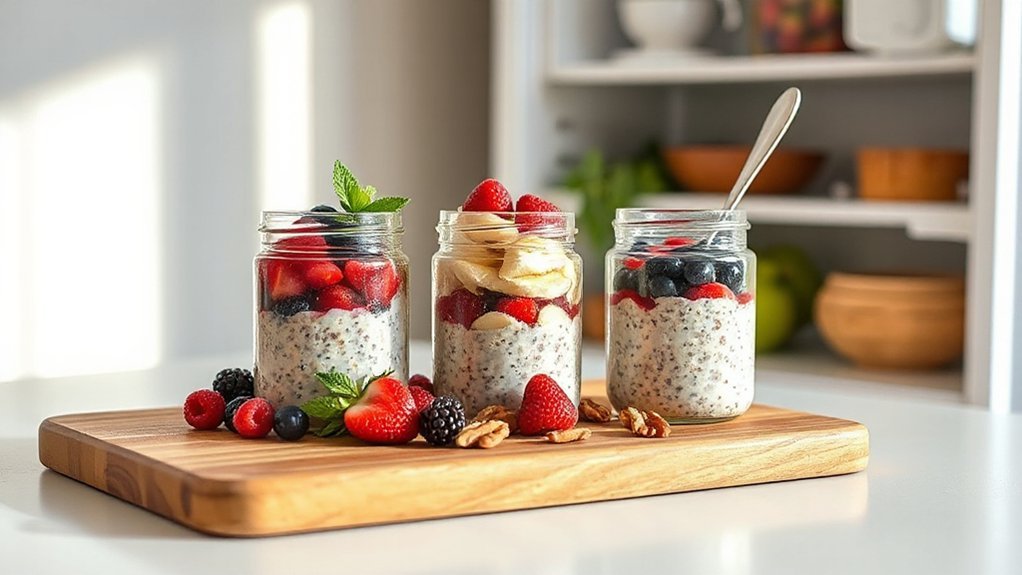
Often, overnight oats and chia puddings give busy clients a nutrient-dense, portable breakfast you can prep in jars and grab all week. You’ll rely on simple ratios—oats or chia, milk, and a binder—for consistent texture, and studies show they support satiety and stable blood glucose. Offer Flavor Pairings like berry-citrus, banana-maple, cocoa-espresso, and apple-cinnamon to keep clients engaged.
Prep nutrient-dense overnight oats or chia puddings in jars—simple ratios, tasty flavor pairings, and lasting satiety.
- Oats berries
- Chia almond milk
- Greek yogurt
- Nut butter
Add Nutrition Boosters such as Greek yogurt, nut butter, hemp seeds, or collagen for protein and micronutrients. Pack jars with layered fruit and seeds for portion control, label dates, and rotate varieties to reduce waste.
Batch-Baked Breakfast Breads, Muffins, and Scones

Batch-baking breakfast breads, muffins, and scones lets you produce consistent, portion-controlled options that support adherence to meal plans and reduce morning decision fatigue. When you batch-bake, measure ingredients carefully and label portions with date and reheating instructions to maintain food safety and predictable nutrition. Use whole-grain flours, pureed fruit, or yogurt to boost fiber and protein; consider gluten free adaptations with blends that mimic texture while keeping fiber high. Plan for varied flavors and creative mix ins—nuts, seeds, dried fruit, or dark chocolate—to increase satiety and micronutrient variety. Freeze extras in single servings and defrost overnight or reheat briefly. Track what your clients or household prefer, adjust sweetness and add-ins, and document outcomes to refine future batches. You’ll save time and reduce waste consistently.
Savory Breakfast Bowls: Grains, Roasted Veggies, and Protein
Savory breakfast bowls combine a base of whole grains, roasted vegetables, and a protein to deliver a balanced, satiating meal that’s easy to scale for meal prep. You’ll minimize morning decision fatigue by portioning grain bases, roasted veggies, and proteins in separate containers; you can assemble quickly. Use grain swaps like quinoa, farro, or brown rice to vary texture and nutrients; roast vegetables with oil and salt. Add proteins—hard‑boiled eggs, baked tofu, or shredded chicken—for energy. Finish with bright pickled toppings and drizzle of yogurt or vinaigrette.
- Cook grains in bulk and cool before storing to prevent sogginess.
- Roast vegetables at high heat for caramelization; store airtight.
- Portion proteins as 4–6oz portions for balanced macros.
- Keep pickled toppings separate until serving to preserve crunch.
Freezer-Friendly Pancakes, Waffles, and French Toast Sticks
Freezing pancakes, waffles, and French toast sticks lets you turn a single prep session into several quick breakfasts that retain good texture and flavor when you reheat them correctly. You should cool items completely, flash-freeze on a tray, then bag portions to prevent freezer burn and preserve Texture Preservation. Reheat from frozen in a toaster, oven, or air fryer for best crispness; microwaving will be faster but may soften edges. For dietary needs, consider Ingredient Swaps like whole-grain flour, mashed banana, or milk alternatives, noting they can change moisture and cook time. Label packages with date and contents; use within two to three months. Test a small batch to fine-tune timing and equipment so your reheated servings match fresh results. Adjust salt and sweetness.
Brunch-Ready Breakfast Proteins: Sausage, Bacon, and Tofu
You can prep bulk sausage patties or links ahead—cook them through, cool, and freeze or refrigerate in single portions to speed brunch service. For bacon, crisp it on a sheet pan then store between paper towels; to revive crispness, reheat briefly in a 375°F oven or microwave between paper towels for fast, even results. If you want a vegetarian option, press and marinate tofu, then bake or pan-sear before storing so it’s ready to finish crisping on brunch day.
Make-Ahead Sausage Tips
Planning your sausage prep lets you serve consistently safe, flavorful protein without last-minute stress. You’ll choose proper grinding techniques, test seasoning blends, and portion for even cooling; refrigerate cooked links within two hours and freeze in single layers to avoid clumping. Label with date and reheating instructions for food safety and efficiency.
- Cook fully to 160°F (pork) or 165°F (poultry) before chilling.
- Cool quickly: shallow trays and 2-hour max room time.
- Portion: two-link servings or 3–4 oz patties, vacuum or airtight wrap.
- Thaw safely in fridge overnight; reheat to 165°F.
Follow these steps to reduce waste, maintain texture, and deliver consistent taste for weekend service or catered brunches. Track batch yields and feedback to refine seasoning and portioning for reliable guest satisfaction each week.
Crispy Bacon Reheating
When reheating bacon, aim to restore crispness, reach a safe serving temperature (165°F), and avoid soggy, grease‑heavy results by choosing quick, even‑heat methods. You’ll get reliable results using two approaches: microwave techniques for speed and airfryer revival for texture. For microwave techniques, layer bacon between paper towels on a microwave‑safe plate, heat in 20 to 30 second bursts, check temperature with a probe, and drain excess fat. For airfryer revival, preheat to 350°F, arrange slices in a single layer, and re‑crisp for two to four minutes, flipping if needed. Both methods work from refrigerated storage; if bacon’s frozen, thaw overnight in the fridge first. Always let bacon rest briefly on paper towels to absorb oil before serving. Use a probe thermometer for consistency daily.
Make-Ahead Sauces, Spreads, and Dressings: Pestos, Syrups, and Yogurt Toppings
You can make pestos and herb sauces ahead to boost flavor and cut morning prep—store them in airtight jars or frozen ice‑cube trays for single‑serve convenience. Research shows prepped condiments increase meal variety and support healthier choices, so pair pesto with eggs or grain bowls and top yogurt with honey, fruit compotes, or toasted seeds for texture and protein. Keep portioned mix-ins on hand to customize servings quickly while controlling sodium and sugar.
Pestos and Herb Sauces
Although often dismissed as finishing touches, pestos and herb sauces are meal‑prep workhorses you can make ahead to boost flavor, nutrition, and convenience across multiple brunches. They freeze well, retain nutrients, and let you control sodium and fat—evidence supports using herbs for antioxidants and shelf stability. Consider regional variations and simple flavor pairings to guide batches:
- Basil-pine nut pesto
- Cilantro-lime chimichurri
- Parsley-lemon gremolata
- Walnut-mint sauce for fruit or bowls
Portion into ice cube trays or small jars for grab-and-go use; label with date and intended use. When advising clients, ask about allergies and preferred intensity, then suggest oil choices to adjust texture and shelf life. Reheat gently or stir in cold to finish dishes. Keep a small tasting jar for testing preferences, often useful.
Yogurt Toppings and Mix-ins
Because yogurt’s mild tang pairs with sweet, savory, and crunchy elements, make-ahead toppings and mix-ins let you tailor nutrition, texture, and flavor for busy brunches. You can portion Greek or plant-based yogurt into containers and add jars of prepared components: roasted fruit compote, herbed olive oil, toasted seeds, and nut butter. Use measured spice blends (cinnamon-cardamom, za’atar) to boost flavor without added sugar. For protein and satiety, include prebaked granola or honeyed chickpeas. Label for allergies and reheating guidance; most toppings keep 3–5 days refrigerated. Encourage clients to combine just before serving to preserve textural contrasts—crispy granola, creamy yogurt, and syrupy fruit. These strategies improve adherence, reduce waste, and streamline assembly during weekend or weekday brunches. You’ll notice faster service and fewer last-minute decisions.
Assemble-Ahead Sandwiches, Wraps, and Toast Boards
Assembling sandwiches, wraps, and toast boards the night before can save 20–30 minutes in morning prep while keeping components fresh when you follow simple layering and moisture-control rules. You’ll plan Layer Order to prevent sogginess: spread wet condiments on proteins, keep greens dry, and use cheese or sturdy fillings as barriers. Choose Packaging Options that maintain separation—airtight containers for bread, small tubs for spreads. Label servings and reheating instructions so clients or family know what to do. Practical tips proven in meal-prep studies show brief chilling preserves texture and food safety.
- Use wax paper between slices to avoid sticking
- Pack dressings separately in small jars
- Opt for perforated vent lids for crisp toast
- Refrigerate assembled items within two hours daily
Fruit, Parfait, and Salad Prep to Keep Things Fresh
You can keep fruit bright and safe by trimming and acidulating susceptible pieces, then storing portions in airtight containers with a paper towel to absorb moisture. Layer parfaits in jars—yogurt, fruit, then granola on top—so you preserve texture, control portions, and make grab-and-go servings. Wash and spin greens ahead, but keep dressings separate and toss just before serving so you’ll preserve crunch and nutrients.
Prep Fruit for Freshness
How you prep fruit determines how long it stays fresh and how appealing it looks and tastes. You’ll prioritize simple, evidence-backed steps so fruit stays crisp for brunch service. Rinse, dry thoroughly, and trim only when ready to serve to slow spoilage. Use ethylene control by separating high-ethylene items (bananas, apples) from sensitive berries. Consider vacuum sealing for longer storage of chopped fruit; it reduces oxidation and microbial growth. Store prepared fruit in airtight containers with absorbent paper for salads and platters. Check regularly and rotate stock.
- Rinse and pat dry immediately
- Store berries on paper towels
- Separate ethylene producers
- Vacuum seal for multi-day prep
Label containers with date and portion size to simplify service and reduce waste during busy brunch shifts every week.
Layer Parfaits in Jars
When you layer parfaits in jars with an eye on moisture control, they’ll stay appealing and safe for service for several days. You’ll plan layer sequencing to keep wet components separated from crunchy ones: yogurt against fruit, granola on top. Emphasize jar aesthetics for client satisfaction—clear jars show neat layers and portion size. Use airtight lids, cold-chain storage, and label dates; research supports holding times up to 48-72 hours if chilled.
| Layer | Ingredient | Tip |
|---|---|---|
| Bottom | Fruit | Drain excess juice |
| Middle | Yogurt | Thick, low-water |
Assemble to order when possible, but pre-layer responsibly to save time and maintain quality. Communicate ingredients and allergens on labels so clients can make informed choices. Train staff on consistent assembly and inspection to preserve safety, appearance, and client trust daily.
Dress Salads Just Before
Because dressings speed moisture migration and enzymatic breakdown, dress salads just before service so greens stay crisp and fruit retains texture; you’ll reduce sogginess and preserve visual appeal while minimizing food-safety risks. For reliable Crisp preservation, store components separately and keep greens dry. Use Dressing timing in your workflow—dress at the last moment or table‑side. Pack dressings sealed for transport. Train helpers on portion control and safety. Label items and monitor temperatures.
- Keep dressings separate until service
- Chill toppings and fruit independently
- Add nuts and seeds after dressing
- Use squeeze bottles for consistent portions
Document dressing recipes and acidity levels, rotate prepared components within recommended hold times, and communicate Dressing timing to staff to maintain quality and reduce waste for every brunch service daily.
Storage, Reheating, and Transport Tips for Perfect Leftovers
Glass or BPA-free airtight containers will keep your brunch leftovers safe and tasty: you should cool food to room temperature within two hours, divide into shallow portions, and refrigerate at or below 40°F (4°C) for up to 3–4 days (or freeze for longer storage). Use clear Labeling Systems to note contents, date, and reheating instructions so you and guests avoid guesswork. Stack containers using stable Stacking Techniques—heaviest items on bottom, lids snapped—to maximize fridge space and prevent spills. Reheat evenly: cover to retain moisture, reheat to 165°F (74°C), and stir mid-cycle for microwave use or use a 325°F (160°C) oven for casseroles. For transport, pack chilled items with ice packs in insulated bags and keep hot items in thermoses. Discard if temperature abuse occurred.
Conclusion
You’ll save time, eat better, and reduce stress when you batch-cook frittata wedges, prep overnight oats, and freeze pancakes. You’ll serve warm breakfasts with minimal effort, grab balanced meals on busy mornings, and trust clear labels and safe storage. Follow reheating guidelines, portion servings, and rotate supplies to keep food fresh. You’ll build routines that fit your life, protect nutrition, and make relaxed weekend brunches feel effortless and intentional—and save money, too, every week.




Leave a Comment