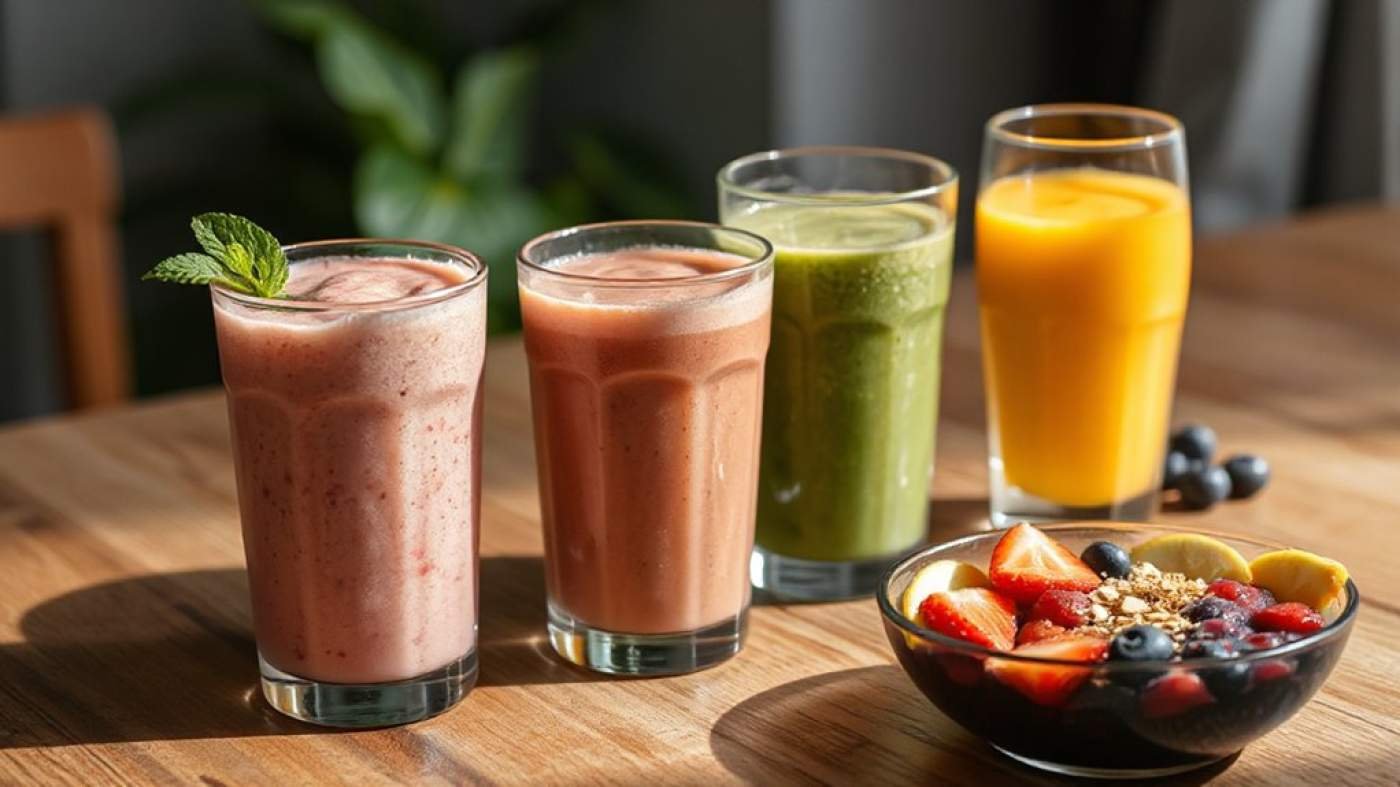

Research shows that boosting breakfast protein can cut midmorning snacking by about 25%. You’ll want drinks that balance protein, healthy fats and produce without excess sugar. I’ll give practical base formulas and swap options so you can build smoothies and juices that sustain energy and prevent crashes—starting with two simple, evidence-based templates.
Key Takeaways
- Aim for 20–30 g protein per brunch smoothie using Greek yogurt or protein powder for satiety and post-meal repair.
- For dairy-free options, combine plant protein powder, silken tofu, and nut butter to match protein and creaminess.
- Use frozen fruit, measured portions, and adjust liquid to achieve consistently smooth, non-diluted texture.
- Build juices from colorful whole ingredients—leafy greens, citrus, and orange vegetables—with a touch of healthy fat for vitamin absorption.
- Limit juice servings to 150–300 ml, rotate flavors (citrus, berry, green) and prioritize combos for vitamins and antioxidants.
Creamy Protein-Packed Smoothies
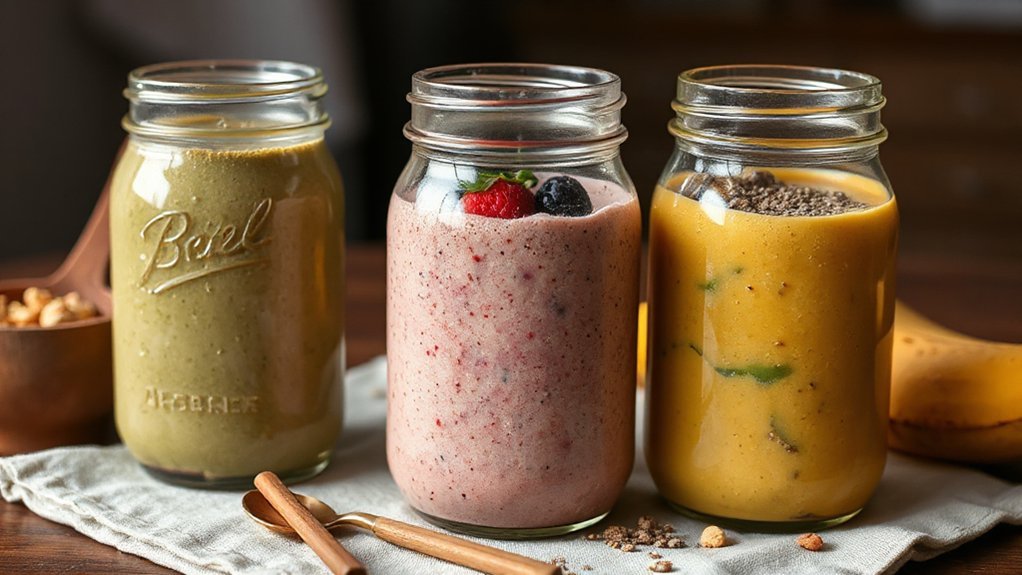
Boosting protein intake with a creamy smoothie helps you stay full, support muscle recovery, and meet daily protein targets without added prep time. When you choose Greek yogurt as a base, you get high-quality whey and casein that deliver 10–20 g protein per serving and improve satiety; studies show dairy proteins aid post-exercise repair. If you’re dairy-free, combine a measured plant protein powder with silken tofu or nut butter to reach similar totals while keeping texture smooth. Aim for 20–30 g protein per smoothie, balance carbohydrates and unsaturated fats, and use frozen fruit for fiber and minimal dilution. Measure portions, taste-test once, and adjust thickness with water or milk. These steps help you create reliable, client-centered, nutrient-dense brunch options. Track results and refine accordingly.
Vibrant Vitamin-Rich Juices
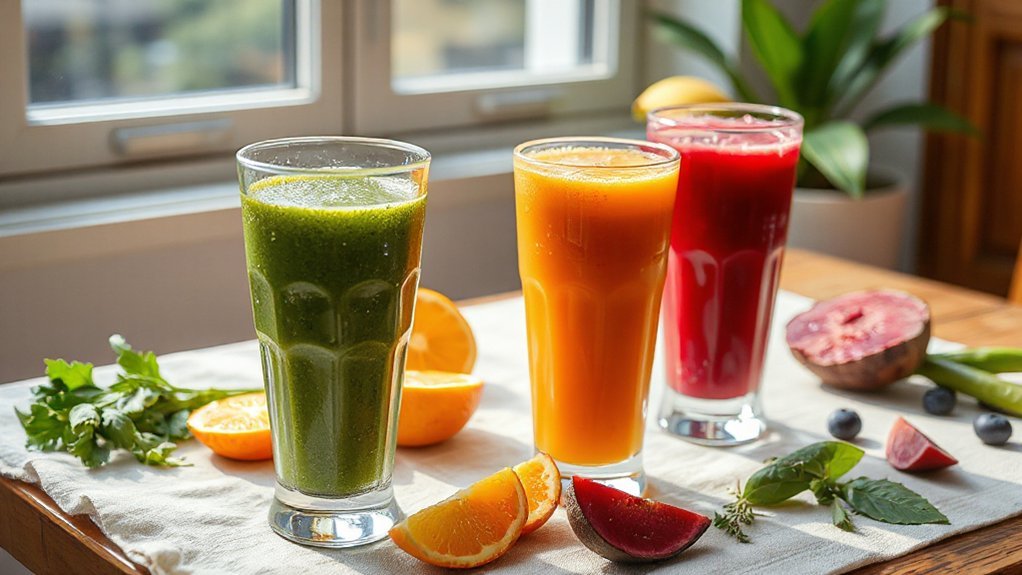
Tapping into colorful, whole ingredients lets you create vitamin-rich juices that deliver targeted micronutrients quickly and palatably; choose leafy greens and citrus for vitamin C and K, orange vegetables for beta‑carotene, and red fruits for lycopene, and you’ll improve nutrient density while keeping recipes simple. Use pairing principles to support absorption — add a small healthy fat for fat‑soluble vitamins and rotate flavors to stay consistent. Aim for 150–300 ml portions to control sugar. Prioritize citrus immunity blends for vitamin C and berry antioxidants for polyphenols. Practical combos include:
Colorful whole-ingredient juices deliver targeted vitamins—pair fats for absorption, rotate recipes, and keep portions 150–300 ml
- Kale, green apple, lemon, avocado — iron and vitamin K support.
- Carrot, orange, ginger — beta‑carotene and absorption enhancer.
- Beet, red grape, lime — lycopene precursors and nitrates for circulation.
- Mixed berries, spinach, flax oil — antioxidant profile with omega‑3.
Conclusion
You’ll blend creamy bases like Greek yogurt or silken tofu with frozen fruit and a scoop of nut butter to hit 20–30 grams of protein, creating a smoothie that feels like a sunrise in your glass. For juices, you’ll pour 150–300 ml to keep sugars steady and rotate flavors weekly. Adjust thickness with water or plant milk, and add flax oil for fat-soluble nutrient uptake—practical choices you can measure and trust every brunch, every day.



Leave a Comment