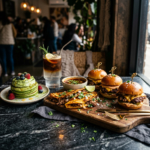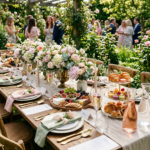
You’ll plan a balanced, make-ahead brunch by picking a hot finish, a fully baked main, two sides, a starch, and fresh fruit. Shop by ingredient, batch similar tasks, and label containers with reheating times. Focus on items that finish quickly in the oven or under a broiler—saves time and keeps flavors bright—and you’ll see why.
Menu Planning Fundamentals
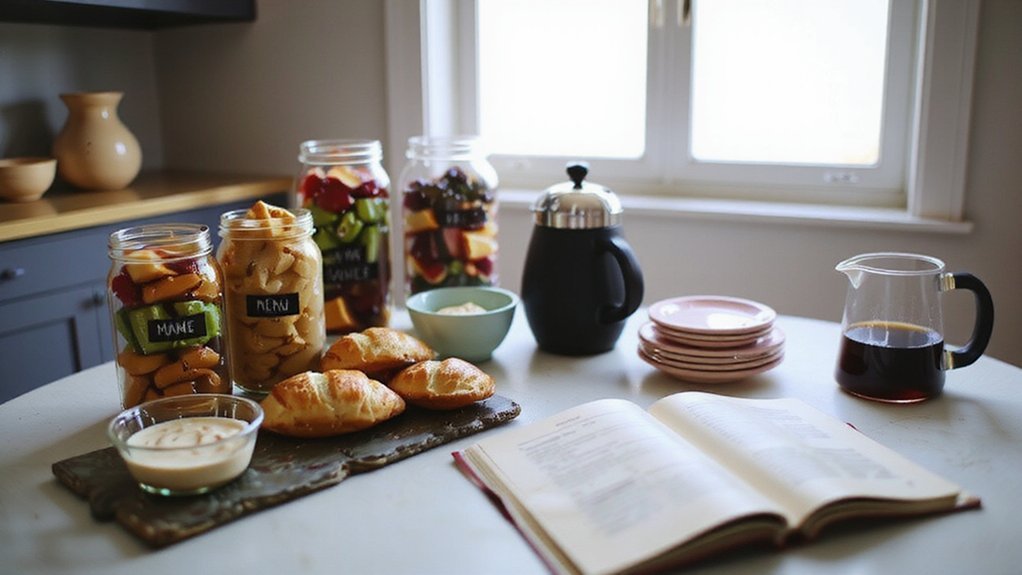
Balancing your ingredients around make-ahead and quick-finish items will keep you calm and on schedule: pick one hot main (eggs or frittata), one make-ahead main (overnight French toast, strata, or baked quiche), two sides (roasted potatoes, sautéed greens), a starch (toast, pancakes, or bagels), and a fresh fruit component. Decide a clear theme selection—Mediterranean, Southern, or plant-forward—to guide spice, herb, and garnish choices. List ingredients by station and prep time so you’ll streamline shopping and prep. Do portion calculations per guest: 3–4 ounces protein, 4–6 ounces sides, one to two starch servings, plus a fruit portion. Schedule tasks backward from service, batch similar steps, and label containers. You’ll reduce last-minute scrambling and allow creative tweaks. Confirm dietary needs early and adjust ingredient quantities accordingly.
Make-Ahead Breakfasts and Bakes
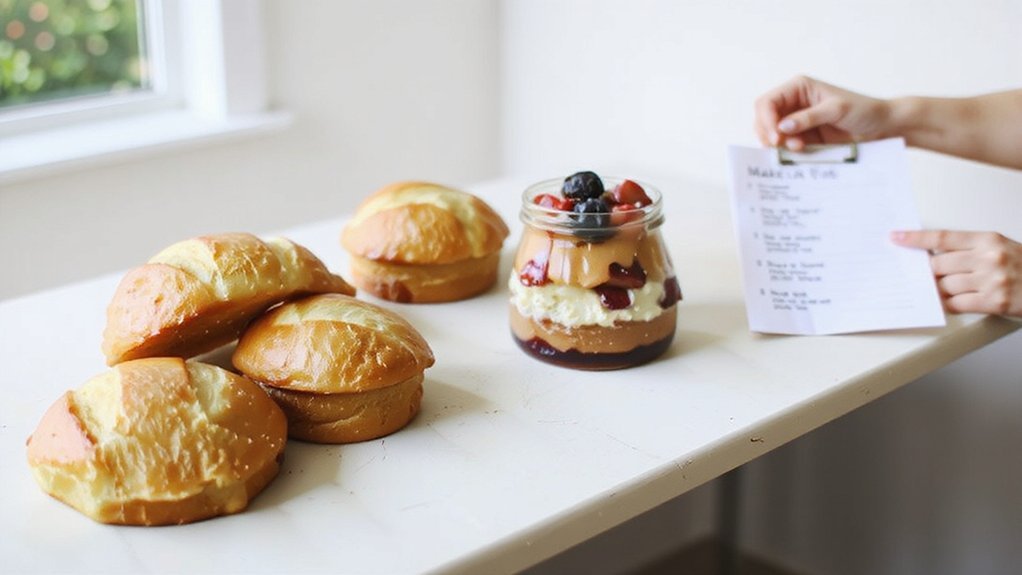
Prep overnight oats jars tonight by layering oats, milk or yogurt, chia seeds, and fruit or nuts so you’ll have ready breakfasts in 6–8 hours. Assemble egg casseroles with eggs, cheese, veggies and cooked sausage or tofu, then refrigerate overnight or bake ahead; you can reheat them for 20–30 minutes when guests arrive. Bake muffins, scones or quick breads in batches, freeze them individually, and thaw or warm for 10–15 minutes as you serve.
Overnight Oats Ideas
Mix rolled oats with milk (dairy or plant), a spoonful of yogurt, 1–2 tablespoons chia or flax, and your sweetener of choice in individual jars, then refrigerate 6–8 hours or overnight for ready-to-eat breakfasts you can top with fruit, nuts, or nut butter before serving. Scale batches to guests: 1 cup oats to 1 cup milk per four jars. Layer add-ins: mashed banana, cocoa powder, instant coffee, matcha, chopped dates, or cardamom for global flavors; fold in mascarpone or coconut cream for dessert twists. Label jars with dates; chill up to 3 days. Assemble topping station—fresh berries, toasted seeds, granola, maple, and nut butter—so guests customize quickly. Reheat briefly if you prefer warm; otherwise serve straight from fridge for a no-fuss, inventive brunch component.
Make-Ahead Egg Casseroles
When you want a hands-off brunch, assemble a make-ahead egg casserole the night before: whisk 8 large eggs with 1–1¼ cups milk or cream, 1–1½ cups shredded cheese, salt, and pepper; fold in fully cooked fillings (1–2 cups total—sautéed onions/peppers, spinach, mushrooms, or browned sausage/bacon) and pour into a greased 9×13 pan. Use Layer Techniques to distribute densest fillings on bottom and delicate greens on top so bake times stay even. Pay attention to Binder Ratios—egg-to-dairy should stay near 8:1–10:1 by volume for a custardy set; adjust for add-ins. Cover and refrigerate up to 24 hours; bake at 350°F for 40–50 minutes until center sets. Rest 10 minutes before slicing. Serve warm or at room temperature. Garnish creatively—herbs, hot sauce, or microgreens for contrast.
Freezable Baked Goods
Shift from custardy egg casseroles to sturdy, freezer-friendly baked goods you can portion and stash for busy mornings. Choose recipes with sturdy crumb—banana bread, scones, strata muffins, savory loaves—use specified ingredients, note bake times, cool fully before packing. Adopt Packing Techniques: wrap individually in parchment, then foil, label with date to maximize Shelf Life (3 months best).
- Banana bread
- Cheddar scones
- Blueberry muffins
- Savory loaf
Label date clearly. Thaw at room temp or reheat in a 350°F oven for 10–15 minutes; microwaving 30–60 seconds works for single servings. For innovation, swap mix-ins: rosemary, zested citrus, or miso butter. Prep day: bake 2–3 hours, freeze 30 minutes for firm slicing, then store.
Cold Salads and Bowls
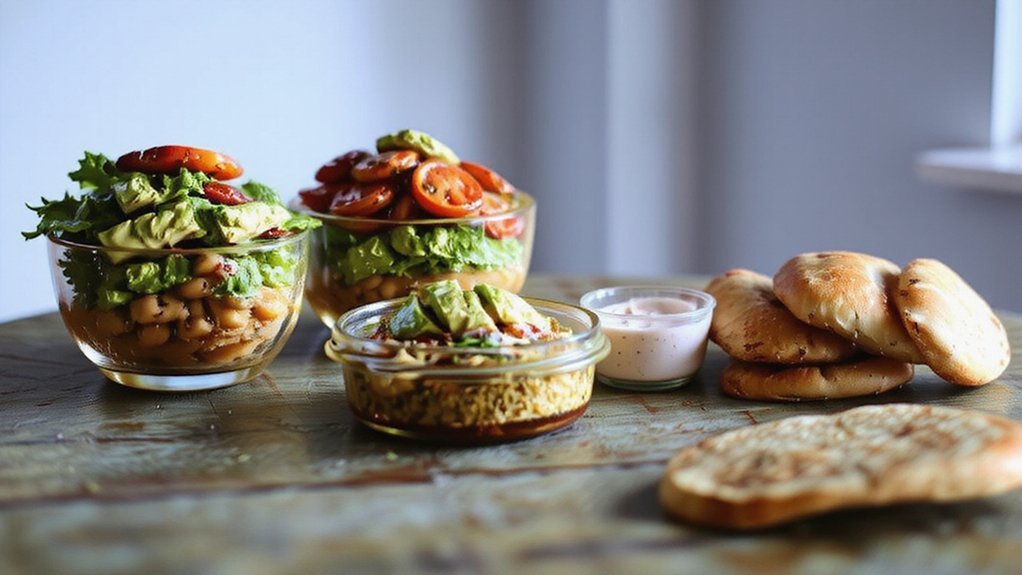
Preparing cold salads and bowls is about assembling chilled grains (quinoa, farro), proteins (chickpeas, rotisserie chicken, tofu), crunchy veg, and a simple vinaigrette so ingredients stay bright and hold up. Plan components two days ahead: cook and cool grains, toss beans with acid, roast sturdier vegetables and chill. Assemble in layers or jars for easy service; keep dressings separate until 15 minutes before serving. Aim for contrast — soft grains, crisp leaves, and Crunchy toppings like toasted seeds, fried shallots, or garlic crisps. Use a small spoonful of mustard, citrus, or miso for Flavor balancing, tasting as you go. Label containers, note allergens, and refrigerate; this’ll save morning time and keep texture and taste pristine. Serve chilled, with optional herb garnish for bright finish
Easy Brunch Proteins
Cold salads pair well with simple proteins, so pick options that you can make or finish quickly: hard-boiled eggs (cook 9–12 minutes and chill), smoked salmon (slice and keep chilled), shredded rotisserie chicken (pull and season), seared tofu (marinate 15–30 minutes and pan-fry 3–5 minutes per side), or store-bought sausage/pancetta you crisp in 5–8 minutes. When you plan, prioritize proteins that hold up chilled or reheat fast. Pack components separately — dressings, herbs, crunchy toppings — and finish just before serving. Crisp Spiced Sausages in a skillet 5–8 minutes; warm shredded chicken 3–4 minutes with a bright spice rub. For Smoked Salmon, slice thin, add lemon zest and dill. Press tofu, marinate, then sear.
- Hard-boiled eggs
- Smoked Salmon platter
- Shredded rotisserie chicken
- Spiced Sausages
Smart Beverage Stations
Setting up a self-serve beverage station makes pouring drinks fast and keeps guests moving. Designate zones: coffee, tea, cocktails, and a water/infusion pitcher. Pre-brew concentrated cold coffee and steep tea bags in glass jars; label strength and dairy/alternative milk options. For cocktails, batch simple syrups, citrus washes, and a spirit carafe. Add an ice bin, tongs, garnishes (herbs, citrus wheels), glassware, and napkins. Use IoT Dispensers for precision cold-brew or sparkling water; connect them via App Integration to monitor levels and schedules before guests arrive. Provide small recipe cards and measuring tools so people customize portions quickly. You’ll save pour time, reduce waste, and present a modern, ingredient-forward station that guests can easily navigate. Prep labels and refills the night before for seamless service.
Timing and Day-Of Schedule
With beverage stations prepped the night before, map a minute-by-minute timeline for the morning so each dish finishes hot and your counters stay clear.
- Block Arrival windows (10–10:30) to stagger guest flow and plating pace.
- Organize ingredients into labeled bins: eggs, herbs, batters, pastry, fruit.
- Schedule equipment slots: oven, stove, toaster/coffee maker with buffer minutes.
- Set a Cleanup timeline: 10-minute tidy after plating, 20-minute mid-brunch cycle.
Stick to times, assign helpers, and innovate with prep stations to avoid chaos; you’ll host confidently.
Label small bowls with portioned garnishes, pre-measure salts and spices, and set timers for each recipe stage so you can plate with precision; coordinate a single point person to monitor oven windows, beverage refills, and guest flow smoothly.
Reheating and Finishing Touches
When reheating items, match method and time to the ingredient so flavors and textures come back fast and clean: reheat egg casseroles or frittatas in a 325°F oven for 12–18 minutes (cover with foil first, uncover last 2–3 minutes to brown), warm individual egg portions in the microwave on medium for 25–40 seconds and let rest 1–2 minutes, and revive pastries or croissants at 350°F for 5–8 minutes or under a hot broiler 1–2 minutes to re-crisp. Use low residual heat for custards, crisp restorers like a quick broiler or toaster to revive crusts, and finish savory dishes with an herb chiffonade for fresh aroma. Focus timing, set timers, and plate.
| Item | Method | Finish |
|---|---|---|
| Eggs | 325°F oven | herb chiffonade |
| Pastry | 350°F/ broiler | crisp restorers |
Dietary Restrictions and Substitutions
Although guests’ needs will differ, start by mapping each dish’s key ingredients and swapping them deliberately: replace eggs with 1 tbsp ground flax or chia plus 3 tbsp water (per egg) for binding, use aquafaba for whipped foams, and sub dairy with 1:1 plant butter or full-fat canned coconut for custards. You’ll label components, note cross-contact risks, and prepare allergen labeling cards. Prioritize swaps that hold up when reheating and can be prepped the day before. Balance texture, flavor, and prep time so alternatives don’t add last-minute work. Use creative ingredient swaps to honor cultural considerations while keeping technique simple.
Map each dish, swap eggs and dairy deliberately, label allergens, and prioritize reheatable, make-ahead alternatives.
- Test binders and note cook-time adjustments.
- Pre-mix vegan custard base.
- Reserve aquafaba for foams before serving.
- Mark allergen labeling visibly.
Table Setup and Service Tips
Simplify place settings by laying one plate, fork, knife, spoon, cloth napkin and a water glass per guest so you can set tables in under five minutes. Create a self-serve beverage station with coffee, tea, juice and water in labeled carafes plus mugs, tumblers, sugar, and cream within arm’s reach. Group extras (pitchers, stirrers, spare napkins) nearby and assign someone or schedule a quick refill check so drinks stay topped up without last-minute scrambling.
Place Settings Simplified
Lay out a basic place setting in five minutes: plate centered, fork on the left, knife (blade in) and spoon on the right, napkin folded under the fork or on the plate, and water or juice glass above the knife. Use minimal pieces: one charger, one dinner plate, single set of flatware. Think storage solutions and budget sourcing—choose stackable plates and reusable napkins to save time and money. Set a small bread plate left if you want an elevated look.
- Pre-stack plates by course for quick service.
- Bundle flatware in napkins for tidy drops.
- Use simple center accents that won’t clutter.
- Label spots for dietary needs to speed seating.
Rotate pieces between courses to maintain visual interest. You’ll serve efficiently and keep cleanup fast.
Beverage Station Setup
Move from place settings to a streamlined beverage station that keeps guests hydrated and cuts service time. Position carafes of cold water, coffee, iced tea, and a signature cocktail along one surface; group cups, stirrers, and garnishes nearby. Use a simple Labeling System—chalk tags or printed tent cards—so guests self-serve confidently. Pre-chill glassware and prep garnishes in small bowls for quick replenishing. For ice, adopt proactive Ice Management: freeze extra in reusable trays, store in insulated bins, and use tongs to prevent dilution. Supply a pitcher of citrus water and a decanter for milk alternatives to minimize traffic. Assign a helper to refresh refills every 20–30 minutes. This setup saves time, reduces interruptions, and highlights thoughtful, ingredient-driven hospitality. Keep disposables elegant and compostable always.
Conclusion
Choose one theme and finalize your make-ahead menu: one hot finish, a fully baked main, two sides, a starch, and fresh fruit. Shop and batch ingredients by station, label containers with portions, allergens, and reheating steps. Schedule tasks backward from service with timed oven and stove slots, pre-chill beverages, and set a self-serve station. Assign a point person for timing and refills, and add quick herbs or citrus zest just before serving for maximum impact.