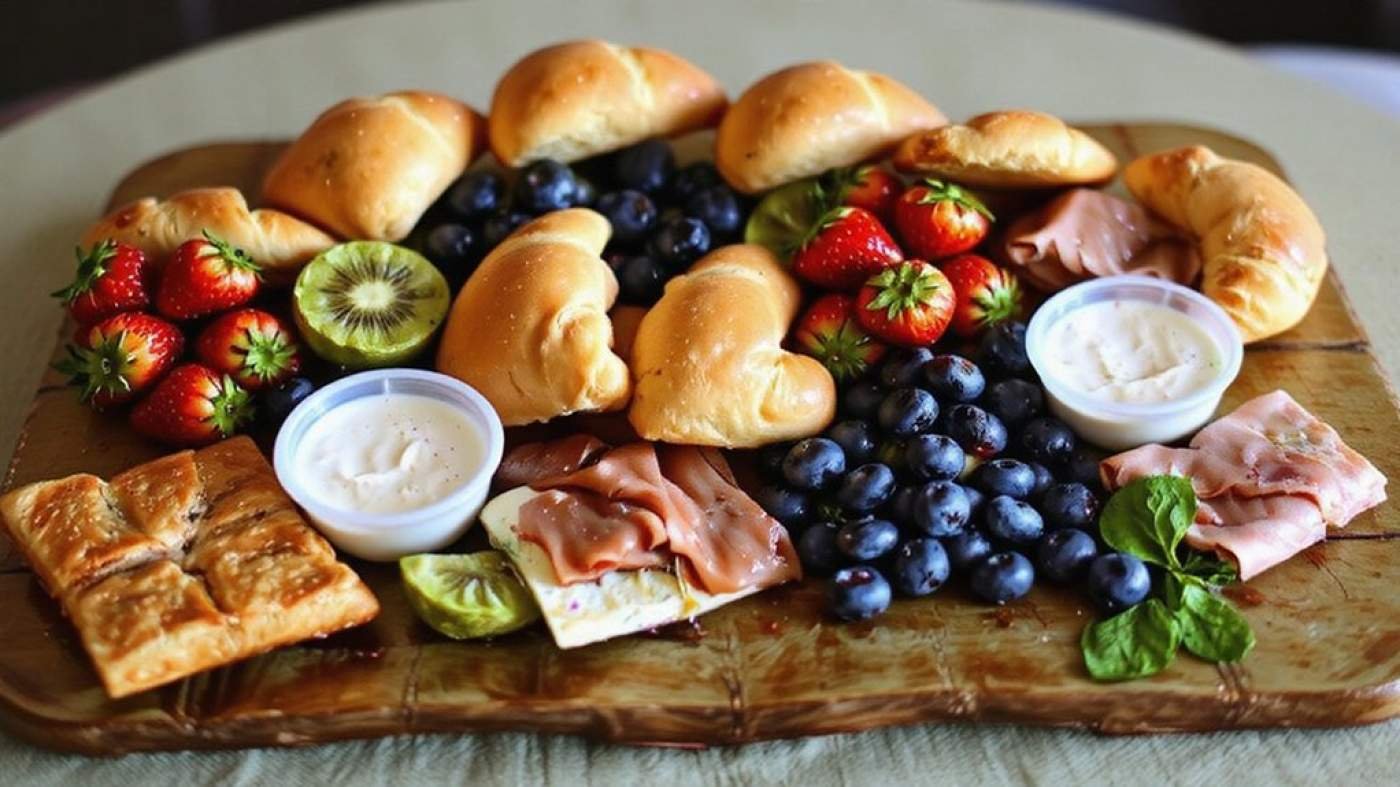

You’ll want a large board, three cheeses (soft, semi‑firm, aged), a cured or plant protein, fresh fruit, pickles, crunchy nuts, two spreads and crusty bread or crackers. Balance color, texture and bite size, and prep perishables last. You’ll get a clear shopping list, arrangement steps and quick make‑ahead tips to pull it together with visual impact—starting with what to choose and why.
Why a Brunch Board Works Every Time
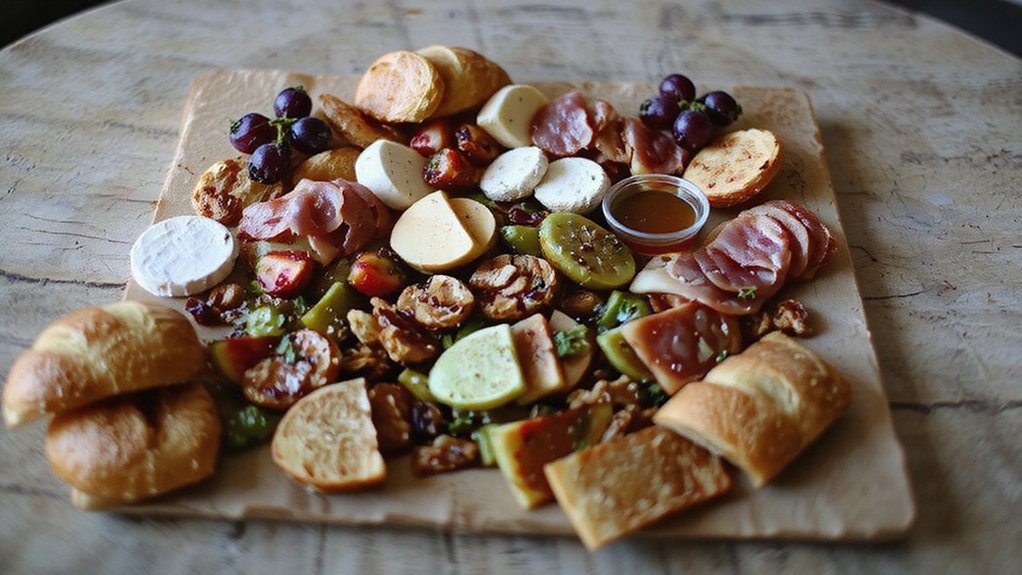
Often, a brunch board wins because it layers color, texture, and flavor into one effortless spread. You’ll assemble clusters: bright berries, citrus wedges, cured meats, hummus dollops, roasted vegetables, varied cheeses, crunchy nuts, and artisan bread slices. Arrange contrasting hues and heights so eyes and hands move across the table. Aim for bite-sized combos—cheese with jam and fig, prosciutto-wrapped melon, smoked salmon on cucumber rounds—to encourage Interactive grazing. This setup supports Effortless hosting: guests self-serve, plates stay tidy, and timing stays flexible. Think about balance—salty, sweet, creamy, acidic—and repeat colors to create rhythm. Label components for dietary needs, provide small tongs and toothpicks, and refresh perishables quickly to keep the board vibrant and inviting. You’ll impress guests with minimal effort and style.
Choosing the Right Board and Serving Pieces
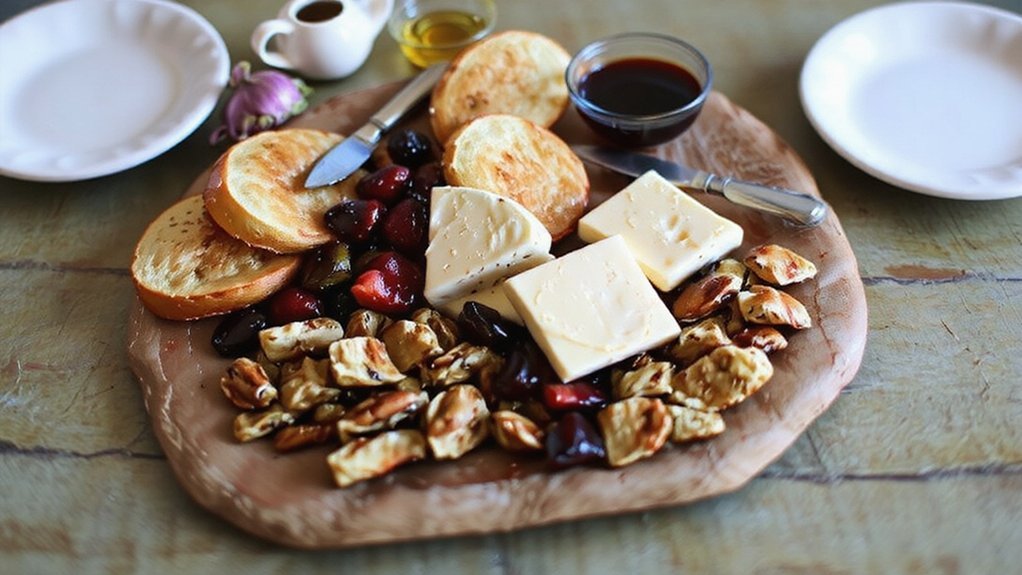
When you pick a board, prioritize material and size to showcase ingredients: choose a wide wooden board for warm cheeses and charcuterie, cool marble or slate for soft cheeses and fruits, and smaller paddles for single clusters or toast; aim for at least 12–16 inches across so items don’t crowd and leave room for bowls, knives, bread. Select serving pieces that emphasize color and height: ceramic bowls for jams, glass dishes for olives, shallow ramekins for spreads, and metal tongs for delicate pastries. Use a material comparison to match visuals and temperature control. Think modular — stackable paddles, nested bowls, and varied knife finishes spark modern presentation. Follow clear care instructions: oil wood, avoid thermal shock on marble, and handwash delicate items to prolong use.
Building a Balanced Mix: Sweet, Savory, and Textures
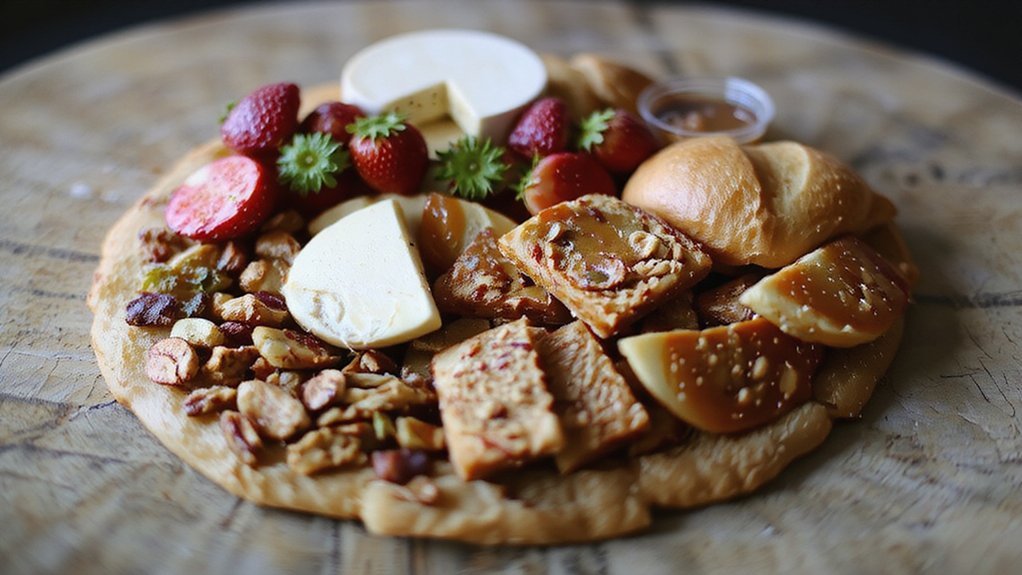
Now that you’ve picked your board and serving pieces, build a balanced mix by arranging sweet, savory, and varied textures so each bite feels intentional. Start with color blocks: glossy fruit, matte crackers, and creamy spreads. Place items to guide temperature contrasts and palate progression—progression—cold yogurt bites near warm pastries, crisp elements beside soft. Think in small clusters that invite mixing.
- Fresh berries for bright acidity
- Warm mini pastries for buttery richness
- Toasted nuts for crunch and bitterness
- Honey or jam for sticky sweetness
- Pickled vegetables for vinegary lift
Keep negative space to highlight shapes and let guests compose adventurous combinations. Rotate heights with bowls and ramekins, and trim garnishes for clean edges to emphasize color and texture today, and surprise the eye often.
Crowd-Pleasing Protein and Cheese Options
Proteins and cheeses set your board’s flavor map, so pick a small, varied lineup that looks as good as it tastes: thinly sliced cured meats (prosciutto, soppressata) draped or rolled, a smoky fish option like smoked salmon or trout, and a vegetarian protein such as marinated chickpeas or spiced roasted nuts for balance. Choose Cured Classics — salami, coppa — arranged in folds for height. Pair with Fresh Ricotta dollops finished with lemon zest and olive oil. Add a firm cheese (aged cheddar or Manchego) sliced into slabs and a soft bloomy-rind cheese for spreadability. Label textures and flavors so guests build salty, creamy, smoky, tangy combinations. Finish with small bowls for mustard, honey, or pickles to complete the savory board and herb accents.
Fresh Fruit, Pastries, and Sweet Treats
Pick seasonal fruits—juicy peaches and nectarines in summer, crisp apples and pears in fall, and bright berries and citrus in cooler months—for color, texture, and freshness. Arrange them in clusters and slices to create visual contrast and easy grabbing. You’ll pair pastries like buttery croissants, flaky danishes, and mini muffins with complementary fruit: lemon curd or citrus for tartness, berry compote for scones, and jam or honey beside croissants.
Seasonal Fruit Picks
Selecting seasonal fruit sharpens your board’s color, texture, and flavor—choose 2–3 fruits that contrast in color and bite: think ruby strawberries, golden peaches, and firm green apples. Watch climate trends and local harvest festivals to pick peak ripeness; you’ll highlight provenance and seasonality. Arrange fruits to guide the eye and fork: slice some, leave some whole, and cluster by color. Use simple tools—a paring knife, small tongs, bowls for berries—to keep presentation clean.
- Strawberries: halved, fan slices
- Peaches: wedges, char for depth
- Green apples: thin fan slices
- Berries mix: leave stems for height
- Grapes: small clusters for gaps
Balance sweetness with acid and texture. Rotate selections weekly and trust visual contrast to spark inventive bite choices and conversation.
Pastry Pairing Ideas
How do you balance flaky pastries with fresh fruit and sweet treats to keep every bite interesting? Start by arranging textures: golden croissants, buttery pain au chocolat, and crisp fruit tarts near clusters of berries and sliced stone fruit. Contrast with creamy elements — lemon curd, mascarpone, whipped ricotta — in small bowls. Add sweet bites like mini muffins, cinnamon knots, and chocolate-dipped pretzels for variety. Label suggested coffee pairings: light roast for fruit-forward pastries, medium roast for buttery viennoiserie, espresso for chocolate. Offer mimosa variations in carafes — classic orange, peach bellini, and a grapefruit-rosemary mix — to echo flavors. Use color blocks on the board, stagger heights with cake stands, and keep bite sizes consistent so guests can mix and match confidently.
Savory Accents: Vegetables, Spreads, and Pickles
Where will you arrange the bright pickles, creamy spreads, and crisp vegetables to create contrast and flow across the board? Start by zoning: place Umami spreads near cheeses, Marinated vegetables opposite fresh crudités for balance. Aim for color, texture, and line.
- Cornichons for sharp snaps
- Roasted peppers for sweet gloss
- Herbed labneh as a creamy anchor
- Quick-pickled red onion for zing
- Charred asparagus for height
Place spreads in small bowls, smear a few for visual trails, and cluster vegetables in layered fans. Use skewers to lift pickles and create vertical interest. Alternate cool and warm tones, keep bite-sized pieces accessible, and let sauces peek rather than overwhelm. You’ll craft a savory rhythm that invites exploration. Finish with microgreens and citrus zest for surprising brightness.
Accommodating Dietary Preferences and Restrictions
Label each item clearly so guests know allergens at a glance—use small cards or color-coded picks for nuts, dairy, eggs, and shellfish. Offer bold vegan and vegetarian options like marinated chickpeas, grilled seasonal veggies, herbed tofu, and dairy-free spreads so plant-based guests feel included. Swap regular breads and pastries for gluten-free crackers, baguette slices, and pancakes, and mark them separately so you don’t risk cross-contamination.
Clear Allergen Labeling
When you assemble your brunch board, clearly mark common allergens so guests can scan and choose with confidence. Use clean label templates and note legal requirements for disclosure; place tiny cards by each cluster listing nuts, dairy, gluten, eggs or soy. Arrange items so labels align visually with components; use icons, color coding, and concise wording to keep the surface uncluttered. You’ll want durable cards and a pen for last-minute swaps.
- Almonds: tree nuts
- Blue cheese: dairy
- Croissant: gluten, eggs
- Smoked salmon: fish
- Hummus: sesame
This system elevates safety and design, letting guests navigate ingredients quickly while you maintain aesthetic control. Labeling small batch items or recipe-based spreads with origin and allergen notes sparks creative presentation while protecting guests with precision and clarity always.
Vegan & Vegetarian Options
Creating a balanced vegan and vegetarian section, include vivid plant proteins and contrasting textures so guests can identify options at a glance: pile bright roasted beets and charred asparagus next to creamy hummus, herbed chickpea salad, marinated tofu or tempeh cubes, and a selection of dairy-free cheeses with sliced seasonal fruit. Arrange colors and heights: stack crostini alternatives, line citrus wedges, and tuck crunchy nuts and seeds in bowls. Label items clearly and group raw, roasted, and fermented components for easy selection. For innovation, add smoked paprika oil, pistachio dukkah, or citrus-preserved olives. Use Budget Tips like bulk chickpeas and seasonal veg; transform extras into Leftover Recipes such as chickpea fritters or tofu scramble for next-day brunch and garnish with microgreens for brightness pop.
Gluten-Free Alternatives
Because guests with celiac disease or sensitivity need clear, delicious swaps, set aside a distinct gluten-free zone and pile visually striking alternatives—crispy corn tortilla triangles, toasted polenta rounds, almond- or chickpea-flour crostini, gluten-free crackers, and sliced gluten-free baguette—next to dips and spreads. Label the zone and arrange contrasting colors and textures. Offer grains and bakes that celebrate ancient grains and modern flour blends for variety. Showcase each item with a tiny sign listing ingredients. Keep spreads separate and use dedicated utensils.
- Crispy corn tortilla triangles
- Toasted polenta rounds
- Almond- or chickpea-flour crostini
- Gluten-free crackers (flour blends)
- Sliced gluten-free baguette (ancient grains option)
Serve fresh, consider toasting on demand, and rotate textures for visual impact. You can pair fruit compotes and nut butter for balance.
Shopping Checklist and Prep Timeline
Before you head to the market, sketch the board’s look and list ingredients by category: cheeses (soft, semi‑firm, aged), cured meats (sliced and whole), fresh fruit and berries (two contrasting colors), pickles/olives, crunchy nuts, two spreads, crackers/bread, and a fresh herb garnish. Next, do Market mapping: group shops by specialty—cheese monger, deli, farmer’s stand—and note quantities per person. Time blocking saves you stress: assign shopping, chilling, slicing, and assembly rehearsals into your calendar. Pack a reusable cooler for delicate items, and bring small containers for measured spreads. Prep timeline: buy day-before for cheeses and cured meats, morning-of for fruit and fragile herbs, and 30–60 minutes pre-event for slicing and spooning spreads. Label perishables for guests with allergies. Keep a printed checklist for quick verification.
Artful Arrangement and Styling Tips
When you lay out your board, think about focal points, color contrast, and textural variety so each bite looks and tastes intentional. You’ll build in height variation by stacking mini pancakes, folded prosciutto, and sprigs of herbs; those peaks draw the eye. Respect negative space to avoid clutter and let colors pop. Place bold cheeses as anchors, arrange fruit in gradients, and tuck dips into shallow bowls. Balance crunchy, creamy, and acidic elements for dynamic tasting. Rotate textures so every section invites exploration and encourage guests to mix bites. Play with unexpected pairings for surprise.
- Anchor with a bold cheese
- Create color gradients with fruit
- Stack elements for height variation
- Use small bowls to define negative space
- Add herbs and edible flowers for contrast
Make-Ahead, Storage, and Serving Suggestions
If you plan ahead, prep most components a day or two in advance so you can assemble the board quickly and keep everything vibrant: slice and wrap cheeses in parchment, portion cured meats into loosely folded bundles, wash and dry fruit, roast or toast nuts, and chill dips in airtight containers. Store delicate items separately—berries in a single layer, sliced apples with lemon juice to prevent browning, and crackers in sealed tins to keep crispness. Label containers with use-by times and follow basic safety guidelines for temperature and cross-contamination. Right before serving, arrange contrasting colors and heights, add fresh herbs, and drizzle honey or flavored oil. Save extras with targeted leftover recipes: savory tarts, breakfast sandwiches, or blended dip refills for future boards daily.
Conclusion
Finish by arranging three cheeses, cured meats or plant proteins, fresh fruit, pastries, pickles, nuts, and two spreads on your board so colors and textures pop. Leave negative space, tuck herbs and edible flowers into clusters, and label allergens. Slice bread and stack crackers nearby with serving utensils. Refrigerate perishables until serving and refresh fruit and cheese as needed. With these ingredient-focused steps, you’ll present a stunning, crowd-ready brunch board every time and savor smiles.



Leave a Comment