
You don’t need a dedicated waffle maker to get crisp pockets and a tender inside. With the right batter tweaks and heat control, a cast iron, griddle, panini press or even your oven can produce great results. This guide gives hands-on, space‑saving options, timing tips and texture adjustments so you can pick the method that fits your kitchen—and one trick will change how you finish them.
Why You Might Skip Buying a Waffle Maker
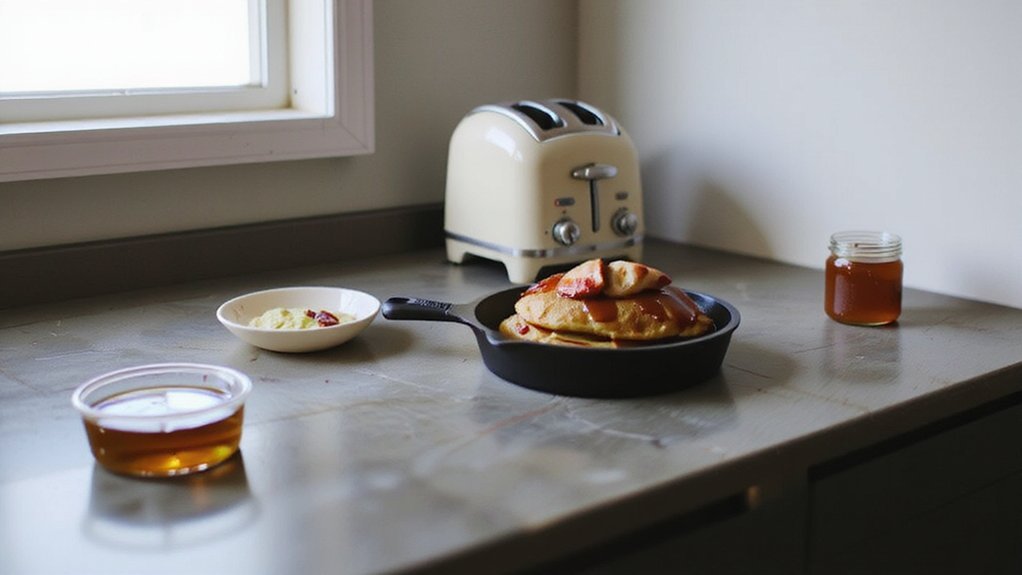
If you only make waffles occasionally, buying a dedicated waffle maker often isn’t worth the counter space, cost, and cleanup hassles. You’ll notice appliance clutter fast: a bulky machine sits idle during infrequent use, taking room for gear you actually reach for. Instead, evaluate alternatives that give more functionality per square inch and fit evolving routines. Look for batter-friendly tools you already own, prioritize devices that double as grills or presses, and pick models with removable plates for quick cleanup. Consider storage-friendly, modular solutions and smart appliances that sync with recipes to reduce trial-and-error. When you focus on adaptability and value, skipping a waffle maker with limited versatility becomes a deliberate, innovation-driven choice. You’ll save money, counter real estate, and maintenance time with confidence.
Cast Iron and Skillet Waffle Hacks
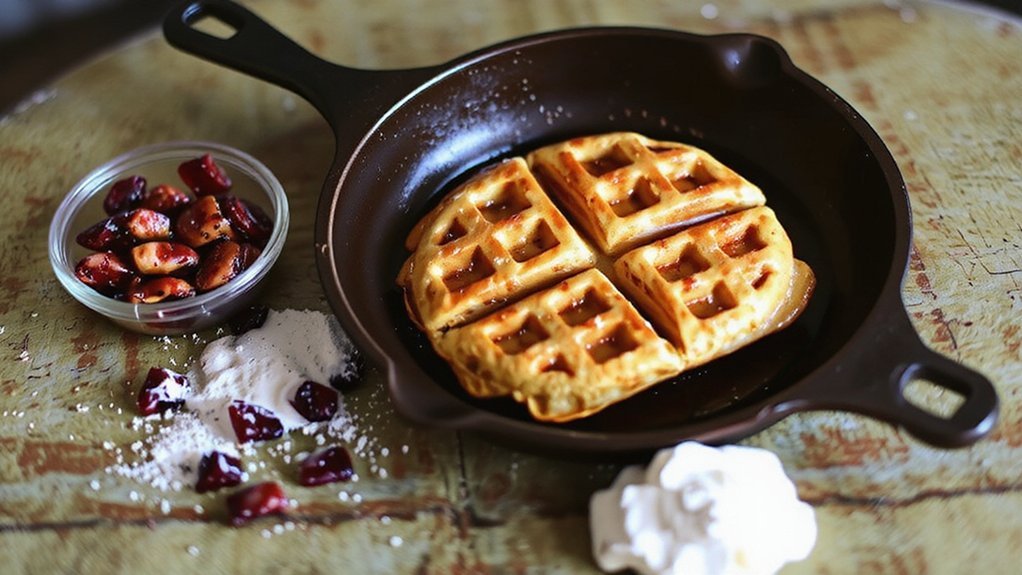
Using a well-seasoned cast iron pan or skillet lets you make crisp, waffle-like breakfasts without a dedicated maker, and with a few simple hacks you’ll get even browning and defined pockets. You preheat on medium, use oil sparingly, and tweak batter thickness so it holds patterning: thicker batter gives deeper pockets. Press gently with a spatula or another pan to imprint grid shapes; time each side for 2–3 minutes depending on your stove and heat control. Flip once, avoid crowding, and let steam escape by leaving a small gap while cooking. Finish in a warm oven if centers need time. Clean and re-season promptly to preserve nonstick performance; a seasoned skillet rewards precise technique and inventive tweaks. You’ll iterate quickly and improve results consistently.
Using a Griddle or Electric Skillet
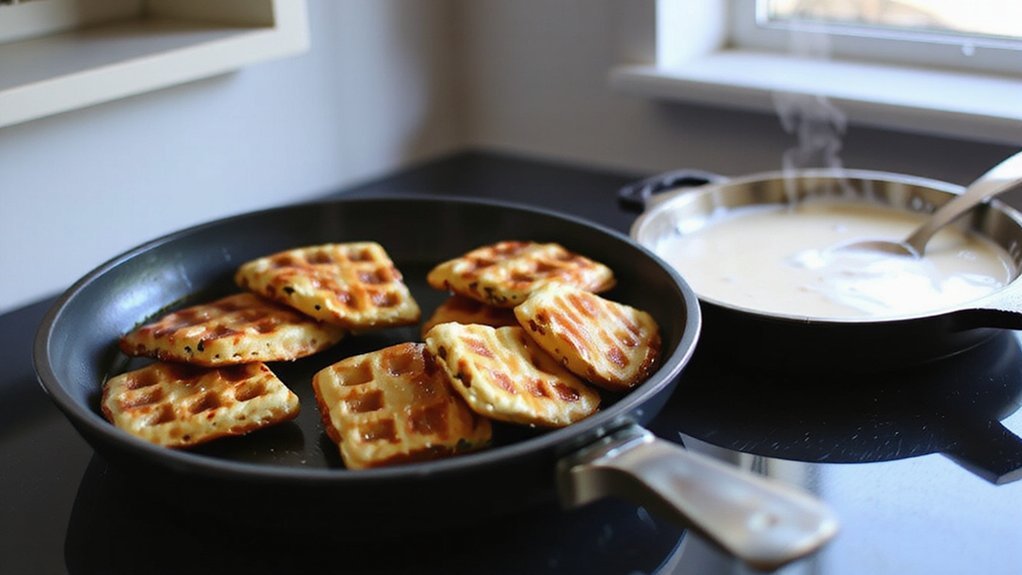
Griddling on a flat electric skillet gives you broad, even heat and room to make several waffle-style rounds at once. You’ll pour batter into rings or freeform circles, monitor edges for bubbles, and flip for crispness if you want both sides browned. Use an instant-read thermometer and routine temperature calibration to keep the surface steady; mark settings that match your preferred doneness. Nonstick finishes and removable plates simplify cleanup, and many models collapse or nest for space saving storage in tight kitchens. You’ll appreciate adjustable thermostats, quick heat response, and consistent contact across the plate—features that let you iterate recipes fast. With a griddle or electric skillet you prototype shapes, textures, and batter ratios without committing to a dedicated waffle iron or extra gadget.
Oven and Sheet-Pan Waffle Methods
When you want to make many waffles at once without a special appliance, bake batter on a rimmed sheet pan or in silicone waffle molds on a sheet—preheat the oven to 400–450°F (use convection if you have it) so the exterior sets quickly while the interior stays tender. Rack Positioning matters: place the rack in the center or slightly lower for crisper bottoms; top-rack placement browns faster. Use a thin, even Batter Spread to control thickness—pour, then tilt and scrape with offset spatula. For molds, fill only to the rim and tap to remove air. Bake 10–15 minutes, watching for golden edges. Cool on a wire rack to maintain texture. You’ll iterate recipes quickly, scaling batches without a waffle iron. Expect consistent, crisp edges.
Panini Press, Contact Grill, and Toaster Alternatives
If you don’t have a waffle maker, a panini press or contact grill can give you crisp, pressed waffles with even browning. A toaster oven works well for smaller batches and lets you control temperature and browning without cluttering the stove. Adjust your batter thickness, cooking time, and pressing technique to get consistent waffles from each appliance.
Panini Press, Contact Grill
Try a panini press or contact grill when you don’t have a waffle iron — they’ll press batter into a crisp, gridded cake faster than a skillet and are great for stuffed or savory versions. You’ll dial in Temperature Control to avoid soggy centers, watch batter spread, and use Surface Seasoning or a light oil to promote release. Think compact, agile equipment that saves time and ups textural contrast. Press gently, flip if plates aren’t floating, and time batches for consistent browning.
- Hot ridged plates imprint deep pockets.
- Steam vents eject excess moisture.
- Weighted lid compresses fillings evenly.
- Quick heat cycles speed production.
You’ll experiment with batter thickness, press time, and creative fillings to iterate fast and refine a signature gridded recipe each time consistently.
Toaster Oven Alternatives
Because toaster ovens combine baking, broiling, and toasting in a compact package, you can often replicate those functions with a panini press, contact grill, or a few straightforward toaster alternatives. You’ll press sandwiches and quick flatbreads in a panini press, adjusting time and pressure to crisp without burning. A contact grill doubles as a broiler substitute—set it higher for browning and use a tray for drippings. For broader tasks, try an air fryer for rapid convection-style roasting and a convection microwave when you need combined heating and speed. Standard two-slot toasters handle simple toasting while sheet pans under a covered skillet serve as makeshift baking. Choose tools based on capacity, temperature control, and cleanup to match the toaster oven’s versatility and energy efficiency considerations.
Ready-Made and Frozen Waffle Options
You’ve got two convenient paths: mass-market frozen waffles for consistent results and artisan ready-made waffles for superior texture and flavor. Inspect labels and packaging—look for real butter, fewer additives, and crisping instructions so you know what to expect. Reheat in a toaster oven or skillet to restore crunch (microwave only if pressed for time), and finish with warm syrup, butter, or savory toppings to match the waffle’s style.
Store-Bought Frozen Waffles
When you want a fast, consistent breakfast without the fuss, store-bought frozen waffles give you predictable texture, portion control, and long shelf life. You’ll pop them in a toaster or oven, monitor browning, and customize toppings; check Nutritional labeling to match macros and sodium, and weigh Brand sustainability if packaging or sourcing matters. They free you from batter prep and let you innovate with savory toppings, layered sandwiches, or crisped waffle chips.
- A toaster slot ejects a golden square
- Steam rising as butter melts into grids
- A stack of consistent portions in the freezer
- Plastic-free sleeve or recyclable box on the shelf
You get speed, repeatability, and low waste. You can batch-toast for meal prep and measure crispness by timing and aroma every time.
Artisan Ready-Made Waffles
If you want an upgrade over mass-market frozen waffles, artisan ready-made waffles deliver baker-quality crust, distinctive flours (like buckwheat, spelt, or whole-grain blends), and intentional inclusions such as real butter, cultured dairy, or caramelized fruit. You’ll find these from local patisseries, specialty grocers, or small-batch brands that emphasize provenance and tight ingredient lists. When choosing, examine texture, sugar balance, and visible inclusions; note whether the crumb is open or tender and how the crust caramelizes. Look for clear labeling about milling dates, fermentation, and enrichment—details that shape flavor profiles and shelf-life. If you crave innovation, prioritize vendors experimenting with heirloom grains, seeds, or citrus-zest infusions; those choices give noticeable depth and bake chemistry without requiring you to mix batter yourself while preserving artisanal craft.
Reheating and Serving Tips
To get the most out of artisan or frozen waffles, focus on reheating methods that restore crispness while preserving interior tenderness and flavor. You’ll crisp them in a toaster oven at 375 F for 6 to 8 minutes, or revive frozen waffles straight from the freezer on a hot skillet with a light spray of oil. For delicate textures, steam briefly with a covered pan then finish under a broiler. Think about syrup pairings and creative topping variations before plating so every element complements texture.
- Golden waffle edges steaming as butter melts into pockets
- A drizzle of citrus-ginger syrup pooling in wells
- Crisp crumbs from pan-searing contrasting soft interior
- Layered fruit, whipped ricotta, and smoked honey on top
Finish by serving to maintain contrast.
Tips for Crisp Exterior and Fluffy Interior
Although you’ll miss the deep pockets of a waffle iron, you can still get a golden, crisp exterior and a tender, airy interior by controlling batter consistency, surface temperature, and timing. Focus first on batter hydration — too wet and you’ll steam, too dry and you’ll toughen; test by dribbling a spoonful onto a hot griddle. Dial leavening balance so bubbles form but collapse slowly; slightly underproof batters hold structure. Heat your pan evenly to medium-high, preheat longer than you think, and use a thin layer of oil or clarified butter to promote immediate crusting. Flip once; avoid pressing. Finish in a warm oven if needed to dry the crust. Measure, adapt, and document each tweak to iterate toward your ideal texture for repeatable results.
Conclusion
You don’t need a dedicated waffle maker to get great results — you can use a cast‑iron skillet, griddle, electric skillet, panini press or even your oven, and frozen or ready‑made waffles work too. Adjust batter thickness, press time and heat, then finish briefly in a hot oven or skillet to restore crispness. Try small test batches, note timings, and tweak for the exact crunchy exterior and fluffy interior you want without buying extra unnecessary appliances.