
You can build a breakfast casserole around a custardy egg base poured over cubes of day‑old bread, grated potatoes, or cooked grains. Sautéed vegetables, browned sausage or crisped bacon, and melty cheese add texture, fat, and salt. You’ll find simple ratios and swap‑friendly variations next—so you can get reliably golden, tender results every time.
The Basic Formula: Ratios and Roles
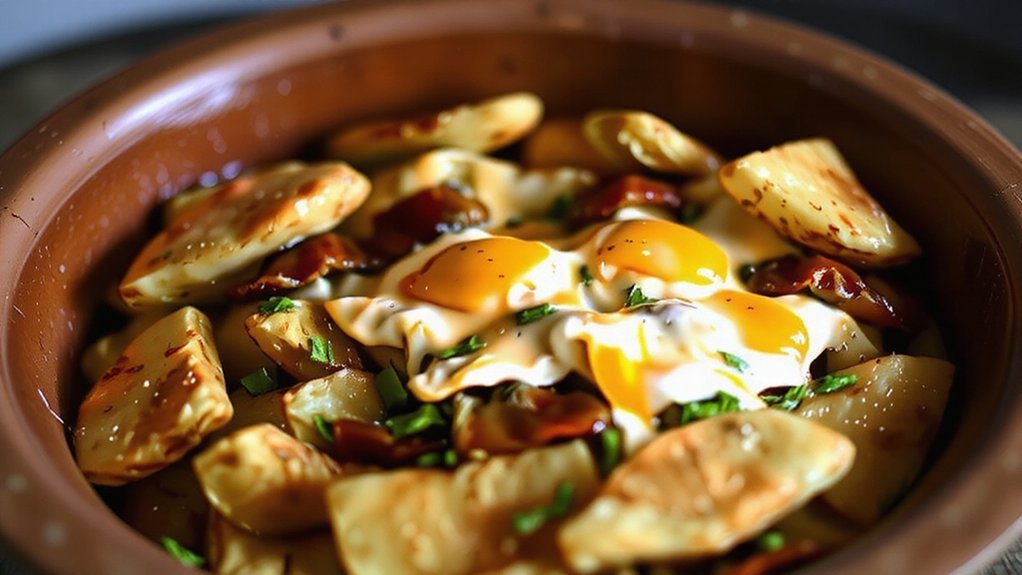
Start with a simple ratio you can scale: 4 eggs to 1 cup dairy forms a custardy base, paired with about 1–2 cups grated cheese and roughly 4 cups cubed bread or 4–6 cups raw vegetables depending on how veg-heavy you want it. You’ll think about roles: eggs bind and set, dairy softens texture, cheese adds fat and salt, vegetables or proteins contribute moisture and flavor contrast. For reliable results, plan volume scaling by pan size so layers aren’t too thick; that also improves heat distribution and prevents soggy centers. Season intentionally; toss veggies with salt to draw moisture, and press fillings gently so you feel even density. Smell will guide you—cooked aromatics, warm dairy—then bake until just set. Adjust timing for desired wobble.
Starch Base Options: Bread, Potatoes, and Alternatives
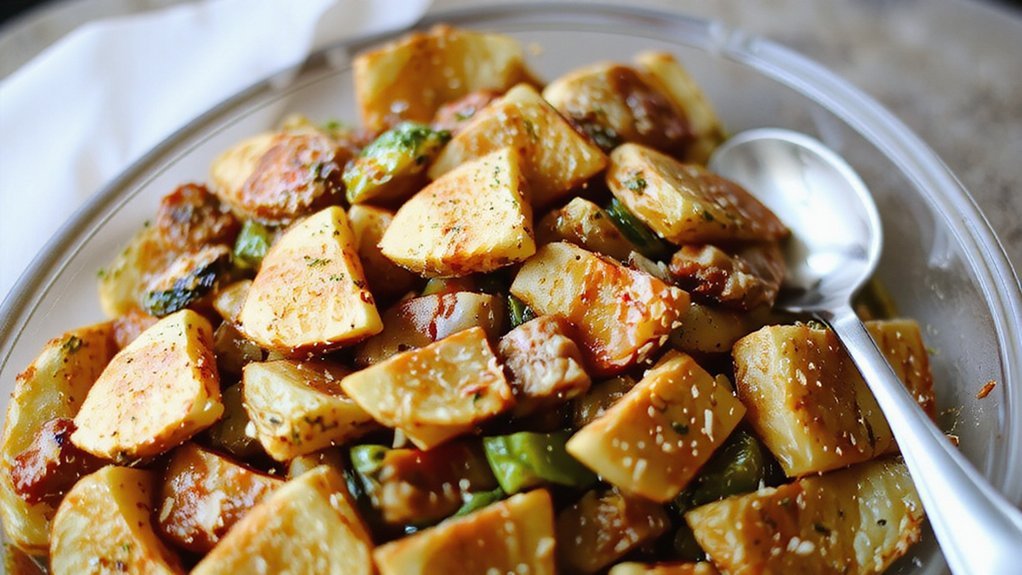
When you pick a starch base, think about how it will soak, crisp, and contrast with the custardy eggs: choose bold textures. Cube day-old sourdough or challah for chew and browned edges; tear ciabatta for irregular pockets. Use grated or thinly sliced potatoes — Yukon for creaminess, sweet potato for caramelized sweetness — par-cook to remove excess moisture and secure crispness. For innovation, swap in gluten free grains like cooked quinoa, millet, or buckwheat to add nutty chew and keep it celiac-friendly. Try international breads — pita, baguette, naan — for cultural riffs and different crumb structures. Press ingredients gently so starch contacts custard evenly. Taste the texture after a small bake trial to refine soak time and oven temperature. Adjust based on feedback.
Eggs and Dairy: How Much to Use for a Tender Bake
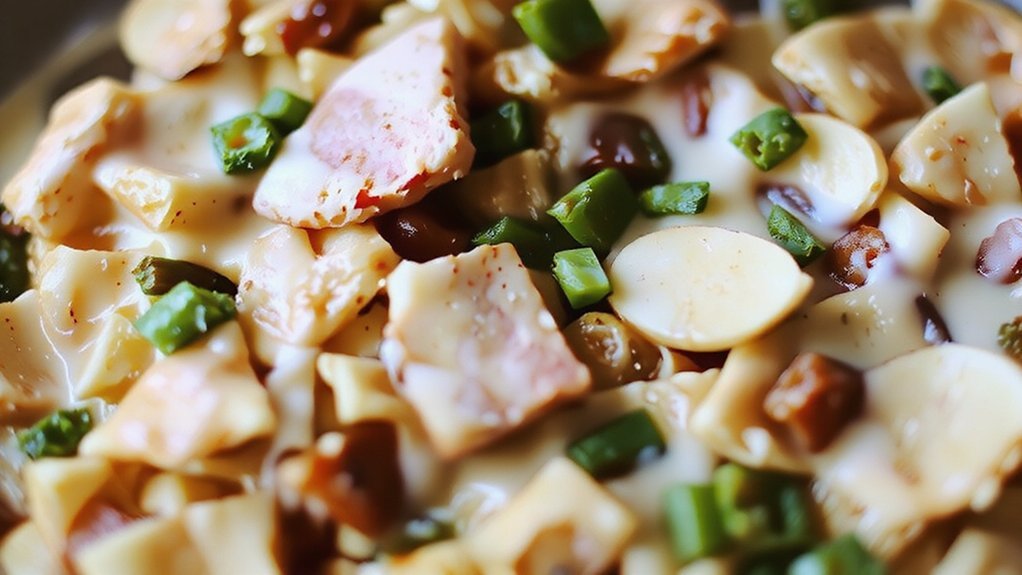
How custardy do you want the bake—silky and soft or sliceable and firm? Your egg-to-dairy ratio decides texture: more dairy yields silk, fewer eggs gives structure. Think custard chemistry: eggs coagulate, milk dilutes proteins, cream adds richness.
Decide how custardy you want it: more dairy for silk, more egg for firm—bake low and slow
- Aim for 1 large egg per 3/4 cup liquid for a tender, spoonable result.
- Use 1 egg per 1/2 cup liquid if you want cleaner slices and firmer bites.
- Prefer cream or half-and-half for a velvety mouthfeel; milk keeps it lighter.
- Bake low and slow—temperature control is essential: 325–350°F until just set; residual heat finishes the custard.
Taste as you innovate; texture responds to small shifts, so test and note adjustments. Record ratios and oven behavior; your sensory notes will guide future tweaks toward consistently perfect bakes.
Protein Picks: Sausage, Bacon, Ham, and Vegetarian Swaps
Choose cooked, crumbled sausage, crisped bacon, or diced ham for rich, savory bites—brown sausage first and drain excess fat to prevent a soggy bake. If you use bacon, render it until crisp so it adds crunchy texture; for ham, sear cubes to deepen flavor. For vegetarian swaps, fold in sautéed mushrooms, crumbled firm tofu seasoned with smoked paprika, or cooked lentils for meaty umami without the meat.
Meat Choices and Tips
Why pick sausage over bacon or ham? You’ll choose sausage for texture, fat distribution, and spice delivery; learn butchery basics to grind or cube meat, and keep sourcing ethics in mind so flavors reflect quality. Brown sausages to render fat, crisp bacon for contrast, or dice ham for meaty umami. Season lightly; eggs and cheese will amplify.
- Choose grind and fat ratio to control moisture and mouthfeel.
- Cook meat thoroughly, reserving drippings for the custard.
- Crisp or keep tender depending on the bite you want.
- Cure awareness: understand salt, smoke, and shelf stability.
Test small batches and tweak spice blends, texture, and cook time; innovative contrasts like velvety custard against crisp edges elevate your casserole from routine to restaurant-worthy without sacrificing simplicity or speed.
Vegetarian Protein Alternatives
Balancing texture and savory punch, vegetarian proteins can give your casserole the same satisfying bite you’d get from sausage, bacon, or ham—if you treat them right. Choose bold Legume Varieties like lentils and chickpeas for meaty chew; press tofu or seitan for density. Crumbled tempeh and Fermented Proteins bring umami and depth. Brown components in a skillet to build Maillard aroma before folding into custard. Layer textures: crispy store-bought bacon substitutes, soft beans, and toasted nuts. Season aggressively—smoked paprika, soy, miso. Test moisture so your bake sets without becoming soggy. Use the table below to mix-and-match textures and flavors.
| Ingredient | Role |
|---|---|
| Lentils | Meaty chew |
| Tempeh | Fermented Proteins, umami |
| Tofu (pressed) | Creamy density |
| Seitan | Wheat meaty texture |
Experiment boldly; adjust salt and smoke to taste.
Vegetables and Cheese: Flavor, Texture, and Prep Tips
You’ll pick vegetables for both flavor and texture—sturdy choices like bell peppers, mushrooms, and broccoli give bite while spinach and tomatoes bring brightness. Sauté or roast firmer veg to concentrate sweetness and drive off moisture, and add delicate greens at the end so they just wilt into the casserole. Choose cheeses by melt and salt—cheddar or gruyère for nuttiness and stretch, feta or goat for tang—and grate or crumble them evenly so every bite’s balanced.
Vegetable Choices
When you pick vegetables, think about how they’ll soften, release moisture, and marry with your cheese. Choose based on seasonal availability and sustainable sourcing, then pre-treat: sweat watery veg, roast dense roots, and drain excess liquid so texture stays lively. You’ll want contrast—creamy versus crisp—and vibrant aroma.
- Sautéed spinach or Swiss chard for silky, earthy layers.
- Caramelized onions to add sweet depth and sticky texture.
- Roasted bell peppers and zucchini for concentrated sweetness and bite.
- Blanched broccoli or asparagus tips for snap and bright color.
Trim uniformly, salt lightly during cooking to draw moisture, and cool before assembly so your casserole holds structure and flavor. Experiment with smoky chiles, preserved lemons, or fresh herbs to push boundaries and amplify layers without overpowering the dish.
Cheese Selection
How do you pick cheeses that lift your vegetables instead of weighing them down? Start by matching textures: crumbly aged cheeses like manchego or parmesan add savory snap, while young chèvre or fresh mozzarella bring cream and moisture. Consider milk provenance—cow, goat, sheep—for distinct tang and fat that accent sautéed peppers, caramelized onions, or roasted squash. Use Aging terminology to choose intensity: young or mild for subtle creaminess, aged or sharp for punchy, salty contrast. Grate hard cheeses fine, crumble soft ones loosely, and tear fresh cheeses to preserve pockets of richness. Toast or bloom cheese briefly on vegetables to coax aroma and stretch. Experiment in small batches: balance salt, fat, and acidity so your casserole sings, not sags. Try herb-infused ricotta next time.
Seasoning, Herbs, and Add-Ins to Elevate Your Casserole
Which seasonings will make your casserole sing? Start with a bright swipe of citrus zest and texture from toasted nuts to lift richness; you’ll smell the lift as it bakes. Balance boldness with subtle herbs: rosemary and sage add woodsy depth, chives and tarragon give green lift. Use salt sparingly, add pepper for bite, and a pinch of smoked paprika for warmth.
- Fresh herbs: chives, parsley, tarragon.
- Bold aromatics: rosemary, sage, garlic powder.
- Textural pops: toasted nuts, breadcrumbs, seeds.
- Finishing sparks: citrus zest, flaky salt, hot honey.
Taste as you go, adjust intensity, and layer flavors so every forkful feels intentional and surprising. Experiment boldly—small changes yield dramatic sensory shifts that make your morning memorable every single time today.
Make-Ahead, Storage, and Reheating Strategies
After you’ve layered in herbs, citrus, and crunchy toppings, plan for cooling, packing, and reheating so those flavors and textures stay vivid. Let the casserole cool uncovered 20–30 minutes, then cover and chill within two hours to preserve custard structure and crisp edges. For Portion planning, divide into individual portions before freezing; vacuum-seal or wrap tightly to avoid freezer burn and flavor drift. Label with date and reheating instructions. For Appliance strategies, reheat gently: oven at 325°F for 15–20 minutes or until warmed through keeps texture; toaster oven works for single portions; a skillet with a tight lid restores edge crispness. If using microwave, zap briefly then finish under broiler for a glossy, golden surface. Serve immediately for best contrast of creaminess and crunch.
Conclusion
You’ll use the basic ratio—eggs to liquid, a starch, protein, veg, cheese, and seasoning—to build limitless morning casseroles. Trust texture: denser bread or grated potatoes yield firm slices; extra cream makes it silkier and spoonable. Sauté veg and pre‑cook proteins for flavor and less moisture. Finish with herbs or crisped crumbs for contrast. Make it ahead, refrigerate or freeze, then reheat gently so it stays tender, fragrant, and satisfying every bite tastes like home comfort.