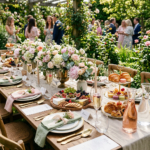
When you plan pancakes for brunch, use size and appetite to guide portions. Two large (8–10″) or three medium (6″) pancakes suit an average adult; kids and hungry teens need different counts. Factor in protein-rich sides and add a small buffer to avoid shortages. Read on for precise portion tables, timing tips, and storage tricks.
Pancake Size and Serving Estimates
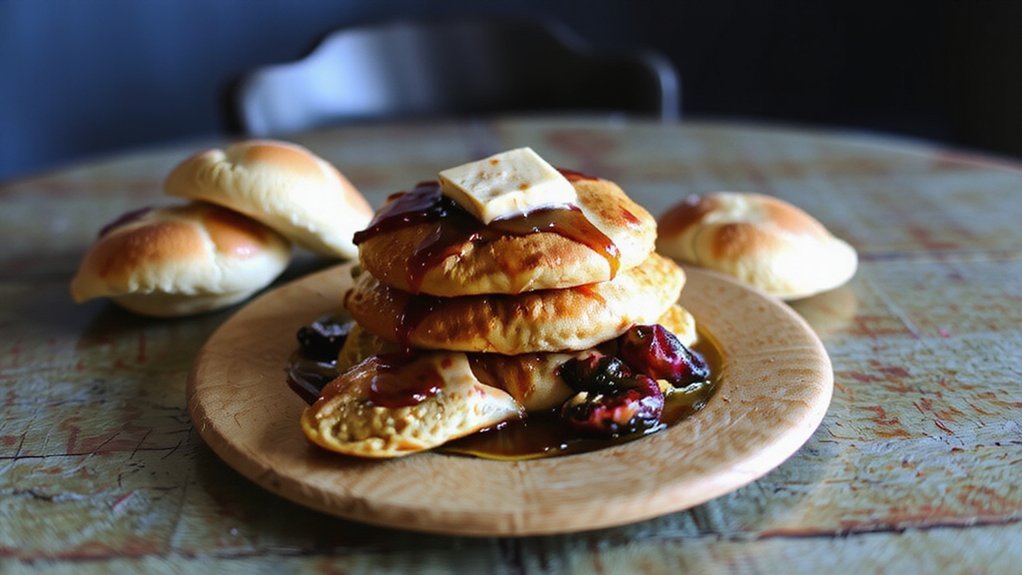
A few simple size rules let you estimate servings reliably. When you pick a Diameter guide, think in inches: 4″ rounds are silver-dollar, 6″ are standard, 8–10″ are large. For each size, plan servings by area: two 4″ ≈ one 8″ pancake. Note Thickness variations: thin crepe-style will yield more servings per batter volume than thick, fluffy stacks. Measure batter volume per pancake — roughly 2 tbsp for 4“, 1/4 cup for 6”, 1/3–1/2 cup for 8–10” — to convert recipe yield to count. Use this method to prototype portions for events, tweak pan temperature and pour size to hit target counts, and document outcomes so your next brunch scales predictably. Track pours per pan and refine measurements to standardize yield across cooks consistently daily.
Adjusting for Appetite and Age
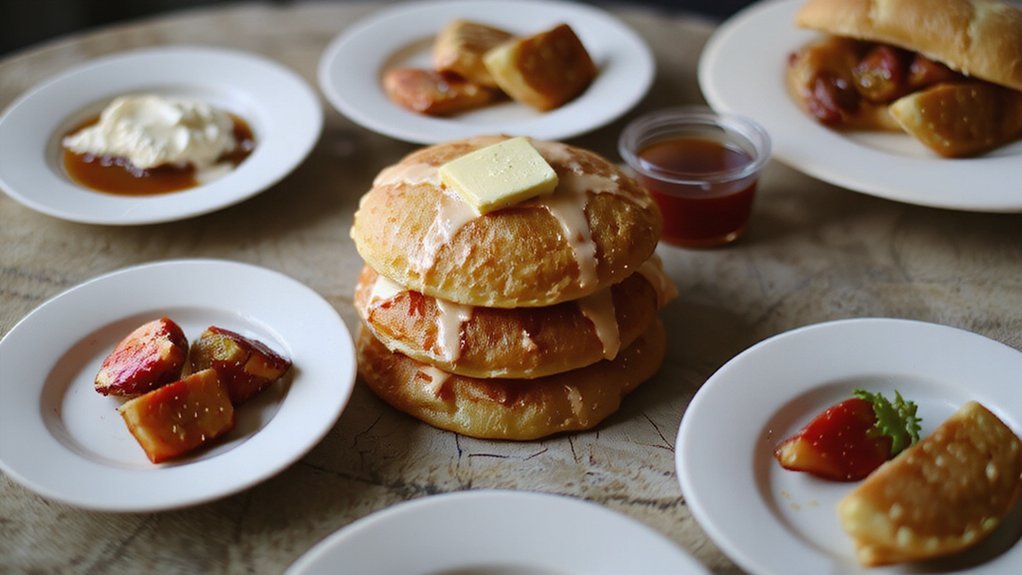
When planning portions, account for age-related appetite differences and activity so you hit the right serving without wasting batter. You’ll calibrate age based portions by grouping guests: children (1–3 small pancakes), teenagers and active adults (3–5), and older adults or light eaters (1–2). Use recent feeding studies and practical observation to expect appetite variations within groups; always plan a 10–20% buffer rather than fixed counts. Offer mix-and-match sizes or mini pancakes to let people self-serve, which reduces waste and respects individual hunger cues. Track consumption over events to refine your ratios and convert counts into batter volume for efficient prep. This data-driven, adaptive approach helps you serve appropriately while supporting creative brunch experiences. Adjust for special diets and monitor hunger signals in real time.
How Sides and Toppings Affect Portions
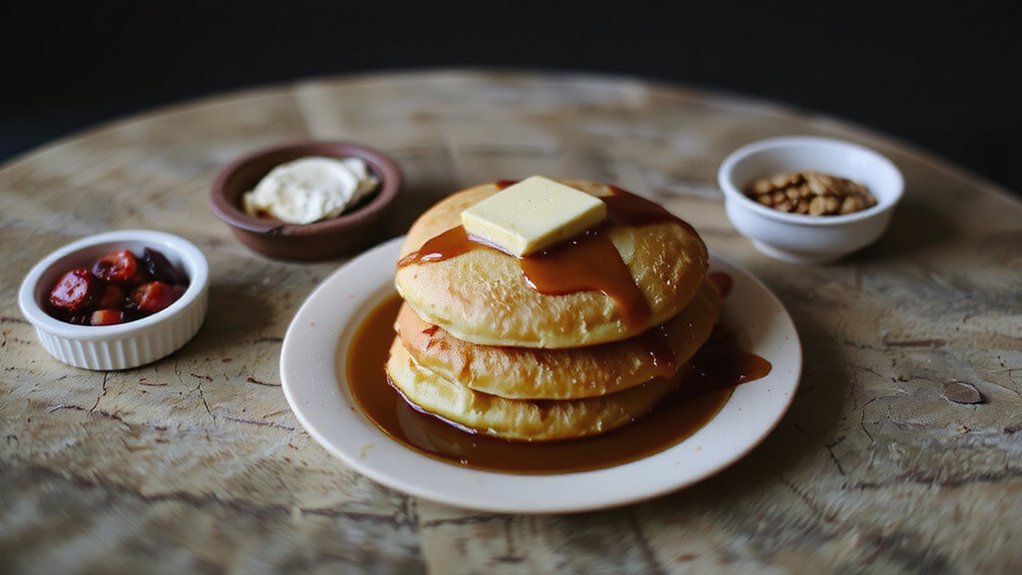
Consider how sides and toppings change how much people eat: protein- and fiber-rich choices (eggs, Greek yogurt, fruit, nut butter) boost satiety so you can plan roughly 10–25% fewer pancakes per person, while high-sugar, high-fat toppings (syrups, whipped cream, chocolate) tend to add calories without filling people and can keep them reaching for more, so don’t shrink portions in those cases. Use topping volume intentionally: light berries or a spoonful of nut butter adds bulk and satisfaction; a cascade of syrup increases calories without satiety. Match pancake counts to protein sides and topping volume to control intake.
Let protein- and fiber-rich sides cut pancake counts 10–25%; avoid heavy sugary toppings—use light fruit or nut butter.
- larger fruit bowls
- modest syrup pitchers
- plated egg portions
Test and iterate based on guest feedback regularly. Adjust portioning by observing consumption and recording what works daily.
Batch Sizes and Time-Saving Tips
Many commercial and home kitchens find that cooking pancakes in batches of 6–12 (depending on griddle size) maximizes yield while keeping quality consistent, and you should plan batches to match your equipment’s heat recovery so you don’t overcrowd the surface. Use griddle rotation to maintain even browning: mark zones, flip timing, swap pans. Prioritize ingredient prepping—measure dry mix, pre-sieve, mix wet separately—to speed cycles and reduce waste. Schedule batter rests and stagger starts so finished pancakes arrive continuously. Track yields per batch and adjust batch size for demand. Table below helps optimize flow and resources.
| Batch Size | Time/Batch | Tip |
|---|---|---|
| 6 | 8 min | Rotate griddle |
| 12 | 10 min | Prep ingredients |
Measure throughput, log cycle times, and iterate batch parameters to innovate efficiency without sacrificing pancake quality.
Storing and Reheating Leftovers
After you’ve optimized batches, plan for storage and reheating so leftovers keep quality and stay safe. You’ll cool pancakes quickly, stack with parchment, and freeze flat within two hours; these freezer guidelines reduce freezer burn and bacterial risk. Label packs with date, and rotate stock. For reheating, thaw in fridge overnight or use microwave on low power, then crisp in a hot skillet or toaster to achieve texture restoration. Reheat only once; discard if smell or color changes.
- Stack with parchment between pancakes to prevent sticking.
- Cool on a wire rack before packing to avoid sogginess.
- Reheat briefly in a skillet to restore edge crispness and mouthfeel.
This evidence-based approach saves time and maintains a near-fresh experience. You’ll innovate workflows and reduce waste consistently.
Conclusion
You’ll plan pancakes confidently: count two 8–10″ or three 6″ per average adult, reduce to 1–2 for light eaters or seniors, and expect 3–5 for teens or very hungry guests; give kids one–two 4″ pancakes. Add protein or fiber sides to cut portions ~10–25%, and include a 10–20% buffer so you don’t run short. Track pours per pan to standardize yield and save time when batching and reheating, so you can serve everyone without waste.