

About 60% of people say breakfast affects their energy and focus, so what you choose matters. You can use an açaí bowl to deliver antioxidants, fiber and healthy fats while keeping portions and sugar in check. You’ll get a practical, food-first approach to a satisfying brunch that fits your goals…
Key Takeaways
- Use frozen unsweetened açaí puree, banana or berries, and 120–150 ml plant milk or yogurt for a thick, scoopable base.
- Add a protein source (Greek yogurt, pea protein, or hemp seeds) to boost satiety and meet morning protein needs.
- Blend in short pulses until sorbet-like, avoiding overblending to preserve texture and nutrients.
- Top with high-fiber granola, chia or flax seeds, fresh fruit, and a small handful of nuts for crunch and healthy fats.
- Choose unsweetened açaí packs, check labels for added sugars, and adjust portion/toppings to align with calorie or dietary goals.
Why Acai Is Great for Breakfast

Because acai packs antioxidants, fiber, and healthy fats into a single spoonful, it makes a nutrient-dense, satisfying breakfast you can prep quickly. You’ll get polyphenols linked to improved attention and mood, supporting cognitive enhancement when paired with balanced macronutrients. The fiber and fats slow glucose absorption, promoting morning satiety and steady energy for your morning tasks. Clinical studies suggest berries with similar profiles reduce oxidative stress and support vascular health, which can indirectly benefit brain function. As a client-centered option, you can adjust portion size and toppings to match goals—weight management, endurance, or concentration—without sacrificing flavor. Focus on whole-food combinations and portion awareness to maximize benefits while keeping this food-focused approach practical and sustainable. Discuss timing and portions with your dietitian for personalized guidance.
Ingredients You’ll Need
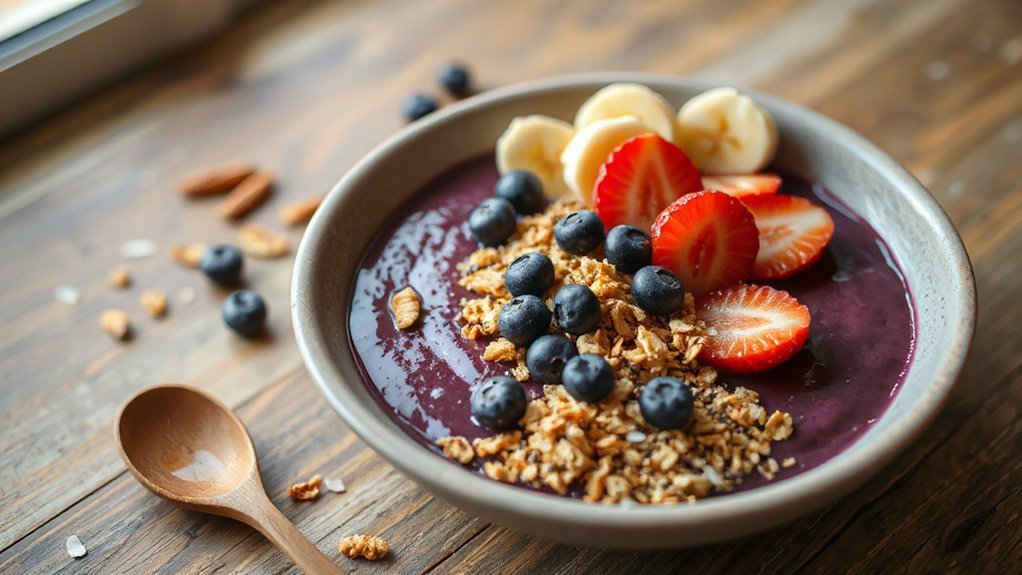
To build a bowl that delivers the antioxidants, fiber, and healthy fats mentioned above, you’ll want a few core items: frozen unsweetened acai puree (or powder), a banana or mixed berries for natural sweetness and additional fiber, and a splash of liquid—unsweetened almond milk, coconut water, or yogurt—to reach the right texture. Add toppings that boost nutrition and satiety: high-fiber granola, chia or flax seeds for omega-3s, and a portion of nuts for healthy fats and protein. Use seasonal produce to maximize flavor and nutrients while reducing cost; thin-sliced fruits also improve mouthfeel. If budget is a concern, consider budget alternatives like frozen fruit blends, bulk seeds, or plain yogurt instead of specialty items. Prepare portions mindfully to meet your energy needs and goals.
Choosing the Right Acai
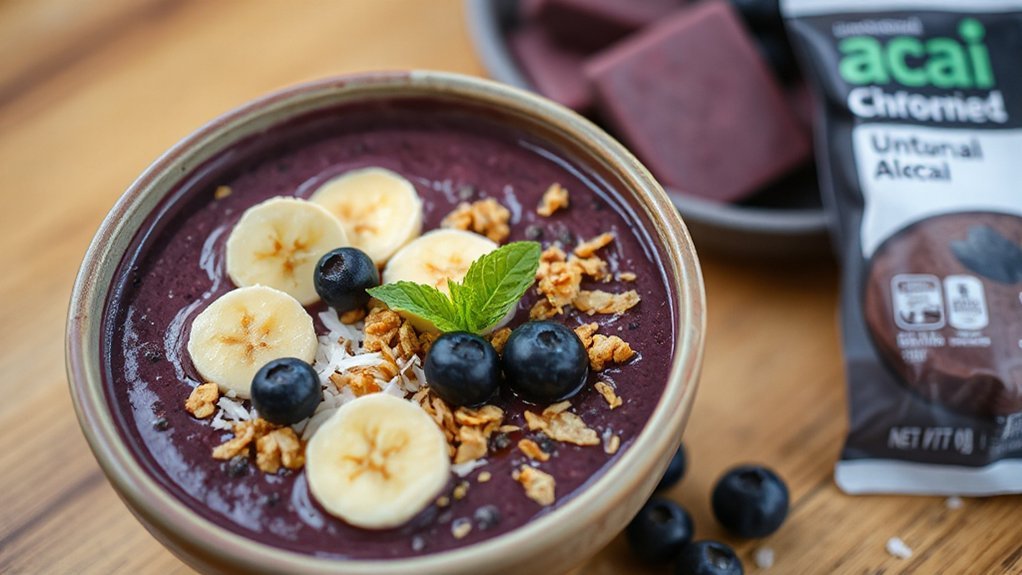
You should weigh frozen acai packs against acai puree for texture, convenience, and how they blend into your bowl. Check labels for added sugars and preservatives, since analyses show some brands add sweeteners that alter flavor and nutrition. Choose products with minimal additives and no extra sugar so your bowl stays nutrient-dense and true to the fruit.
Frozen Packs Vs Puree
Which format suits your needs and goals? You’ll weigh convenience, culinary control, and sustainability when choosing frozen acai packs or puree. Frozen packs stay solid, make smoothie bowls thick with less blender work; puree pours easily for dressings or lighter blends. Consider a texture comparison and packaging waste.
- Frozen packs — pros: convenience, consistent thickness.
- Puree — pros: versatile, easy to portion.
- Sustainability — resealable tubs reduce packaging waste vs single-serve packs.
Clinically informed guidance suggests you pick based on prep frequency and desired mouthfeel. If you want spoonable, dense bowls, choose frozen packs. If you need flexible recipes and measured servings, pick puree. Taste tests favor both; your preference and meal goals should guide selection. Also note seasonality affects flavor.
Sugar Content and Additives
After weighing frozen packs against purees, you’ll want to check what’s actually in the package: sugar levels and additives can substantially change both nutrition and flavor. Read the Nutrition Facts and ingredient list to compare added sugars per serving; many brands add syrups or concentrates that spike calories and alter taste. You should prefer products listing acai first and minimal additives — natural stabilizers like ascorbic acid differ from sweeteners. Demand label transparency from manufacturers and look for third-party testing or certifications that reference regulatory standards for purity and contaminants. If you tolerate small amounts of added sweetener, balance it with fiber and unsweetened toppings. That keeps your bowl nutrient-dense and aligned with your health goals. Consult a dietitian for personalized guidance on ingredient choices daily.
Step-by-Step Preparation
Start by prepping ingredients—you’ll measure frozen acai, fruit, and liquid to achieve consistent texture and nutrient balance. Next, blend the acai base until smooth and scoopable, adjusting viscosity with a splash of liquid as needed. Finally, assemble the bowl and top with fresh fruit, seeds, and granola to add flavor, texture, and micronutrients.
Prep Ingredients
Because texture and balance hinge on proper prep, gather and portion your ingredients before you blend: slightly thaw one 100 g unsweetened frozen açaí packet, measure 120–150 ml of liquid (almond milk or coconut water) for a thick but blendable base, slice one banana and weigh ½ cup mixed berries, and set out 2–3 tbsp granola plus any seeds, nut butter, or sliced fruit for toppings. Use a tool checklist (measuring spoons, scale, cutting board) to speed prep and support waste reduction by portioning. Prioritize fresh produce and chilled components for ideal mouthfeel. Follow this prep plan to support nutrient retention and client preferences and efficient assembly:
- Wash and dry berries.
- Portion toppings into small bowls.
- Pre-slice fruit for immediate assembly.
Blend Acai Base
With your ingredients portioned and chilled, you’re ready to blend the açaí base to preserve texture and nutrient density. Add frozen açaí, a splash of liquid, and fruit to the blender jar in layers—dense items first—to encourage smooth circulation. Pulse initially, then use short bursts until you reach a scoopable, sorbet-like consistency; overblending raises temperature and degrades phytonutrients. Scrape sides with a spatula as needed to achieve homogenous texture. For client safety and predictable results, recommend a high-powered blender and emphasize blade maintenance: inspect seals and sharpen or replace dull blades to avoid uneven purees. Let cool-down intervals protect motor longevity during repeated blends. Taste and adjust sweetness minimally to keep the bowl nutrient-forward. Document client preferences and portion sizes for consistent future preparations.
Assemble and Top
Layering the açaí base in the bowl, place a scoopable, sorbet-like portion in the center and gently press it to create a flat surface for toppings. You’ll arrange ingredients to balance texture, flavor, and nutritional targets, using a consistent sequence so clients can replicate results. Apply color psychology: alternate bright fruits to increase appeal and perceived freshness, which supports adherence to healthy habits. Keep options kid friendly by adding fruit portions and drizzle of honey for palatability. Follow this simple assembly order to maintain structure and portion control:
- Fresh fruit and nut clusters contrast.
- Granola or toasted seeds for crunch and satiety.
- Drizzle and micro-herbs for flavor and visual finish.
Serve immediately and advise clients to eat within 15 minutes for best texture.
Creative Topping Ideas
How do you pick toppings that boost flavor, texture, and nutrition? Start by balancing Texture contrasts, like crunchy granola with creamy banana slices, to engage your palate and slow eating, which evidence links to better satiety. Prioritize fresh fruit for vitamins and hydration, and choose nuts or seeds sparingly for healthy fats and mouthfeel without overloading calories. Use Seasonal motifs—berries in summer, stone fruit in late spring—to maximize flavor and nutrient density while supporting local sourcing. Add a drizzle of unsweetened nut butter or a splash of citrus to brighten flavors without excess sugar. Taste as you go, tailor portions to your hunger, and aim for a visually appealing bowl; presentation improves intake satisfaction and adherence to healthy habits. Adjust toppings to personal preferences.
Protein and Superfood Add-Ins
To boost nutrition and satiety, you can choose protein powders like whey, pea, or collagen—each provides different amino acid profiles and digestibility. You can also add whole-food proteins such as Greek yogurt, nut butter, hemp seeds, or silken tofu for texture and sustained energy. Finally, sprinkle superfood boosters like chia, maca, spirulina, or cacao for antioxidants, fiber, and micronutrients that complement the protein and elevate nutrient density.
Protein Powder Options
Protein matters when you want your acai bowl to satisfy hunger and support recovery, so choose a powder that matches your goals, dietary needs, and flavor preferences. Check mixability testing and brand transparency before you buy; reliable labels and independent lab results reduce uncertainty and help you pick whey, plant, or collagen that fits your tolerance and timing. Consider these practical options:
- Whey concentrate/isolate — fast-absorbing, complete amino profile for post-workout.
- Pea/soy blends — hypoallergenic, higher fiber, suitable for vegans when fortified.
- Collagen peptides — support connective tissue, neutral flavor, not a complete protein.
Start with a 15–25 g serving, assess digestion and satiety, then adjust based on activity and calories. Track results over two weeks to refine portion and timing.
Whole-Food Protein Add-Ins
If you’ve been weighing powder choices, whole-food add-ins give you a nutrient-dense alternative that boosts protein while adding texture and micronutrients. Choose Greek yogurt, cottage cheese, silken tofu or ricotta for creamy, complete-protein bases; they mix smoothly with blended açaí and keep bowls satisfying. Sprinkle hemp, chia or flax seeds and chopped nuts for plant protein, healthy fats and chew—these also stabilize blood sugar. For seasonal variety, prioritize seasonal sourcing and farmer partnerships to get fresher, more nutrient-rich ingredients and support traceability. If you’re plant-based, add cooked quinoa or white beans for neutral-flavored protein. Measure servings to meet your individual protein target and adjust based on appetite and activity; this client-centered approach helps you balance taste, texture and nutrition. Track results and refine choices.
Superfood Boosters and Benefits
Balance comes from pairing whole-food proteins with targeted superfood add-ins that boost micronutrients and functional benefits without overpowering flavor. Choose add-ins that enhance texture and nutrition—ground flax, hemp seeds, collagen peptides—so you meet protein and omega goals while preserving taste. Consider ethnobotanical origins for ingredients like maqui or camu camu; their traditional use guides dose and respect. Prioritize bioavailability enhancers (vitamin C, healthy fats) to maximize absorption of plant iron and polyphenols. Tailor portions to your energy needs and digestive comfort; measure, adjust, and note effects. Sample combinations to find what fits your palate and goals:
- Hemp + banana + almond
- Maqui + orange + chia
- Collagen + avocado + cacao
You’ll get efficient, evidence-informed boosts without sacrificing balance and sustainable benefits for daily recovery and cognitive focus meal satisfaction.
Vegan and Allergy-Friendly Swaps
When you’re avoiding dairy, nuts, eggs, or gluten, simple ingredient swaps let you keep the texture and nutrition of an açaí bowl without compromising safety or flavor. Use frozen açaí puree with oat, soy, or pea milk for creaminess and protein; research shows plant milks can match mouthfeel when blended with frozen fruit. Replace nut toppings with toasted seeds or roasted chickpeas for crunch and iron, and swap granola for certified gluten-free oats or puffed quinoa to respect celiac needs. For clients on a budget, suggest budget substitutions like seasonal local fruits and bulk seeds. Honor preferences through cultural adaptations: use coconut and tropical fruits for Pacific tastes or jaggery and banana for South Asian palates, while monitoring allergens and nutrition goals and needs.
Storage and Make-Ahead Tips
Because an açaí bowl’s best textures come from fresh blending, plan ahead by prepping components separately: portion frozen açaí and fruit in airtight freezer bags, keep crunchy toppings like seeds or granola dry in sealed containers, and store wet add-ins (yogurt alternatives, nut-free butters) in the fridge for up to 3–5 days.
- Portion frozen fruit
- Store toppings separately
- Date and rotate
Use Batch Planning to schedule prep sessions and reduce waste; portioning ahead preserves flavor and nutrient profiles. Labeling System matters: date and list contents on each container so you use older portions first. When you reblend, thaw fruit briefly to maintain smoothness and avoid wateriness. Follow safe storage times, avoid refreezing blended bowls, and rotate stock weekly. Track quality outcomes.
Presentation and Serving Suggestions
Prepping components ahead lets you focus on plating and maximize visual appeal and texture: arrange the blended açaí base slightly off-center, add toppings in distinct zones or radial patterns to highlight color contrasts, and alternate crunchy, creamy, and juicy elements so each spoonful delivers varied mouthfeel. When you serve, consider portion size, contrast, and dietary needs; research shows visual cues influence perception of taste. Use seasonal themes to guide fruit selection and garnish. Set a calm table setting and label components for guests with allergies.
| Element | Purpose |
|---|---|
| Nuts | Crunch, protein |
| Fruit | Color, freshness |
Aim for balanced bites, accessible bowls, and clear serving utensils so clients enjoy both flavor and function. You can add edible flowers for elegance and micronutrients at communal brunches and sustainability.
Troubleshooting Common Issues
Although açaí bowls look simple, runny bases, icy texture, muted flavor, and rapid browning are common—and you can troubleshoot them efficiently by checking three things: ingredient temperature and ratio, blender power and technique, and topping timing.
- Prevent a watery texture by using frozen fruit or less liquid; pulse instead of blending continuously so the mixture stays thick.
- Avoid icy chunks by letting packets thaw briefly and using high-speed blades; scrape and remix to homogenize.
- Preserve flavor and color by adding toppings at the last moment and incorporating a small sweetener if needed.
Follow these targeted adjustments — backed by culinary practice and client feedback — and you’ll get a creamy, flavorful açaí bowl every time. Enjoy consistent results and satisfied clients.
Conclusion
You’re choosing a bowl that balances antioxidants, fiber and healthy fats to steady energy, support cognition and keep you full; you’re blending whole-food ingredients, adding protein and fiber, and topping with crunchy, fresh elements for texture. You can customize portions and swaps to fit allergies, goals and taste. Use frozen açaí, banana and a splash of milk, add protein or yogurt, and enjoy a nutrient-dense, evidence-backed brunch that tastes as good as it works today.








Leave a Comment