
You know the pull of a glossy espresso martini and the warm, bittersweet comfort of a spiked latte. You’ll feel the crema’s silk and smell roasted oils as spirits round the edges. I’ll show which beans, spirits, and techniques get you there, and how to avoid flat or cloying results—so you can make cocktails worth remembering.
The Rise of Boozy Coffee Cocktails
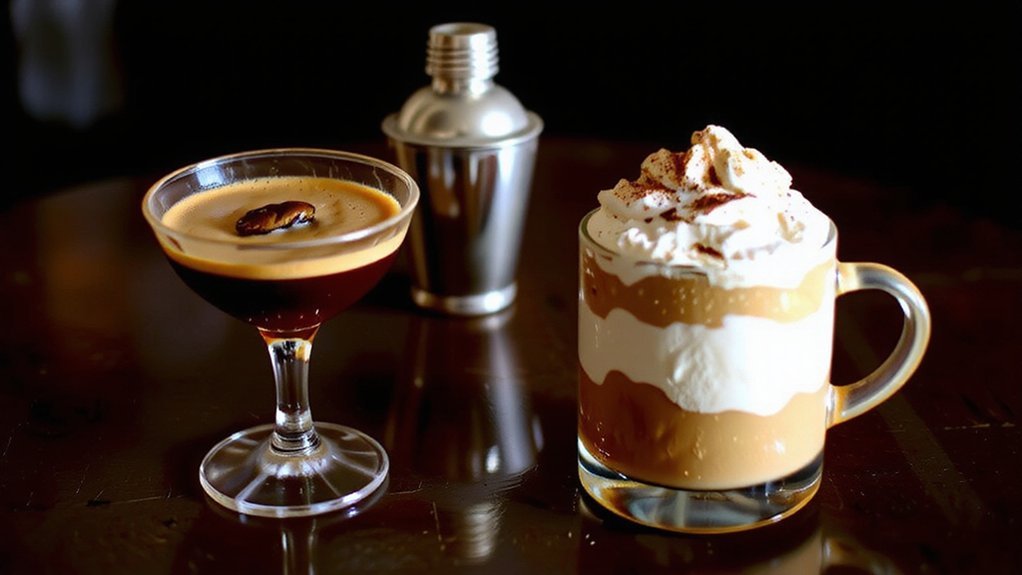
Blending bitter espresso with warming spirits has moved from after-dinner novelty to a full-fledged cocktail category you’ll find on menus and home bars alike. You’ll notice the shift in glossy photos and viral reels: social media turned the Espresso Martini into a design brief for bartenders and home enthusiasts chasing crema and shine. You taste evolution—roasted bitters, sugary silk, a boozy heat that lands like a handshake. That rise rests on cultural origins spanning Italian coffee culture to modern cocktail craft, reinterpreted through late-night bars and café experiments. You’ll want to experiment, but you’ll also demand technique: precise extraction, cool dilution, and tempered presentation. This scene rewards curiosity; push boundaries, respect lineage, and let texture guide your innovation. Share discoveries, not just recipes, confidently.
Essential Ingredients for Cocktails and Spiked Lattes
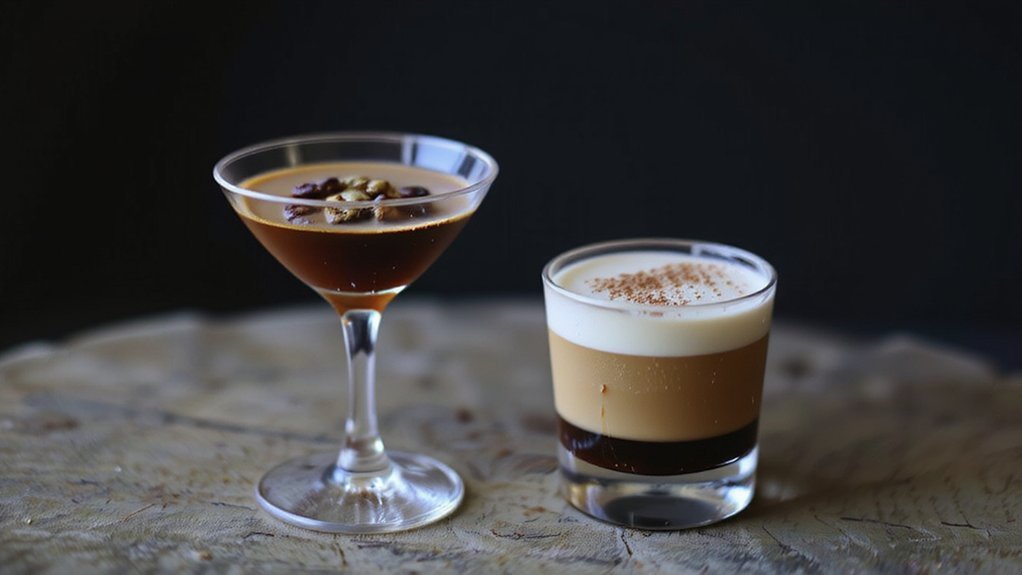
You start with bold, freshly brewed coffee and the right spirit—espresso paired with vodka, whiskey, or coffee liqueur forms the backbone you’re building on. You’ll want to balance that backbone with creamy textures: whole milk or cream for richness, or coconut and oat milks for nutty, silky mouthfeel. Choose ingredients that contrast and complement — bright roast with caramel whisky, or velvety oat milk with a rich coffee liqueur — and you’ll have a cohesive cocktail or spiked latte.
Coffee and Spirits
How do spirits transform a cup of coffee into something rapturously boozy? You smell bright citrus oil, toasted oak, and the sharp sweetness of liqueur as the liquor lifts crema and sings with acidity. Choose spirits that echo roast profiles: bourbon deepens chocolate and caramel, vodka lets origin notes shine, espresso liqueur layers mocha richness. You’ll consider provenance and proof—higher ABV changes temperature and extraction, lower proof softens bite. Respect cultural rituals and legal regulations when sourcing and serving, especially in public venues. Experiment with infusion, barrel-aged blends, or floral vodkas to innovate cocktails and spiked lattes without losing balance. Trust your palate, measure precisely, and build drinks that feel intentional, textured, and unmistakably modern. You’ll refine techniques through tasting and careful daily iteration.
Dairy and Non‑dairy Options
Choosing the right milk—whole, cream, oat, almond, or coconut—shifts mouthfeel, foam stability, and how the spirit’s aromatics come forward. You’ll feel the difference: whole milk rounds bitterness and lifts liqueur warmth; cream fattens texture for velvet sips; oat steams into dense, lasting microfoam that cradles espresso oils. Almond offers delicate, nutty lift but can thin cocktails; coconut brings tropical brightness and pairs with dark rums. For guests with sensitivities, plan allergen swaps—use pea or oat milks to replace soy, or lactose‑free dairy to keep creaminess. Taste, then adjust sugar and spirit ratios to balance. Also weigh environmental impact: choose local dairy or certified sustainable plant milks to align drinks with responsible sourcing and modern innovation. Experiment boldly; document results for consistent elevated guest experiences.
Tools and Equipment You Need
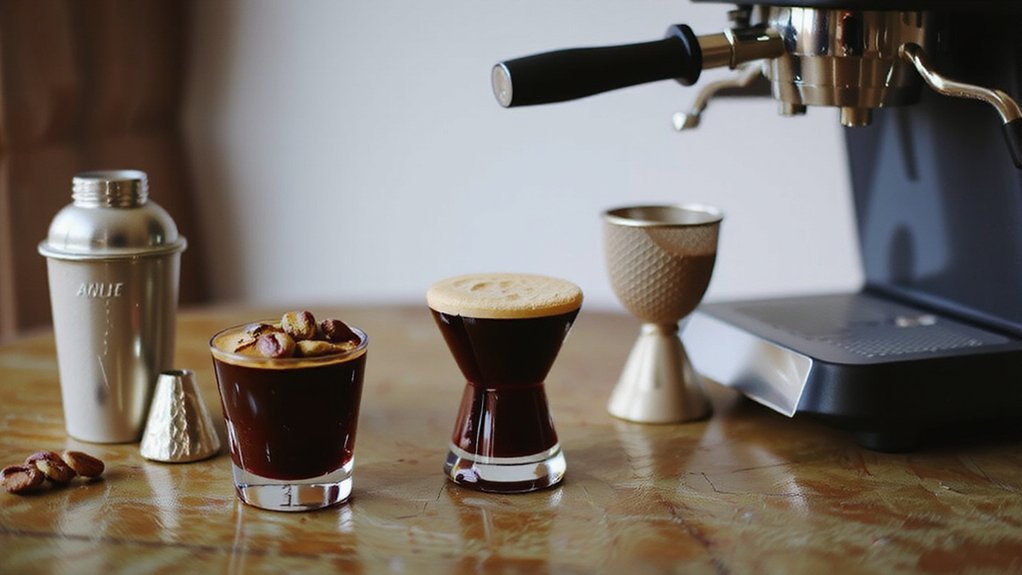
A good set of tools makes the difference between a muddled pour and a bar‑quality boozy coffee. You want tactile, precise gear: a tamper that fits your palm, a shaker that seals with a satisfied click. Prioritize equipment maintenance and smart budget sourcing so your kit performs and evolves. Table below maps essentials and purpose.
| Tool | Why it matters | Tip |
|---|---|---|
| Espresso machine | Crema, pressure consistency | Service yearly |
| Grinder | Aroma release, grind control | Calibrate daily |
| Shaker/strainers | Texture, chill retention | Chill before use |
Invest in a few scalable pieces, tune them often, and you’ll craft innovative cocktails reliably. Rotate parts, document settings, and explore modular upgrades; your sensory memory for balance will sharpen as you experiment with temperature, timing, and extraction variables over weeks and months.
Classic Espresso Martini Recipe
When you’re craving something that snaps awake your palate while finishing silky-smooth, the classic Espresso Martini delivers: pull a fresh, hot shot of espresso, combine it with vodka and coffee liqueur, then shake vigorously with ice until you get a glossy crema and frothy head—strain into a chilled coupe and float three espresso beans for aroma and balance. You’ll fine-tune ratios — typically 45ml vodka, 30ml coffee liqueur, 30ml espresso — and you’ll ice, shake, strain. Pay attention to texture and temperature; a glossy crema signals proper emulsion. Note Calorie Breakdown when tailoring portions, and comply with local Alcohol Regulations when serving. For innovation, try single-origin espresso or a barista’s microfoam technique to coax floral notes. Serve immediately; the aroma fades fast.
- Ratios
- Espresso
- Calories
- Regulations
Cozy Spiked Latte Recipe
If you want something that tastes like a warm hug with a kick, heat freshly steamed milk until it’s velvety, pull a bold shot of espresso, then stir in a splash of your favorite spirit—bourbon, spiced rum, or Irish cream—to taste; top with a dusting of cinnamon or cocoa and a whisper of vanilla to deepen the aroma. You’ll sip something silky and warming that balances richness with a clear boozy note. Measure confidently: start with 1 oz spirit per 8 oz latte and adjust. Use whole milk or oat for creaminess, froth to glossy peaks, and strain crema into the cup. Pair the drink with thoughtfully curated mood playlists and reading pairings to amplify atmosphere. Serve in prewarmed cups and enjoy slowly now.
Creative Variations and Flavor Twists
Exploring playful twists lets you tailor that velvety, boozy latte to any mood or season: swap bourbon for maple-infused whiskey for autumnal warmth, add orange liqueur and grated nutmeg for a bright holiday lift, or stir in cardamom syrup and a whisper of rose water for an exotic, floral note. You’ll coax layers of aroma and texture — bitter espresso, creamy foam, warm spice — then experiment with Smoky Accents or Tropical Twists to surprise the palate. Try these variation prompts to spark your next creation:
- Smoked sea-salt rim for a savory, ashy finish
- Coconut cream and pineapple reduction for island brightness
- Espresso-washed mezcal for deep, smoky complexity
- Cold-brew tiki syrup with lime for vibrant zing
Use them as frameworks; taste, tweak, own cup.
Balancing Caffeine, Alcohol, and Sweetness
Pay attention to timing: coffee’s bright lift hits fast while alcohol’s warming weight arrives slower, so stagger sips and pours to avoid a jittery spike or a heavy crash. Match sweetness to strength—use a touch of syrup or cream to tame bitter espresso without burying the boozy aroma. Taste as you go and adjust sugar and pour order so the drink finishes smooth, not sharp.
Caffeine and Alcohol Timing
When you sip a boozy coffee, your palate may taste warm crema, bitter espresso and sweet liqueur before your body registers the alcohol’s slow climb; because caffeine peaks quickly and alcohol builds more steadily, timing matters for both the flavor balance and how you’ll feel later. You should plan around metabolism windows: caffeine’s spike sharpens perception while alcohol’s lag sustains warmth, and poor timing amplifies sleep disruption. Start with intent — decide if you want alertness or unwinding — then adjust pour and pacing. Consider these practical timing cues:
- Sip espresso shots, then wait 20–30 minutes.
- Pace cocktails to let alcohol plateau before a second round.
- Match bitter intensity to caffeine peak for clarity.
- Stop caffeine four to six hours before sleep to avoid sleep disruption.
Sweetness Balance Tips
Although sweetness can soften espresso’s bite and mask alcohol’s edge, you’ll want to steer it with purpose so flavors stay distinct and the drink doesn’t become cloying. Taste deliberately: begin with less simple syrup or liqueur than you think and add in small increments, so you track palate adaptation and avoid numbness. Use contrasting textures—creamy foam, citrus twist—to create sensory anchoring points that keep caffeine brightness and boozy warmth separate. Choose sweeteners with personality: brown sugar for molasses depth, honey for floral lift, or a salted caramel rim to highlight bitterness. Measure and record; innovation thrives on repeatable tweaks. By balancing intensity, acidity, and artisanal sweetness, you’ll craft drinks that feel adventurous, not overpowered. Trust your palate, iterate, and serve with confident restraint always.
Serving, Garnishes, and Presentation Ideas
Layering espresso, warm spices, and a splash of liqueur creates a drink that smells like caramelized sugar and feels silky on the tongue, so pick glassware and temperature that highlight those sensations. You’ll choose cups that frame aroma, chill martinis to retain crema, and use seasonal accents and presentation rituals to elevate service. Garnishes should add scent, texture, and contrast without overwhelming the palate. Think tactile details and quick theatrics.
- Toasted orange peel for bright oil and aroma
- Flaky salt rim to balance sweetness
- Microfoam rosettes dusted with cocoa or nutmeg
- Edible flowers or herbs for color and scent
Serve deliberately, pause before release, and let guests inhale — presentation guides perception. Refine each element, iterate boldly, and document favorite combinations for service.
Troubleshooting Common Problems
If your cocktail smells off, looks curdled, or tastes flat, you’ll want a quick, sensory checklist to diagnose and fix it. Start by smelling and touching—stale oils or sourness jump out; odor elimination can save the drink. Check dairy temperature and pour technique to avoid curdling. Taste for balance; boost espresso or liqueur if it’s flat. Do safety checks: discard anything past safe storage, clean tools, and watch for glass chips. Use the table below for rapid solutions.
| Issue | Fix |
|---|---|
| Sour milk or curdled | Replace milk; warm gradually; strain |
| Flat or weak | Increase coffee concentration; shake with ice |
Experiment with spices, bitters, or salt to brighten flavor; note provenance of beans and innovate responsibly for consistent, evocative results every time.
Conclusion
You’ve learned how to marry bold espresso, smooth spirits, and subtle sweetness to craft cocktails and spiked lattes that sing. Trust your senses—nose the roast, feel the crema, taste for balance—and tweak roast choice, liqueur, or milk until it’s right. Keep tools clean, measure spirits, and time caffeine. Serve with confident, simple garnishes. With practice you’ll create memorable, mood-setting drinks that taste as deliberate as they look. Enjoy responsibly and let flavor guide every pour.