Most hosts don’t realize that alternating sweet and savory courses keeps guests eating longer and cuts waste. You should set guest count and theme, balance protein-rich mains with bright sides, and offer a labeled beverage station plus smart substitutions for restrictions. You’ll want the checklists and timelines that prevent last-minute chaos—keep going to get them.
Key Takeaways
- Choose guest count, curate a complementary guest mix, and set clear invite details including RSVP, timing, and parking.
- Build a balanced menu alternating sweet and savory, prioritizing protein, acid, fat, and varied textures.
- Plan smart substitutions and label allergen-safe alternatives, enforcing cross-contact protocols for dietary restrictions.
- Create a backward timeline with make-ahead steps, labeled containers, and reheating methods for smooth day-of execution.
- Design buffet zones and traffic flow, separate beverage station, assign replenishment staff, and prepare a day-of emergency kit.
Planning Your Guest List and Theme

Who do you want at your brunch, and what vibe are you aiming for? Decide guest count by available space and interaction level you want; fewer people create intimate conversation, more people boost energy. Set clear invite etiquette: state start/end times, RSVP deadline, dietary notes, plus parking or transit tips. Curate a guest mix that avoids cliques and fosters new connections; prioritize guests who share interests or complementary personalities. Choose a theme that matches timing and location, then enforce theme cohesion through decor, music, and a concise dress suggestion. Send digital invites with reminders, confirm RSVPs two days prior, and plan seating to balance conversation. You’ll run a focused, welcoming brunch that feels effortless and intentional. Prepare contingency plans for last-minute cancellations and substitutions.
Building a Balanced Menu: Sweet Vs Savory
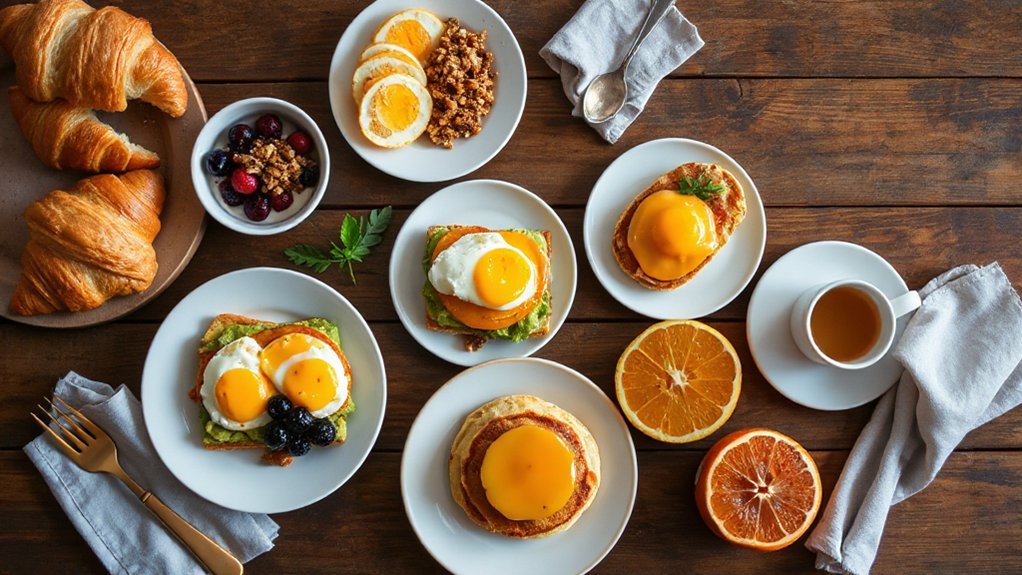
While sweet dishes draw guests in with aroma and comfort, you should counterbalance them with savory options that supply salt, texture, and protein to keep the meal satisfying and steady blood sugar. Plan plates that alternate sweet and savory elements: syruped French toast paired with an herb omelet, or fruit salad alongside smoked salmon on toast. Use flavor contrast deliberately — acid, fat, and umami brighten sweets and prevent palate fatigue. Maintain portion balance by offering small tastes rather than full entrees across many items; aim for three bites per item so guests sample broadly without overfilling. Arrange stations or plated flights to control pacing, and label items concisely so guests choose combinations that achieve satisfying variety and nutritional equilibrium, and encourage mindful enjoyment always.
Dietary Restrictions and Smart Substitutions
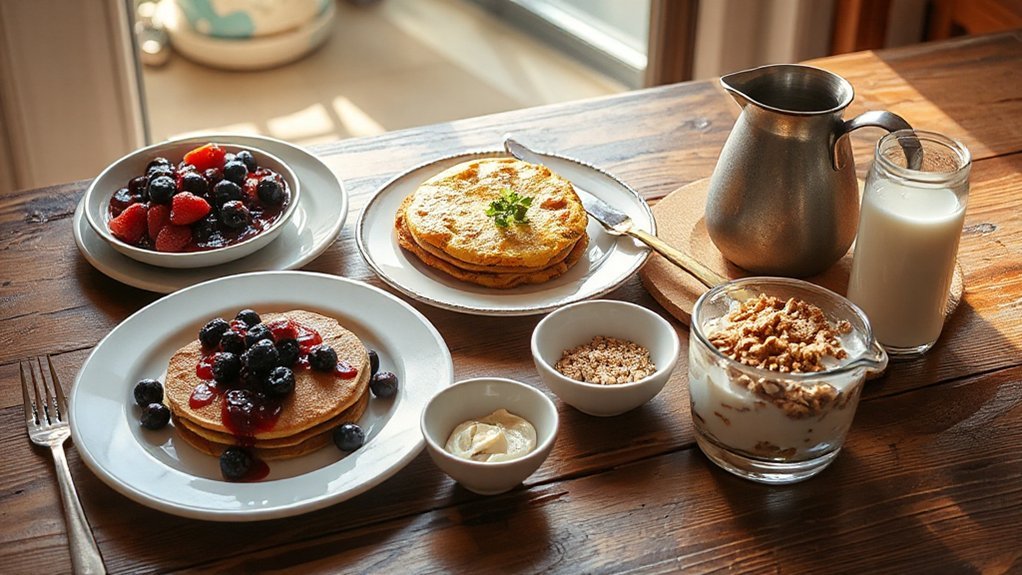
Because many guests have dietary needs, you should plan substitutions that preserve flavor, texture, and nutritional balance without calling attention to restrictions. You’ll map allergen swaps and label alternatives with ingredient transparency, offering matched taste profiles: dairy → cultured nut yogurts, eggs → flax or chickpea blends, gluten → whole-grain or certified GF flours. Maintain protein, fat, and fiber parity so dishes remain satisfying. Use familiar plating and consistent seasoning so substitutions feel seamless.
| Restriction | Smart Swap |
|---|---|
| Dairy | Cultured almond yogurt |
| Egg | Ground flax + water or chickpea flour |
| Gluten | Sorghum or certified GF flour |
| Nut allergy | Sunflower seed butter |
Communicate options clearly and enforce cross-contact protocols. Ask about preferences when confirming RSVPs, keep ingredient lists visible, and train staff or helpers on safe handling procedures every time.
Make-Ahead Dishes and a Prep Timeline
Planning your make-ahead menu lets you shift work off the day of the brunch and deliver consistently fresh results; you’ll front-load tasks by batching stovetop components, baking, and cold prep, then stage finishes and reheats. Decide which items hold: quiches, overnight oats, roasted vegetables; assign clear times for baking, chilling, and portioning. Use a Labeling System on containers with contents, date, cooking/reheat instructions, and serving order. Create a timeline backward from service: final 30 minutes for crisping and plating, 2–4 hours for gentle reheats, overnight for marinades. Practice Reheat Techniques — oven for even heat, sous-vide for texture, skillet for crisp edges — and note temperatures. Pack staging trays and tools so you execute the timeline without improvisation. Test flow at least once prior.
Easy Show-Stopping Mains
If you want a main that looks impressive without last-minute fuss, choose dishes that scale, plate well, and tolerate gentle reheating. Focus on two reliable anchors: a savory Dutch baby and a refined Lobster benedict. For the Dutch baby, pre-mix batter, rest it chilled, and bake just before guests arrive; serve with warm toppings and a simple herb garnish so each portion stays dramatic. For Lobster benedict, poach lobster tails ahead, chill, and rewarm briefly; prepare hollandaise with a blender to stabilize and hold at warm temperature. Plan plating stations and time ovens to avoid congestion. These mains deliver visual impact, easy portioning, and consistent quality—so you present a show-stopping centerpiece without scrambling. Execute the timeline, and guests will remember the meal for weeks.
Simple Sides, Spreads, and Accompaniments
After you’ve secured those centerpiece mains, set up a small arsenal of sides and spreads that amplify flavors, balance richness, and require minimal last-minute work. Choose 3–4 reliable items: a bright salad with citrus and herbs, a board with cheeses and cured meats, and grain or potato salad that holds at room temperature. Make Compound Butters in advance—herb, garlic, or lemon zest—to finish warm breads and proteins. Offer Pickled Vegetables for acidity; quick-pickled cucumbers, radishes, or carrots sharpen bites and cut fat. Include a starch: warm rolls or roasted fingerlings tossed with olive oil and flaky salt. Label self-serve bowls and provide appropriate knives, spoons, and spreaders. You’ll reduce stress and let guests assemble balanced plates. Prep components a day ahead to streamline service.
Beverage Pairings and Brunch Cocktails
How should you match drinks to a varied brunch lineup? You prioritize balance: light, acidic dishes pair with crisp whites and sparkling; rich, savory plates suit Mimosa variations, Bloody Marys, or a light red. Offer a signature cocktail and a nonalcoholic option so everyone’s covered. Manage sweetness and bitterness, adjusting syrups and citrus to complement mains. Use thoughtful glassware selection to elevate perception and control portion sizes—flutes for sparkling, highballs for cocktails, rocks for richer sips. Prep ahead with infusion techniques: herb or citrus-infused syrups, fruit-infused vodkas, and cold-brew coffee for quick assembly. Label offerings, set a simple self-serve station, and keep garnishes fresh. Offer tasting pours to guide guests’ choices confidently always.
Table Setting, Flow, and Presentation Tips
You should set each place with a clear system: plate center, fork to the left, knife and spoon to the right, water glass above the knife and coffee cup to the right. You should plan serving flow so hot dishes move from kitchen to guests in stages—appetizers, mains, then desserts—to keep timing tight. You should use designated stations for self-serve items (breads, beverages, condiments) to prevent bottlenecks and keep tables tidy.
Place Settings Basics
Why does a clear place setting matter for brunch? You guide guests confidently when each item has purpose: plate, fork, knife, spoon, glass, napkin and bread plate. Align utensils from outermost to innermost by use; set glassware above knives. Fold napkins neatly left or atop the plate for instant polish. Reference Historical Etiquette sparingly—its rules inform formality, not rigidity—and adapt for Cultural Variations so settings respect guests’ norms. Keep centerpieces low to preserve sightlines and allow easy conversation. Use placemats to define personal space and protect surfaces. Balance aesthetics with function: choose durable flatware, stain-resistant linens, and consistent color palettes. You’ll reduce confusion, speed seating, and present a composed table that complements your menu. Inspect settings before guests arrive to guarantee flawless, confident presentation.
Serving Flow and Stations
When planning serving flow and stations, map guest movement and service tasks so traffic never bottlenecks and every station has a clear purpose. Position plates and utensils at the start of the line, beverages separate to avoid queues, and hot items grouped with chafing fuel for quick replenishment. Use Buffet Zoning: assign sections for proteins, sides, salads, desserts, and condiments, labeled and sized to expected volume. Maintain Traffic Flow by placing entrances and exits opposite each other and providing clear sightlines. Limit cross-traffic with island stations for drop-off and pick-up. Keep serving tools consistent, provide small napkin stacks at each station, and schedule one person to monitor replenishment and cleanliness. Test the layout before guests arrive. Adjust spacing based on final guest count, accordingly.
Day-Of Timeline and Hosting Checklist
Although most prep’s done, a tight day-of timeline and a compact hosting checklist keep service smooth and guests satisfied. You’ll assign arrival slots, stagger hot items, and set strict plating windows so food hits tables at peak. Review your timeline aloud with helpers, confirm coffee and alcohol stations open 15 minutes before first guest, and set a 30-minute buffer for last-minute fixes. Your checklist should include temperature checks, refill points, trash rotation, and an Emergency Kit (tools, tape, spare napkins, stain remover). Communicate a Parking Plan early—designate spots, provide directions, and reserve access for drop-offs. You’ll brief staff on allergies, payment or seating flow, and post-event cleanup order. Document changes immediately to improve future service performance.
Conclusion
You can host a memorable brunch without stress or culinary mastery. Start small, lean on make-ahead dishes and a clear timeline, and label options for special diets so guests feel cared for. Alternate sweet and savory, pick one show-stopping main, and set up a beverage station to free you from constant refilling. With planning, smart substitutions and a simple flow, you’ll lead a relaxed event that keeps conversation — not chaos — at the table.