

You’ll run a smoother brunch if you set a clear, linear omelet station with portioned fillings, labeled bins, and one attendant per two guests. Plan for cold toppings, cheeses, cooked proteins, and hot griddles, and build in allergen controls and hold‑time logs. Get those basics right and service hums—next, you’ll want the exact layout, quantities, and timing to execute it.
Why an Omelet Station Works for Parties
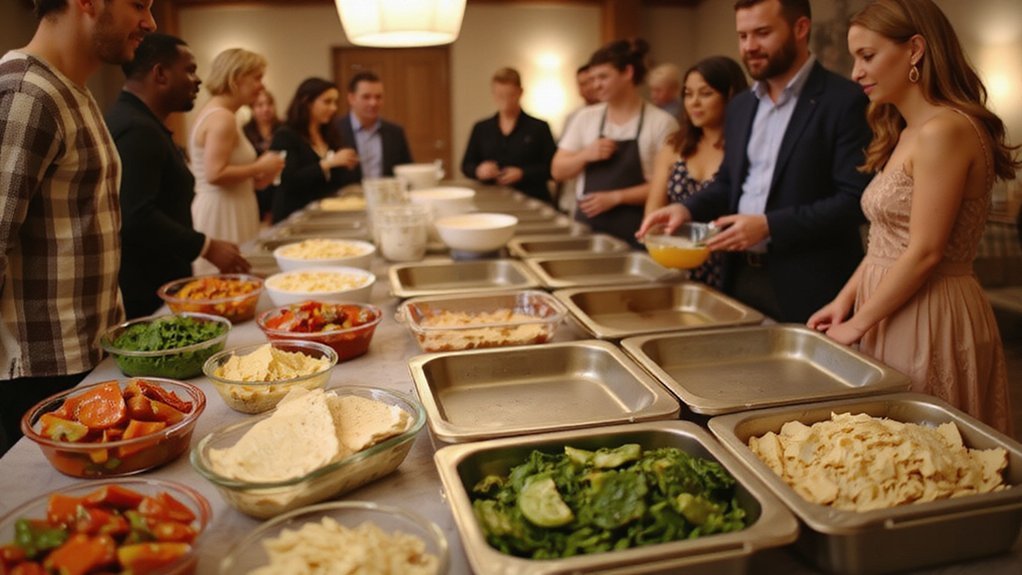
Usually, an omelet station works for parties because it lets guests customize meals on the spot, speeds service, and reduces waste by cooking to order. You’ll create a dynamic focal point that encourages Guest Interaction and gives attendees control over flavors, dietary needs, and portion size. You’ll streamline flow by sequencing stations, staffing skillful cooks, and signaling readiness with clear visual cues. You’ll cut waste and time while delivering made-to-order quality that elevates hospitality. You’ll also get an immediate Atmosphere Boost: the sizzle, live prep, and personalized plating turn feeding into entertainment. If you want innovation, prioritize menu modularity, rapid ingredient rotation, and straightforward labeling so guests make fast, informed choices without bottlenecks. Measure guest feedback and iterate quickly for continuous operational improvement today.
Essential Equipment and Tools
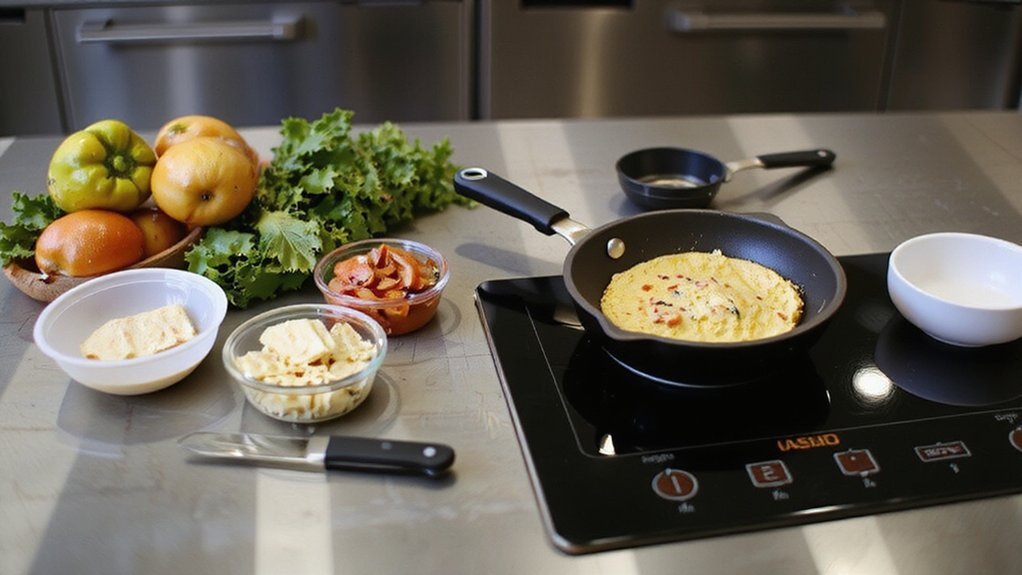
A well-equipped omelet station depends on a few reliable pieces of gear: griddles or flat-top ranges, heatproof pans or crepe griddles, a set of quality spatulas, and a mise en place setup for ingredients and condiments. You’ll also want precise measuring tools, digital thermometers, and spillproof containers so you can innovate consistently. Consider equipment ratings and Power requirements before buying; choose commercial-grade units if you’ll run extended service. Keep an inventory of Replacement parts—extra knobs, thermostats, and nonstick sheets—to avoid downtime. Invest in modular tools that swap between stovetop and griddle, magnetic utensil holders, and easy-clean surfaces. You’ll work faster, maintain safety, and iterate menu ideas without equipment bottlenecks. Plan maintenance schedules, train staff on controls, and document serial numbers for warranty and tracking.
Layout and Flow: Setting Up Your Station
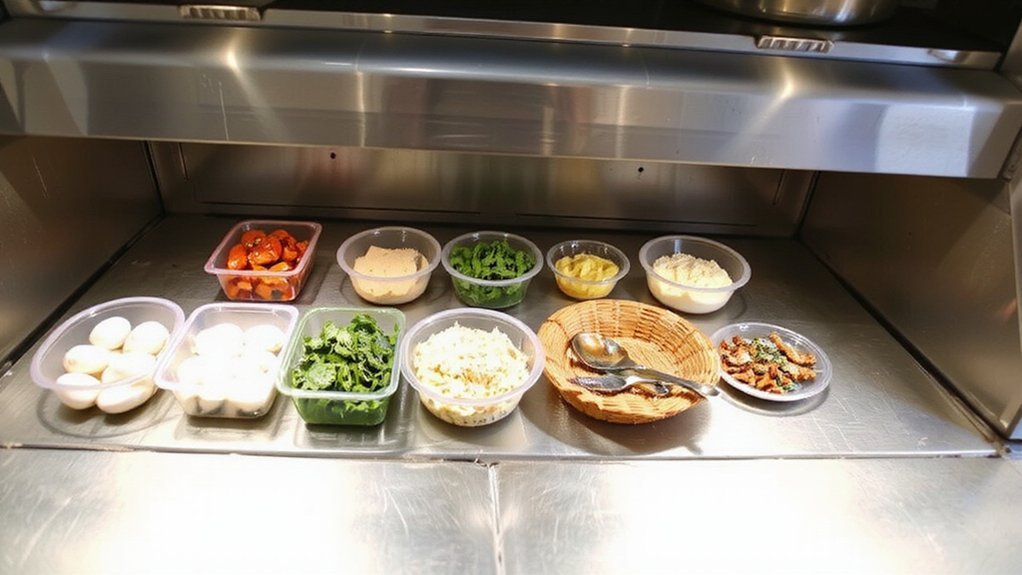
Set your omelet station so ingredients, tools, and heat sources sit within arm’s reach to keep service swift and safe. Place prep surfaces in a linear sequence: cold toppings, cheeses, cooked fillings, eggs, then hot griddles. Maintain consistent station spacing—18–24 inches per person—so multiple guests can assemble without crowding. Use raised bins and labeled containers to speed selection and reduce cross-contact. Position waste and utensil return at the far end to preserve traffic flow and prevent backtracking. Route power cords and gas lines away from the service edge and mark hot zones. Assign one attendant to monitor temperatures and replenish supplies. Test the layout with a dry run, time each step, and iterate until setup is efficient, ergonomic, and visually streamlined for peak performance.
Menu Planning for Every Diet
When planning your omelet menu for diverse diets, map core ingredients to common needs—vegetarian, vegan, gluten-free, dairy-free, low-carb, nut-free, halal/kosher—and offer clear, tested substitutions (tofu or chickpea batter for vegans, egg whites or cauliflower “rice” for low-carb, non-dairy cheeses) while labeling everything and segregating prep and service tools to prevent cross-contact. Prioritize modular toppings and sauces, curate seasonal menus to showcase peak produce, and design cultural adaptations that inspire inventive pairings without compromising safety. Offer composed signature bowls plus build-your-own options, and provide measured portions and allergen panels. Train staff to communicate substitutions confidently, rotate ingredients for freshness, and document recipes so you can scale successful combinations. You’ll deliver an inclusive, innovative experience guests remember. Collect feedback, refine offerings, and publish seasonal pairing guides.
Prep Checklist and Timing Guide
Having mapped core ingredients and substitutions to diets, you’ll want a precise prep checklist and timing plan that guarantees speed, safety, and consistency. Start by listing station tasks, critical temperatures, and sanitization checks; assign owners and build Volunteer Scheduling into shifts so responsibilities are explicit.
Turn ingredient mapping into a one-page prep checklist with station tasks, critical temperatures, sanitization, and assigned volunteers.
- Assign owners; schedule shifts via Volunteer Scheduling.
- Allocate Time Buffers for setup, checks, delays.
- Sequence equipment warm-up, service window, turnover.
Communicate the plan in one-page format; include contingency triggers and who acts when. During service, monitor clocks and log deviations for post-event iteration. You’ll iterate faster when timing data and clear roles let you streamline flow, reduce waste, and scale the concept confidently. Document outcomes and revise schedules after each event. Measure KPIs and update templates.
How to Prep, Store, and Label Fillings
Prep and portion fillings into uniform servings so you’ll serve quickly and waste less. Store perishable fillings in airtight containers and keep cold items below 40°F and hot items above 140°F, with clear use-by times. Label each container with content, prep date/time, and recommended hold time (for example, 48 hours for cooked vegetables, 24 hours for seafood) so you can rotate safely.
Prep and Portion Fillings
Chopping fillings ahead of service saves time and guarantees uniform cook times and presentation. You’ll adopt uniform dicing and weight batching to standardize pieces and portions; that consistency speeds cooking and elevates plating.
- Proteins: cube to 1/2″
- Veggies: uniform dicing
- Cheeses: shred or cube
Portion by weight into service containers so each omelet gets predictable yield; use clear scoops or small ramekins for speed. Chill prepared fillings quickly to maintain texture and food safety. During service, replenish small batches to keep temperature control and freshness. Focus on streamlined workflows: mise en place stations, containers, and dedicated utensils to prevent cross-contamination. Measure portions, record batch weights, and refine yields after the event for future events and improve costing annually. Track waste and adjust portions regularly.
Labeling and Storage Times
If you want consistent quality and safe service, label every batch with item name, prep date/time, discard date/time, and your initials, and store fillings in shallow, airtight containers for rapid cooling and clear visibility. You’ll apply consistent shelf-life based on Regulatory timelines and your own testing; document maximum hold times and refrigeration targets on the label. Use color-coded lids and compact labels that include allergen flags and prep notes. Implement Barcode traceability for high-volume setups so you can scan batches, log handoffs, and audit turnaround. Rotate stock FIFO, discard visibly compromised items immediately, and train staff to reject off-odor or texture changes. Keep a concise logbook and a digital backup so you can prove compliance and optimize service flow and reduce waste reliably daily.
Cooking Techniques for Perfect Omelets
When you master heat control and timing, you’ll consistently produce tender, evenly cooked omelets.
- Use low heat
- Whisk, strain, refine
- French fold at finish
You’ll favor patience over flame, keeping a thin butter film and steady pan temperature. Whisk eggs to homogeneity, pour, tilt, and gently push set edges to center; add fillings when curd is moist. Use residual heat to finish; remove early to prevent dryness. Adjust egg count to pan size and practice pulse stirring to create desired texture. Embrace small experiments: swap fats, tweak salt, test different pans. Log results and refine technique methodically. Innovation depends on repeatable control—measure variables, iterate deliberately, and you’ll produce consistent, elevated omelets for any build-your-own station. Repeat, perfect, and scale with precision.
Serving Strategies and Guest Experience
How will guests move through your omelet station without bottlenecks? Plan clear flow: intake, order, pickup. Use arrival coordination with staggered invites and visible queue markers. Position stations so tools and toppings are within arm’s reach; assign one cook per two guests to keep pace. Encourage guest engagement by offering quick demos and suggested combos on concise cards. Table below visualizes micro-zones.
| Intake | Cooking | Pickup |
|---|---|---|
| Sign-in | Hot griddle | Plated omelet |
Train staff to anticipate peaks, redirect lines, and refill silently. You’ll measure success by steady throughput and positive feedback; iterate using timing checkpoints and simple surveys to refine the experience. Adjust station spacing, monitor flow, collect suggestions, and implement rapid tweaks between service waves immediately.
Safety, Sanitation, and Allergen Control
Because cross-contact can cause life-threatening reactions and legal liability, you must establish strict sanitation and allergen protocols before service begins. You’ll map zones, label allergens, and train staff in Personal Hygiene and Emergency Response.
Prevent life‑threatening cross‑contact: set strict sanitation, zone mapping, allergen labeling, and staff training before every service.
- Color-code stations, utensils, and bins.
- Enforce glove changes, handwashing, and sanitizing.
- Post ingredient lists and confirm orders verbally.
Sanitize surfaces every 30 minutes with approved sanitizer and log actions. Train staff to recognize anaphylaxis and execute Emergency Response, including epinephrine use and calling emergency services. Innovate with disposable liners, touchless dispensers, and ingredient scanners to keep safety efficient and forward-thinking. Document incidents and review protocols after every service immediately. Measure compliance with simple audits and iterate protocols after feedback loops. Use data dashboards for continuous improvement daily.
Creative Toppings, Themes, and Presentation Ideas
Why not design toppings and themes that direct guests through bold flavor and striking visuals? You’ll curate stations with modular flavor lanes—Mediterranean, Smoky Southwest, Herbaceous Garden—each labeled and stocked with complementary ingredients. Offer textural contrasts: crisp shallots, roasted peppers, creamy chèvre, toasted seeds. Train staff to guide builds and suggest pairings to streamline choices. Use Edible artistry for plated samples and signature omelet displays that inspire guests to experiment. Rotate Seasonal garnishes to reflect local produce and color palettes, boosting freshness and narrative. Set out uniform containers, tongs, and clear allergen tags to maintain order. Finish presentations on warm platters and slate boards for contrast. You’ll elevate the experience while keeping flow efficient, creative, and safe. Guests will remember your thoughtful, bold culinary staging.
Conclusion
You’ll run a smooth, safe build‑your‑own omelet station by enforcing a linear flow with labeled bins, color‑coded utensils, preportioned fillings and one attendant per two guests; log hold times, segregate allergens, and stagger arrivals to keep pace and temperature. Offer clear substitutions (tofu, egg whites, non‑dairy cheese), display suggested combos, and collect quick feedback. Use the checklist and timing guide to refine staffing, reduce waste, and guarantee consistently fast, satisfying service for every single event.







Leave a Comment