

You’ll get more nutrients and less foam when you choose cold‑pressed juices over high‑speed juicers. They retain color, enzymes and flavor better, so your brunch drinks feel fresher and more satisfying. I’ll share practical recipes, timing and storage tips that actually work for a weekend spread—keep going to make a simple batch that holds up through service.
Why Cold-Pressed Beats Traditional Juicing
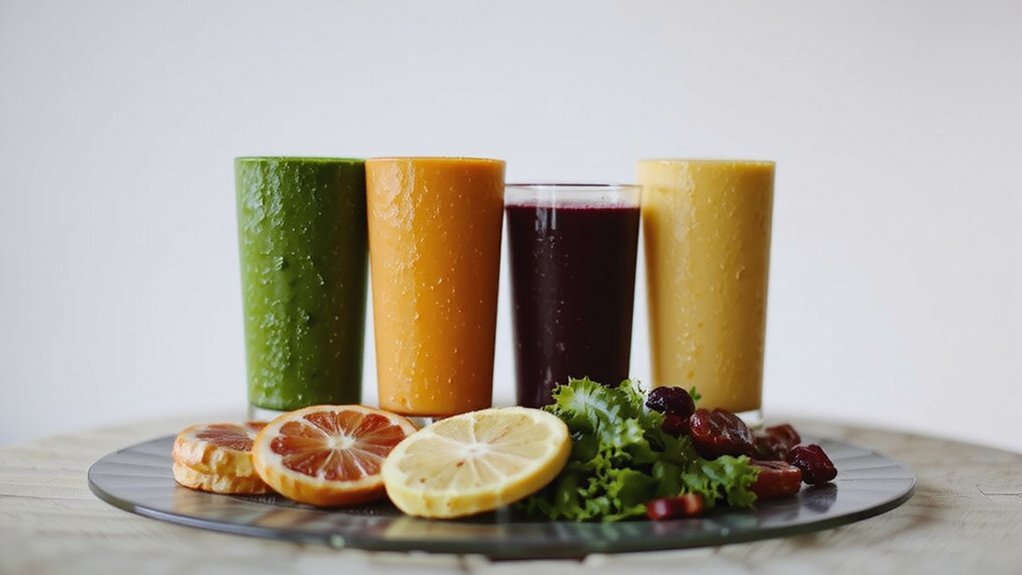
Because cold-pressing uses a slow hydraulic press instead of high-speed blades, it minimizes heat and oxidation, so you get more juice with higher nutrient and enzyme retention. You’ll notice clearer flavor and longer shelf stability because cell walls release liquid without heat-denaturing compounds. Studies show higher antioxidant and vitamin levels compared with centrifugal methods, which supports practical decisions for brunch menus or small-scale production. You’ll also reduce machine wear: gentle pressing improves equipment longevity and lowers maintenance frequency. Expect quieter operation too; significant noise reduction makes cold-pressing suited to open kitchens or co-working spaces. When you choose cold-press tech, you’re opting for measurable quality gains, operational efficiency, and an innovative edge that aligns with evidence-based foodservice practices. You can scale processes without sacrificing quality.
Green Energizer: Kale, Apple & Ginger
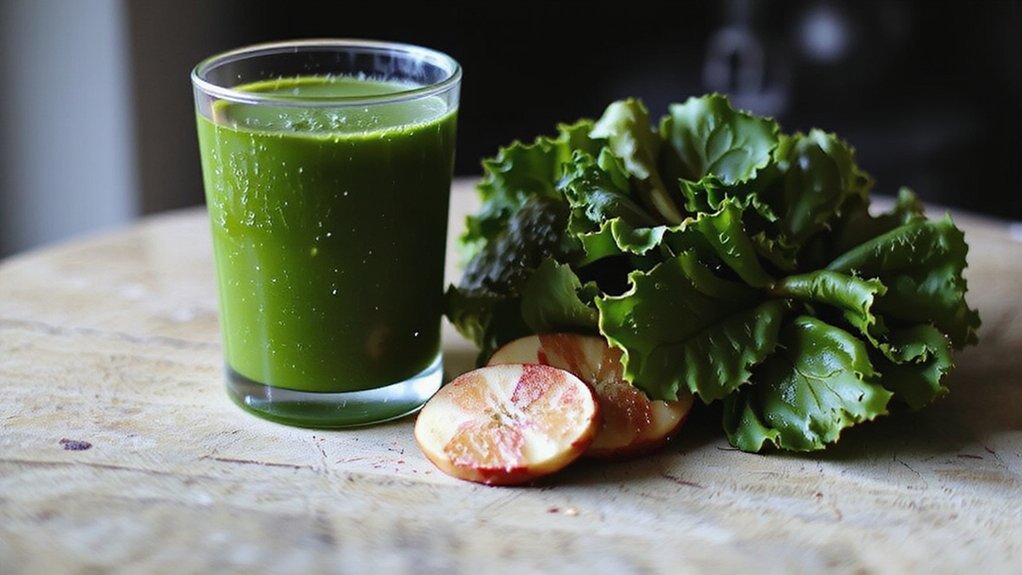
Why choose a kale-apple-ginger blend? You get concentrated nitrates from kale for circulation, vitamin C from apple for absorption, and ginger for digestion and anti-inflammatory effects. When you cold-press, retain more phytonutrients than heat methods; choose kale sourcing from young leaves or trusted organic suppliers to minimize bitterness and contaminants. Balance flavor: use sweeter apples to offset raw kale. For ginger dosage, start with 10–20 grams per liter of juice and adjust for tolerance—more can increase potency but may overwhelm delicate greens. You’ll want to rinse produce, trim stems, and juice promptly to limit oxidation. Store the finished juice in an airtight container, chilled, and consume within 48 hours for maximum nutrient retention and sensory quality. Experiment with ratios to match personal energy needs.
Citrus Refresher: Orange, Grapefruit & Mint
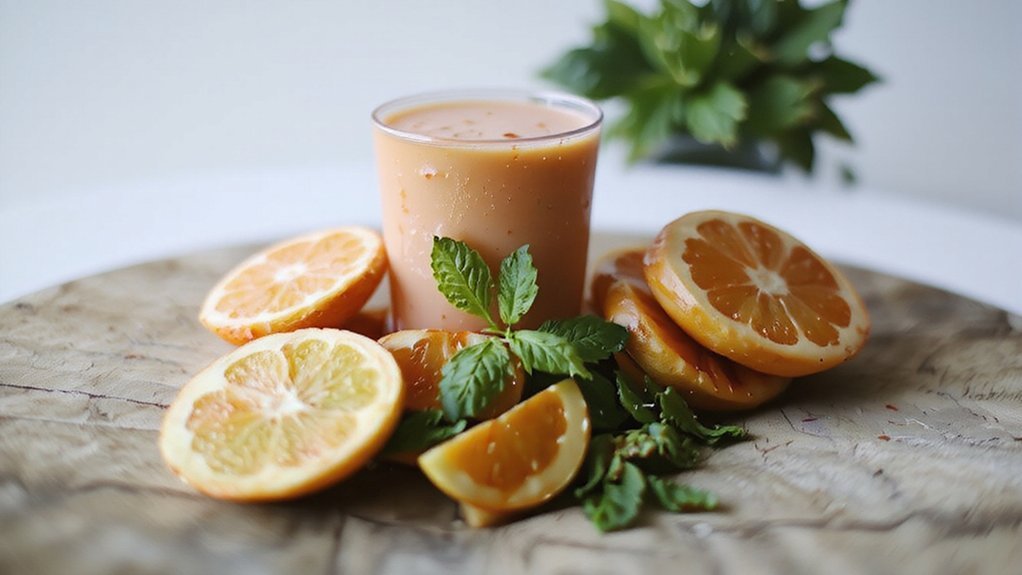
You’ll balance bright citrus by pairing sweet orange with tart grapefruit to moderate acidity and boost vitamin C. You’ll add a handful of fresh mint to provide a cooling aroma and soften bitterness without masking the citrus. When you cold-press, remove seeds, trim thick rinds, chill the fruit, and feed citrus and mint alternately to maximize yield and preserve volatile oils.
Bright Citrus Balance
How does a simple blend of orange, grapefruit, and mint deliver a bright, balanced cold-pressed juice? You optimize sweetness-acidity interplay by selecting ripe oranges and slightly under-ripe grapefruit to control bitterness and pH, producing a stable sensory profile. You apply mouthfeel modulation via pulp fraction and brief enzyme clarification to adjust viscosity without heat. Aroma layering comes from zonal juicing: peel oils sparingly, flesh for freshness, and a measured mint infusion for top notes. Measure ratios (2:1 orange to grapefruit, pinch of peel oil, few leaves) and test brix and titratable acidity to standardize outcomes. This approach gives repeatable brightness, nutrient retention, and a clear template for creative iterations. You can scale quantities linearly, recording adjustments to maintain consistency across batches and shelf-life stability.
Mint’s Cooling Role
While mint’s menthol molecules bind cold receptors and create a cooling sensation, you can control that effect to sharpen the citrus refresher rather than overwhelm it. You’ll adjust leaf quantity, bruising intensity, and pairing to calibrate thermal perception and preserve citrus brightness. Evidence shows moderate mint increases perception of coolness while enhancing perceived acidity via aroma modulation. Use small batches to test ratios and note sensory changes; prefer younger leaves for subtlety. The table summarizes practical variables.
| Variable | Effect | Recommendation |
|---|---|---|
| Leaf amount | Cooling | Start 3-5 leaves |
| Bruising | Release aroma | Light bruise only |
| Pairing | Balance acidity | Grapefruit+orange |
Apply these parameters to innovate balanced, repeatable recipes. Record measurements and tasting notes so you can iterate rapidly and refine sensory targets precisely; consistently repeatable.
Juicing Technique Tips
Carry the mint calibration into your extraction method so cooling notes stay subtle and citrus brightness comes forward. You’ll adjust feed rate, pressure and pulp separation to preserve volatile aromatics and prevent bitterness. Prioritize machine maintenance, documenting blade sharpness, seal integrity and juicing screen condition after each run. Run a concise Safety checklist before startup: secure lids, check grounding, confirm emergency stop. Use short, repeatable cycles and cold-water rinses to limit heat build-up; studies show lower temperatures retain flavor compounds. Imagery helps:
- clear pulp like pale velvet,
- bright oil droplets on surface,
- mint flecks suspended in juice.
Measure outcomes, compare batches, and standardize the winning parameters regularly now. Log pH, temperature and Brix after each run to accelerate reproducible innovation daily.
Floral Immune Booster: Turmeric, Pineapple & Rose
Because turmeric, pineapple and rose each supply complementary bioactives, this cold-pressed blend targets inflammation and immune resilience. You’ll combine fresh turmeric root for curcumin, ripe pineapple for bromelain and rose petals for polyphenols and aromatic flavonoids, nodding to turmeric folklore and rose perfumery while staying scientific. Use a low-speed press, keep pulp minimal, and add a pinch of black pepper to enhance curcumin absorption. Consume within 24 to 36 hours refrigerated to preserve enzymes and vitamin C. Start with 1 inch turmeric, 1 cup pineapple, and a tablespoon of petals; adjust intensity to taste. This protocol gives you a potent, drinkable concentration without supplements, letting you innovate brunch offerings grounded in measurable phytochemistry and practical technique. Label batches and note ingredient sources for reproducibility.
Hydrating Cucumber-Lime Cooler
After the anti-inflammatory floral blend, switch to a crisp Hydrating Cucumber-Lime Cooler that focuses on rapid rehydration and mild electrolyte replenishment. You’ll press cucumber for water and potassium, add lime for vitamin C, and use a small pinch of sea salt to support sodium balance. Prioritize glassware styling with clear tumblers and plan brunch photography with natural light. Keep prep scalable and strain for texture.
- Crisp cucumber slices
- Thin lime wheels
- Tiny sea-salt pinch
You can batch the cooler for brunch service, adjust acidity for guests, monitor sodium for sensitive diets, and label bottles for speed; these steps make the recipe reliable for creative menus and increase impact in taste and imagery.
Beetroot Bliss: Beet, Carrot & Apple
You’ll get a nutrient-rich boost from beetroot, carrot, and apple—beets provide dietary nitrates for circulation, carrots add beta‑carotene, and apples contribute vitamin C and natural sweetness. For best enzyme and color retention, use a cold-press or slow masticating juicer and process beets in small chunks to avoid motor strain. Wash and peel beets if their origin is uncertain, alternate hard and soft produce in the feed chute, and drink within 48 hours for peak freshness.
Nutritional Benefits
While the juice keeps less fiber than whole produce, drinking Beetroot Bliss delivers concentrated nutrients that can support circulation, vision, and immune function. You get nitrates from beetroot that enhance blood flow and exercise performance, beta‑carotene from carrot for retinal health, and vitamin C from apple to boost micronutrient absorption and antioxidant synergy, helping you recover faster and protect cells. This is practical fuel for a brunch that prioritizes efficacy and innovation.
- Deep red beetroot: visualizes blood‑flow benefits and earthy complexity.
- Bright orange carrot: evokes vision support and sweet vegetal warmth.
- Crisp apple: suggests vitamin C lift and revitalizing balance.
Portion control and timing will refine benefits without excess calories or sugar spikes substantially. Consume alongside whole foods for balanced fiber and sustained energy.
Juicing Techniques
Maximizing the circulation, vision, and antioxidant benefits you read about depends on how you juice Beetroot Bliss, so adopt techniques that preserve nitrates, beta‑carotene, and vitamin C. Start with firm, cold produce: chill beets, carrots, and apples to slow oxidation. Cut uniformly to reduce mechanical stress and feed slowly into a low-speed or masticating juicer to limit heat. Rotate harder and softer items—alternate beet and apple—to improve extraction. Use immediate aeration control: collect juice in a sealed container and top with a thin layer of water or lemon to protect vitamin C. Practice disciplined pulp management: press leftover pulp for a second yield or compost. Schedule regular juicer maintenance: disassemble, rinse promptly, and deep-clean parts to preserve performance and hygiene. Measure yields and adjust.
Tropical Sunrise: Mango, Pineapple & Coconut Water
In the morning, a Tropical Sunrise made from mango, pineapple, and coconut water gives a bright, nutrient-dense start that’s both hydrating and rich in vitamin C and beta‑carotene. You can cold‑press ripe mango and pineapple to preserve enzymes and antioxidants while coconut water restores electrolytes.
- Golden mango flesh
- Sun-ripened pineapple rings
- Clear coconut lagoon
Focus on island origins when sourcing fruit to enhance trace mineral profiles and support flavor layering that balances sweetness and acidity. Use a 2:1 fruit-to-coconut ratio for body, and pulse slowly to minimize oxidation. Chill and serve to maximize nutrient retention. Practical variations include adding squeeze of lime, pinch of salt, or swapping young coconut water for fuller-bodied versions depending on hydration needs and textural preference.
Herbaceous Green: Spinach, Celery & Parsley
After enjoying the sweeter Tropical Sunrise, switch to a Herbaceous Green that balances spinach, celery, and parsley for a nutrient-forward morning boost. You’ll blend crisp celery with tender spinach and bright parsley to deliver concentrated vitamins, minerals, and antioxidants. This combination emphasizes Chlorophyll Benefits for cellular health and supports Iron Absorption when paired with a squeeze of citrus. You’ll keep ratios roughly 2:1:1 (spinach:celery:parsley) to maintain flavor and yield. Cold-pressing preserves delicate phytonutrients, so you’ll get a fresher green profile than high-heat juicing. For innovation, try adding a thin slice of ginger or fennel frond to refine complexity without masking greens. Drink within hours for peak flavor and nutrient potency. Adjust ingredient proportions to match your palate and daily functional goals and hydration needs.
Prep, Storage & Batch-Pressing Tips
Prepping produce thoroughly and keeping everything cold will make your batch-pressing more efficient and preserve nutrients: rinse and dry greens and herbs to remove soil and reduce microbial load, trim fibrous stems where needed, and chop firmer items (celery, apple, cucumber) into uniform pieces so the press extracts evenly.
- Cold-rinse
- Rapid chill
- Log batch bottles info
Use a clear Sanitation Protocols checklist: sanitize surfaces, cold-water rinse, and sanitize strainer parts between runs. Batch-press similar-density ingredients to optimize yield and reduce oxidation. Cool juices immediately and employ a Labeling System with press date, contents, and pH estimate. Store bottles upright at ≤4°C and consume within 48–72 hours for best quality. Visual cues help: color shifts and off-odors indicate spoilage; discard if doubtful.
Pairings: Which Juices Complement Popular Brunch Dishes
Why match juices to brunch dishes? You enhance digestion, balance flavors, and elevate presentation based on acidity, fat, and aroma. Pairings grounded in taste science boost enjoyment and nutrient synergy.
| Dish | Juice Match |
|---|---|
| Avocado Toast | Grapefruit, mint |
| Eggs Benedict | Lemon-ginger |
| Pancakes | Apple-cinnamon |
| Cheese Boards | Pear-elderflower |
Choose citrus or acidic blends with rich, fatty items to cut heaviness; use sweeter, low-acid juices with pastries. For Cheese Boards, select aromatic, slightly tannic blends to mirror cheeses. Measure sweetness and pH when scaling recipes, and taste-test small batches. You’ll create innovative, evidence-based combos that guests notice and remember. Start with 100–200 ml portions, label bottles with juice components and pressing date, and iterate quickly to refine acidity-sweetness balance for each menu item based on guest feedback regularly.
Conclusion
When you choose cold-pressed juices for brunch, you’ll preserve more nutrients, color, and flavor than with traditional centrifugal juicers. Tailor blends—Green Energizer or Tropical Sunrise—with ginger, lime, or black pepper to aid digestion and absorption. Batch-press similar produce, chill immediately, label bottles, and serve 100–200 ml portions beside rich dishes. These evidence-based, practical steps help you deliver fresher, safer, nutrient-dense drinks your guests will actually enjoy. Rotate inventory and consume within 48–72 hours for safety.







Leave a Comment