Start by planning 20 breakfasts: prep 2 batches of dough, 1 cup butter chilled for laminating croissants, 3 eggs for tamagoyaki, 2 cups batter ready for dosa, 1 tbsp za’atar for manakish. Follow timing: chill dough 30–60 minutes, cook eggs low and slow, simmer sauces 10–15 minutes. Use these precise techniques to build a reliable morning rotation—then pick which recipe you’ll master first.
French Croissants
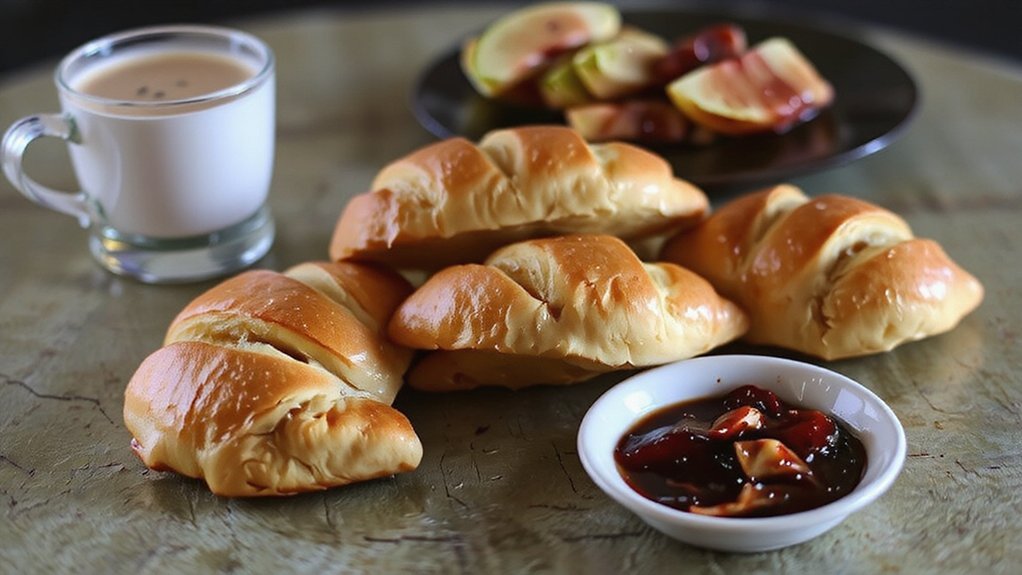
If you want reliable, flaky French croissants, start by mixing 500 g strong (bread) flour, 10 g fine salt, 55 g caster sugar, 10 g instant yeast, 300 ml cold milk, and 50 g softened butter into a smooth, slightly tacky dough; knead 6–8 minutes, then rest 30 minutes chilled. Roll dough to 1 cm, square, and encase 250 g cold butter for classic butter lamination; perform three double folds with 30–40 minute chills between, keeping temperature 4–8°C. For Almond filling, prepare 150 g almond paste, 60 g powdered sugar, 40 g egg, 20 g softened butter; pipe into cooled croissants or use as frangipane layer. Proof shaped croissants at 24–26°C until doubled, egg wash, bake 200°C for 15–18 minutes until deep golden finish.
Japanese Tamagoyaki
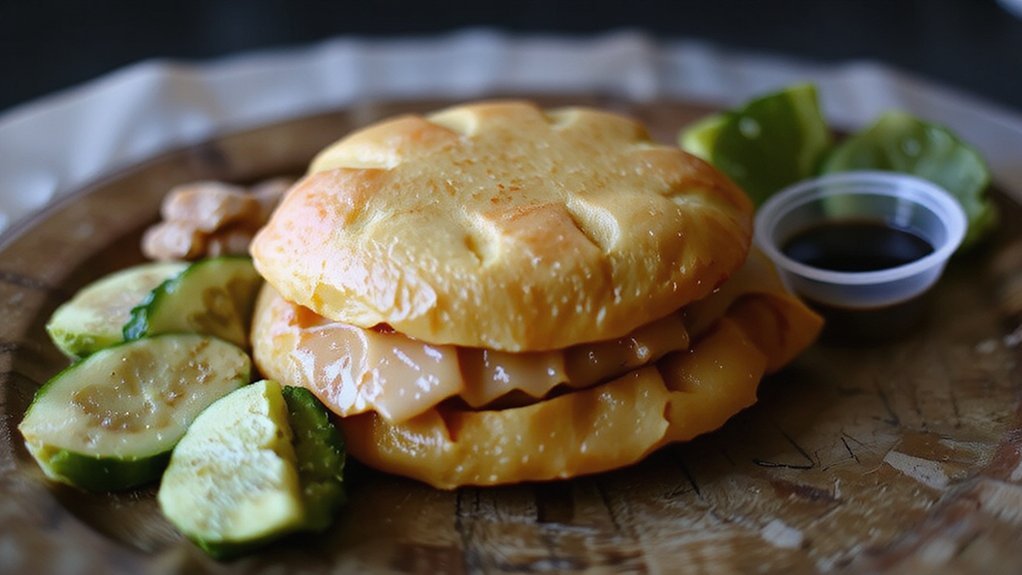
Tamagoyaki is a Japanese rolled omelette made by layering thin cooked sheets of egg for a sweet-savory texture; you’ll use a rectangular tamagoyaki pan if you have one. Beat 4 eggs with 1 tbsp sugar, 1 tbsp mirin, 1 tsp soy sauce, and a pinch of salt, then strain for a smooth custard. Heat a lightly oiled pan over medium, pour a thin layer, cook until just set but still moist, roll it toward you with a spatula, push the roll to the far side, oil the pan, add the next layer, and repeat until done.
What Is Tamagoyaki
How do you make it? You start with 4 large eggs, 30 ml dashi, 1 tsp soy sauce, 1 tbsp mirin, 1 tsp sugar, pinch salt. Whisk eggs until homogeneous, strain, then combine with liquids to highlight an umami profile and subtle sweetness rooted in culinary history. Heat a 20×15 cm tamagoyaki pan or nonstick skillet over medium-low, brush 5 ml oil, wipe excess. Pour ¼ cup (60 ml) egg mixture, tilt pan to cover, cook until surface sets but remains moist, lift edges to let uncooked egg flow underneath. Repeat layering with remaining mixture, maintaining consistent 60–90 second cooks per layer and adjusting heat to avoid browning. Rest 2 minutes before slicing; serve warm or room temperature. Experiment fillings like shiso or yuzu.
How to Roll
After the final layer has nearly set, oil a silicone spatula or a pair of chopsticks with 2–3 ml neutral oil and place them at a 30° angle against the far edge of the pan. Tilt the pan toward you, lift the edge of the cooked strip with the oiled tool, and roll it away from you in smooth motion. Push the roll back to the far edge, brush 5–10 ml egg mixture for next layer, and repeat. Use micro-adjustments to control thickness; aim for 6–8 thin layers for a balanced texture. For advanced Rolling Techniques, experiment with angled lifts and wrist rotation compactness. Finish with Seam Sealing: press the final edge down with the spatula for 5–10 seconds, cool on a bamboo mat.
Mexican Chilaquiles
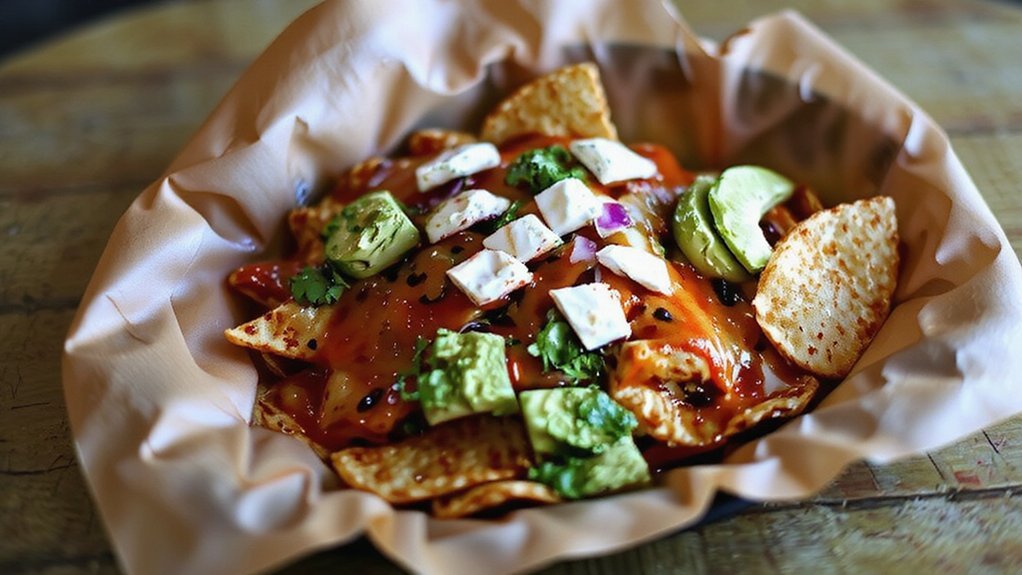
Cut 12 corn tortillas into 8 wedges, heat 2 tbsp oil in a skillet and fry in batches until crisp (about 2–3 minutes per side), then drain on paper towel. Warm 2 cups salsa roja or salsa verde in a saucepan, simmer 4–5 minutes to reduce excess water, then toss chips with 1/2 cup of the salsa off-heat so they stay slightly crisp. Top with crumbled 1/3 cup queso fresco, 2 tbsp crema, sliced avocado, thinly sliced red onion, chopped cilantro and a fried egg per serving, and serve immediately.
Classic Chilaquiles Recipe
Once you’ve gathered 10–12 day-old corn tortillas (cut into 6 wedges), 1/2 cup neutral oil, 2 cups heated red salsa, 1/4 cup thinly sliced white onion, 1/2 cup crumbled queso fresco, 2 tablespoons crema, 2 tablespoons chopped cilantro, 4 eggs (optional) and salt, fry the tortilla wedges in 1/4–1/2 cup oil in batches 1–2 minutes per side until crisp and golden, drain on paper, bring the salsa to a simmer, add the chips and toss gently 2–3 minutes until they’re coated and just softened (not mushy), then plate and finish with onion, queso, crema, cilantro and a fried egg per serving if desired. Adjust chile selection, embrace sauce layering; crispness is key, reserve extra chips, and always serve immediately for ideal texture and contrast.
Salsa Choices and Tips
Now that your chips are fried and your toppings are ready, choose a salsa that matches the texture and heat you want: for 10–12 tortilla wedges plan on 1½–2 cups (375–500 ml) of sauce. Pick roasted salsa for depth: roast 4 tomatoes, 1 onion, 2 cloves garlic, 2 jalapeños; blend. For fresher bite try salsa verde: boil 10 tomatillos 5 minutes, blend with ¼ cup cilantro, 1 serrano. Innovation: use Fruit salsas—blend 1 mango with ½ cup pineapple, 1 tbsp lime, 1 chili.
| Type | Heat | Notes |
|---|---|---|
| Roasted | Medium | Char |
| Verde | Mild | Tang |
| Fruit | Low | Sweet |
Table compares profiles and Preservation methods to guide batch size and storage. You’ll heat to meld flavors; store in airtight jars 5 days or freeze in ½‑cup portions.
Toppings and Serving Ideas
While the chips stay crisp, assemble chilaquiles by layering 4 cups (about 400 g) fried tortilla wedges with 2 cups (475 ml) warm salsa, tossing gently to coat. Top immediately with 2 large eggs fried sunny-side up or poached, spacing evenly. Scatter 1/2 cup (60 g) crumbled queso fresco, 1/4 cup (15 g) chopped cilantro, and 2 tbsp thinly sliced red onion. Add 1 avocado, sliced, fanned over center. For seasonal garnishes, select microgreens, pickled radishes, or roasted corn kernels—use 2–3 small additions to refresh flavor. Finish with 1 tbsp crema or sour cream, a squeeze of 1 lime, and 1 tsp toasted sesame or pumpkin seeds for texture contrasts. Serve on warm plates; let diners mix; you’re preserving crispness. Adjust salt to taste.
Turkish Menemen
If you want a classic Turkish menemen, heat 2 tablespoons olive oil in a skillet over medium heat, add 1 diced green pepper (or 1 small onion, optional) and sauté 3–4 minutes until softened; stir in 2 cups (about 400 g) peeled, diced tomatoes and 1/2 teaspoon salt, simmer 8–10 minutes until the mixture is thick and liquid has reduced. Lower heat, create wells, crack 4 eggs into tomato mix, season with 1/4 teaspoon black pepper and 1/2 teaspoon Aleppo pepper or crushed red pepper, and cook 4–6 minutes for runny yolks or 7–9 for set yolks. Finish with 2 tablespoons chopped parsley. Explore regional variations by adding feta or sucuk; serve with warm crusty bread—recommendations for bread pairings: simit, pide, or country loaf.
Indian Masala Dosa
You should soak 2 cups parboiled rice and 1 cup split urad dal (plus 1/2 tsp fenugreek) for 4–6 hours, grind with 1/2–3/4 cup water to a smooth, slightly coarse paste, and ferment 8–12 hours until airy and mildly tangy. Adjust to a pourable, ribbon-like consistency with water (aim for about 1:1.2 rice:water by volume after grinding), add 1/2 tsp salt, and spread thin on a hot, lightly oiled cast-iron or nonstick skillet at medium heat. For the masala, you’ll boil and mash 3 medium potatoes, heat 1 tbsp oil, temper 1 tsp mustard seeds and 8–10 curry leaves, sauté 1 chopped onion with 1/2 tsp turmeric and 1 tsp chili powder, then fold in potatoes and 1 tbsp chopped cilantro.
Dosa Batter Basics
How do you make a dependable dosa batter? You’ll use 2 cups white rice, 1/2 cup urad dal, and 1 teaspoon fenugreek seeds. Rinse, then soak rice 4 hours, dal 4 hours together; drain.
- Soak ratios: 2:0.5 rice:dal for crispness.
- Grind Ratios: coarse rice then fine dal; combine to 1:1.5 water by weight.
- Fermentation Time: 8–12 hours at 30°C for tang and bubbles.
- Salting: add 1 teaspoon salt after fermentation.
Grind rice to slightly gritty texture, dal to velvet paste. Mix gently, cover loosely for even fermentation. Adjust water to batter that coats a spoon—pourable but thick. Use immediately after desired rise. For innovation, experiment with 10–20% parboiled rice or millets to change crispness and flavor complexity and aroma notes.
Potato Masala Filling
Mashing 500 g waxy potatoes (about 3 medium) after boiling 20–25 minutes until fork‑tender gives the base for this filling: peel and roughly mash them, set aside. Heat 1 tbsp oil, add 1 tsp mustard seeds, 1 tsp cumin, and 8 curry leaves; temper until seeds pop. Sauté 1 medium sliced onion 5 minutes, add 2 green chiles, 1 tsp turmeric, 1 tsp salt. Stir in mashed potatoes, 2 tbsp chopped cilantro, 1 tbsp lemon juice; adjust for Spice Balance. Press mixture to test Texture Contrast: smooth yet chunky. Serve warm inside dosas.
| Component | Amount | Purpose |
|---|---|---|
| Potatoes | 500 g | Bulk, texture |
| Spices | varied | Flavor balance |
| Cilantro | 2 tbsp | Freshness |
You can tweak chilies and lemon to innovate without losing authenticity or texture experiments regularly.
American Pancakes With Maple Syrup
Start by whisking 1 1/4 cups (160 g) all-purpose flour, 2 tbsp granulated sugar, 1 tbsp baking powder, and 1/2 tsp fine salt in a bowl; in a separate bowl, whisk 1 cup (240 ml) milk, 1 large egg, and 2 tbsp melted butter until combined, then fold wet into dry until just moistened (a few lumps are fine) and let the batter rest 5–10 minutes. Heat a nonstick skillet over medium, brush 1 tsp butter, pour 1/4 cup batter, cook 2–3 minutes per side until golden. For innovation, try buttermilk variations or gluten free options to modify flavor and texture. Keep heat steady; minimal stirring yields tender pancakes.
- Use 1/4 cup
- Preheat skillet
- Rest 5–10 min
- Low-medium heat always
Spanish Tortilla Española
When you’re ready, peel and thinly slice 1 lb (450 g) waxy potatoes into 1/8-inch (3 mm) rounds and thinly slice 1 medium yellow onion; you’ll want uniform pieces so they cook evenly. Heat 3 tbsp olive oil in a 10-inch nonstick skillet over medium-low, add potatoes and onion, season 1 tsp salt, and cook 20–25 minutes, stirring occasionally, until tender but not browned. Whisk 6 large eggs with 2 tbsp milk, fold in cooled potato mixture, and adjust seasoning. Return 1 tbsp oil to skillet, pour mixture, cook 4–6 minutes until edges set. Flip using a plate, cook 2–3 minutes more. Note the Onion debate and explore Regional variations by adding chorizo, manchego, or herbs. Serve warm or room temperature; cut into wedges immediately.
Greek Bougatsa
To make bougatsa, you’ll layer 8 sheets of phyllo in a greased 23×33 cm pan, brushing each sheet with 30 g melted butter and folding 2 cm edges to seal. For sweet bougatsa, you’ll pour 500 ml vanilla custard (or a 250 g semolina custard) into the phyllo and dust with 1 tbsp powdered sugar; for savory, you’ll use 300 g crumbled feta with 150 g sautéed spinach, 1 tsp oregano and pepper. Bake at 180°C (350°F) for 35–40 minutes until golden, then rest 10 minutes before cutting and serving warm.
What Is Bougatsa
Bougatsa is a Greek phyllo pastry filled with a sweet semolina custard or a savory cheese mixture; you’ll assemble it by layering 6–8 sheets of phyllo, brushing each with 40–60 g (3–4 tbsp) melted butter, enclosing about 500 g of filling, sealing the edges, and baking at 190°C (375°F) for 25–30 minutes until the phyllo’s crisp and golden. Preheat, measure, and work quickly so sheets stay pliable; use a pastry brush and a shallow tray for even browning. Note origin history; aim for a clear texture profile: flaky exterior, tender interior. Innovate shape and finish.
- Layering: overlap 2 cm, 6–8 sheets.
- Buttering: 40–60 g per sheet.
- Filling: 500 g, smooth semolina or cheese.
- Baking: 190°C, 25–30 min; rotate once evenly.
Sweet Vs Savory
Although both versions use the same phyllo technique, you must pick fillings and finishes precisely: for sweet, prepare 500 g semolina custard (80–100 g sugar, 500 ml milk, 40 g butter, 1 tsp vanilla), layer 6–8 phyllo sheets brushing each with 30–40 g melted butter, enclose the custard, bake at 190°C (375°F) for 25–30 minutes, then dust with 10–15 g powdered sugar and a pinch (≈1 g) ground cinnamon; for savory, mix 500 g cheese (e.g., 300 g ricotta + 200 g feta), 1 beaten egg, 5 g salt and 5 g black pepper, layer 6–8 phyllo sheets brushing each with 40–60 g melted butter, seal and bake 25–30 minutes at 190°C, finishing with a light drizzle of olive oil or a sprinkle of sesame seeds. You’ll prioritize Flavor Pairing and Texture Contrast; tweak fillings, crispness and finishing touches to innovate.
Ethiopian Injera With Firfir
A cast-iron skillet and a well-fermented teff batter will give you authentic injera; mix 2 cups teff flour (or 1 cup teff + 1 cup all-purpose for a milder flavor) with 2–2½ cups lukewarm water, whisk until smooth, cover and let ferment at room temperature 24–48 hours until tangy and bubbly, stir in ½ teaspoon salt. Heat skillet over medium, pour ½ cup batter, swirl to a thin round, cook covered 1–2 minutes until holes form; cool rack. For firfir, tear injera, sauté 1 chopped onion and 1 minced garlic in 2 tbsp niter kibbeh or oil, add 1 cup cubed injera, 1 tbsp berbere, 2 tbsp water, simmer 3 minutes. Teff fermentation, Firfir variations.
Ferment teff 24–48 hours, cook thin injera in cast-iron until holes form; tear and sauté for spicy firfir.
- Crisp
- Swirl
- Adjust
- Innovate
Israeli Shakshuka
Heat 2 tablespoons olive oil in a 10-inch skillet, sauté 1 small chopped onion and 1 diced red pepper for 5 minutes, add 2 cups crushed tomatoes and simmer 10 minutes until thick.
Stir in 1 teaspoon ground cumin, 1 teaspoon smoked paprika, 1/4–1/2 teaspoon chili flakes and 1 teaspoon salt, make 4 wells, crack in 4 eggs, cover and cook 6–8 minutes for runny yolks.
You’ll serve shakshuka straight from the pan with crusty bread, crumbled feta, chopped parsley or cilantro, and optional olives or a lemon wedge.
Classic Tomato-Poached Eggs
Sweating 2 tbsp olive oil in a 10–12-inch skillet, cook 1 medium diced onion and 1 diced red bell pepper over medium heat until softened, about 6 minutes; add 3 minced garlic cloves, 1 tsp ground cumin, 1 tsp sweet paprika and 1/4–1/2 tsp red pepper flakes and cook 30 seconds until fragrant. Add 28 oz crushed tomatoes, 1 tsp sugar, 1 tsp kosher salt, simmer 10–12 minutes to reduce and check acid balance; adjust with a squeeze of lemon. Make four wells, crack in 4 large eggs, cover and cook 6–8 minutes for set whites and runny yolks. Use proper pan selection for even heat. Serve with chopped cilantro and crusty bread.
- Heavy skillet
- Reduce sauce
- Keep yolks
- Finish
Spice Variations & Tips
While the onions and peppers soften, bloom your spices in the oil—add 1 tsp ground cumin, 1 tsp sweet paprika and 1/2–1 tsp smoked paprika (optional) to the pan and cook 30–45 seconds until fragrant; then stir in 1/4–1/2 tsp red pepper flakes or 1 tsp harissa paste for heat. Keep a tight spice ratio: 1:1 cumin to sweet paprika maintains balance; smoked paprika adds depth, not dominance. For Heat Matching, taste the tomato base before adding extra chile; adjust red pepper flakes in 1/8 tsp increments. Use Aroma Layering: add pinch of ground coriander with tomatoes, finish with 1 tsp chopped cilantro or parsley off-heat. If you want citrus brightness, add 1 tsp lemon zest. Document each change so you can replicate variations.
Serving Suggestions & Sides
After you’ve adjusted spices and finished the sauce, plate shakshuka for sharing: ladle 300–350 g sauce into a shallow 25–28 cm skillet or serving bowl, leaving the egg wells visible; nestle 2–4 eggs evenly, cover, and rest 1–2 minutes off-heat so residual heat sets whites.
- Swirl 15 g butter for sheen, 10 g parsley, 5 g feta.
- Tilt skillet to expose yolks; use Plating Techniques that contrast color.
- Offer Seasonal Pairings: 50 g arugula salad with lemon; 50 g roasted peppers.
- Serve 150–200 g warm bread, or 100 g labneh with za’atar for texture.
Maintain heat: return to low flame 30–60 seconds if whites aren’t set. Finish quickly; plate for sharing immediately. You’ll impress with balanced texture and bold contrast.
Brazilian Açaí Bowl
Açaí base: place 100 g frozen unsweetened açaí puree, 1/2 frozen banana, and 60 ml (1/4 cup) cold coconut water or orange juice in a high-speed blender; add 1 tsp agave or honey only if you want sweetness. Use pulse then blend 30–45 seconds until thick, scoop into chilled bowl. Emphasize Sustainable Harvesting when sourcing açaí for Superfood Benefits. Top: 50 g granola, 70 g mixed berries, 1 tbsp chia seeds, 1 tbsp sliced almonds. Technique: keep mixture dense — add 15 ml water only if needed. Serve immediately.
| Component | Amount |
|---|---|
| Açaí puree | 100 g |
| Banana | 1/2 |
| Liquid | 60 ml |
| Granola | 50 g |
Chill bowls beforehand; rotate toppings for texture contrast; experiment with cacao nibs, bee pollen, or lime zest for creative accents today.
British Full English Breakfast
For a classic Full English, work to a timed sequence so everything finishes hot: heat a large frying pan over medium-low, add 1 tbsp vegetable oil and cook 2 pork sausages for 10–12 minutes, turning regularly; move sausages to a warm plate, raise heat to medium-high and fry 2 rashers back bacon 3–4 minutes per side until crisped, then keep warm. Next, wipe pan; add 1 tsp butter; cook 2 eggs fried 2–3 minutes; sear 100g mushrooms in tbsp oil 3–4 minutes; grill 2 tomatoes 2 minutes down; warm toast. You plate to keep heat and crisp textures. Consider regional variations and vegetarian alternatives:
- Swap black pudding for spiced sausage.
- Use halloumi for a protein.
- Add baked beans.
- Finish with herbs and lemon zest.
Moroccan Bastilla-Style Breakfast Pie
Combining North African spices with flaky phyllo, this bastilla-style breakfast pie serves 4 and cooks in about 45 minutes: preheat the oven to 200°C/400°F (180°C fan), then cook 200 g merguez (casings removed) in a 25 cm skillet over medium for 6–8 minutes, add 1 small onion (150 g) diced and 1 tsp ras el hanout plus ½ tsp ground cinnamon and sauté 3–4 minutes until softened; beat 6 large eggs with 1 tsp salt and ¼ tsp black pepper, pour into the skillet and scramble gently until just set (2–3 minutes), fold in 50 g toasted ground almonds and 1 tbsp chopped parsley, cool slightly. Use Phyllo Technique: line a 24 cm tin, brush butter; add Almond Filling, you fold, bake 12–15 minutes.
Chinese Congee With Century Egg
When you make congee, rinse 1 cup (200 g) jasmine or medium-grain rice until the rinse water runs clear, then place it in a heavy 3–4 L pot with 8 cups (2 L) low-sodium chicken stock or water; bring to a boil, reduce to a low simmer, and cook uncovered for 50–60 minutes, stirring every 8–10 minutes and scraping the bottom to prevent sticking, until the grains break down into a creamy porridge. You’ll fold in 2 century eggs and 1 cup (240 g) shredded chicken, season with 2 tsp soy and 1 tsp sesame oil, finish with scallions. Honor century egg’s Fermentation Process and Cultural Symbolism. Try:
- Mushroom stock.
- Sesame paste (1 tbsp).
- Pickled greens (2 tbsp).
- Fried shallots.
South African Bobotie-Style Egg Bake
Shift from the gentle porridge of congee to a layered South African bobotie-style egg bake that pairs spiced minced meat with a milk-and-egg custard. You’ll brown 500g lean beef or lamb with 1 onion, 2 cloves garlic, 1 tbsp Cape Malay curry powder, 1 tsp turmeric, 1 tsp ground coriander, 1 tsp sugar and 1 tsp salt; add 50g raisins and 1 tbsp chutney, simmer 5 minutes. Press meat into a greased 20x20cm dish. Whisk 4 eggs with 300ml milk, 1 tbsp lemon juice and 30g grated cheddar for the Custard Topping; pour over meat. Bake 30–35 minutes at 180°C until golden and set. Rest 10 minutes, then slice and serve with toasted brown bread. You can garnish with coriander and lemon wedges.
Argentine Medialunas and Coffee
How do you get tender, glossy medialunas and a matching café con leche? You’ll make enriched dough: 300g all-purpose flour, 50g sugar, 6g salt, 7g instant yeast, 120ml milk, 60g butter, 1 egg. Knead 8–10 minutes, rest 60 minutes, laminate with 60g butter, roll to 3mm, cut crescents, proof 45 minutes. Brush with egg wash, bake 12–14 minutes at 200°C.
- Prefer low hydration for layers.
- Chill between folds for 20 minutes.
- Use 1:1 espresso to steamed milk for café con leche.
- Serve warm; pair medialunas with delicate blends.
Emulate Buenos Aires cafes by prioritizing balance; explore modern cafe pairings—citrus jam, mild cheese—for innovative contrasts. Adjust sugar 10–20g to innovate sweetness; document changes and taste every iteration for refined results.
Lebanese Manakish With Za’atar
Dough: mix 500 g all-purpose flour, 8 g fine salt, 7 g instant yeast, 10 g sugar, 300 ml warm water and 30 ml olive oil; knead 8 to 10 minutes until smooth and elastic, let rest covered 45 to 60 minutes at room temperature until doubled. Divide dough into eight balls of about 90 g, rest ten minutes. Flatten to 18 cm discs, brush with 15 ml olive oil. Make za’atar paste: combine 60 g za’atar, 30 g olive oil and 5 g lemon juice to spreadable consistency. Spread 15 to 20 g paste per disc, leaving 5 mm edge. Bake on preheated 250°C stone or tray for 6 to 8 minutes until blistered. Cool. You’ll transform Traditional flatbread, acknowledging Za’atar origins.
Scandinavian Smørrebrød Breakfast Open-Face Sandwich
When assembling a classic Danish smørrebrød, start with a sturdy rye slice (70–80 g, 1–1.5 cm thick) and spread 10–15 g softened unsalted butter evenly to seal the crumb. Press a light smear of mustard (5 g) for acidity. Top with 80–100 g thinly sliced Pickled Herring, drain and pat dry. Add 20 g paper-thin red onion, 10 g capers, and 15 g dill-cucumber ribbon. For modern Rye Variations, toast edges at 200°C for 3–4 minutes to lift flavor and texture. Finish with 5 g lemon zest and 3 g cracked pepper. You’ll simply plate immediately to preserve crunch.
- Layer contrasts: fat, acid, crisp.
- Texture tweak: seeded rye vs sour.
- Visual: stagger slices diagonally.
- Serve: chilled topping on room-temp bread.
Filipino Silog (Garlic Fried Rice and Egg)
After a cool, composed smørrebrød you may want something hot and straightforward: start with garlic fried rice (sinangag) and a fried egg. Use 2 cups cold cooked jasmine rice, 4 cloves minced garlic, 2 tbsp neutral oil, 1 tsp salt. Heat pan until shimmering, add oil, fry garlic until golden — about 90 seconds — then toss in rice, break up clumps, press and sear for 2 minutes per side. Finish with 1 tsp soy or fish sauce, taste, adjust. For eggs, fry in 1 tbsp oil on medium-high, spoon hot oil over whites for crisp edges, yolk runny. Serve with Tuyo pairing: crisped salted fish or grilled tomatoes. Master these Sinangag techniques to innovate with herbs or chili flakes. Plate immediately; enjoy warm, bold breakfast creativity.
Australian Avocado Toast With Vegemite Twist
If you want a salty, umami lift, toast one thick slice of sourdough (about 100–120 g) to medium-dark on high heat for 2–3 minutes per side with 1 tsp butter so the crust crisps and the crumb stays tender. Spread 1/4 tsp Vegemite thinly for Vegemite Balance, then mash 1/2 ripe avocado with 1 tsp lemon juice, 1/8 tsp flaky salt and 1/4 tsp olive oil; keep texture slightly chunky. Layer avocado over toast, press gently. Finish with 1 tbsp microgreens or chopped chives and 1/4 tsp cracked pepper. These tweaks refine Avocado Pairings and push savory innovation boldly.
Toast sourdough, thin Vegemite, chunky avocado, lemon, flaky salt, microgreens — a bold savory upgrade.
- Try 1 soft-poached egg for richness.
- Add 5 g feta for tang contrast.
- Sprinkle 1/2 tsp chili flakes for heat.
- Drizzle 1/4 tsp sesame oil for depth.
Conclusion
Take the global brunch tour and you’ll cook five recipes this week: make 12 croissants using 500 g flour and 250 g butter laminated in 4 folds; roll 4 tamagoyaki omelets with 6 eggs and 1 tbsp sugar; crisp chilaquiles by frying 200 g tortilla pieces then simmering in 300 ml salsa for 5 minutes; assemble za’atar manakish dough (300 g flour) and bake at 220°C for 8–10 minutes. Taste, adjust salt, and share warmly.