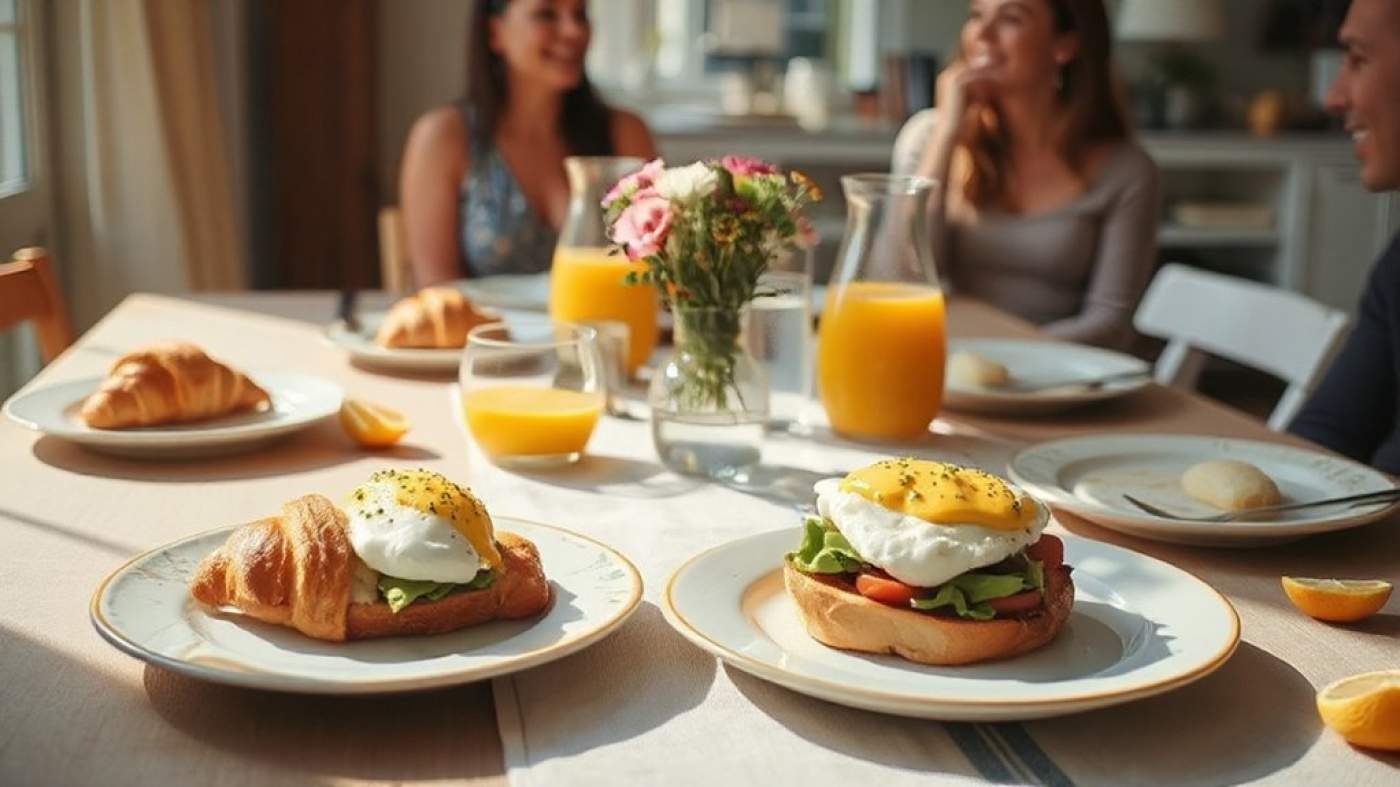

Most people don’t know that a successful brunch is planned around beverage timing as much as food. You’ll want a make‑ahead menu, a self‑serve drink station, and low centerpieces so conversations flow. I’ll walk you through guest counts, dietary labels, buffet timing, and a short day‑of checklist that keeps you calm — and your guests comfortable.
Key Takeaways
- Choose a format (buffet for mingling, sit-down for intimacy) and schedule a 2–3 hour window starting around 10–11 a.m.
- Finalize guest list and firm RSVPs early, collect dietary restrictions, and build a modest buffer for last-minute needs.
- Build a balanced menu with make-ahead mains, finger-friendly savory pastries, chilled salads, and one interactive station (toast or build-your-own).
- Set up beverage stations (coffee bar, pre-batched cocktails/mocktails, water/juice) with clear signage and frequent replenishment windows.
- Plan guest flow and presentation: stagger buffet openings, low centerpieces, clear plate paths, labeled dishes, and a 30-minute final cook buffer.
Timing, Guest List, and Budget
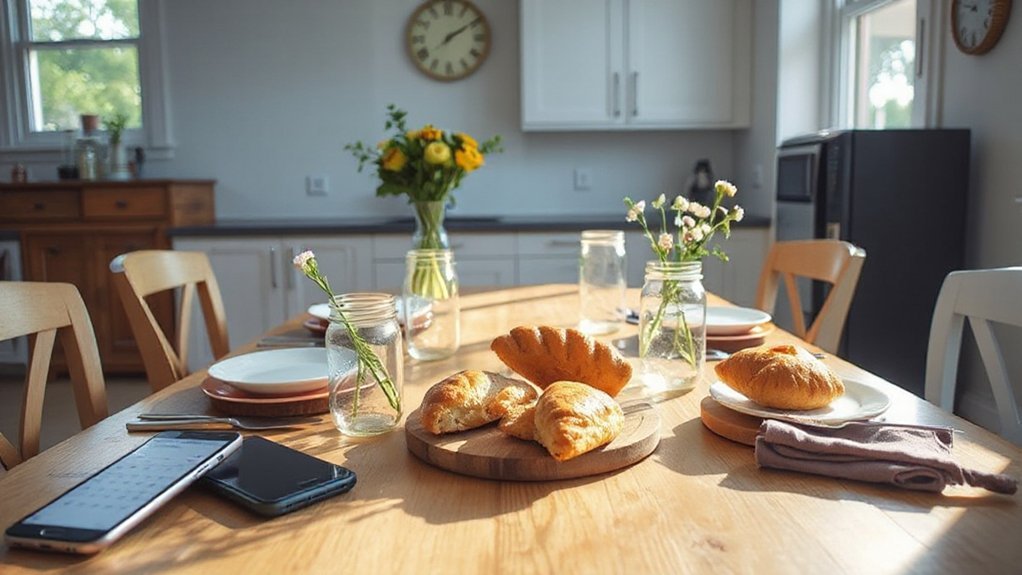
Because timing shapes the mood, plan your brunch for a late-morning slot—typically 10 to 11 a.m.—and keep it to about two to three hours so guests arrive relaxed and don’t overstay. Next, set a clear guest list based on space and vibe: decide on numbers that let people mingle, then confirm with firm RSVP deadlines so you can finalize seating and supplies. Be realistic about who complements whom; invite a mix but avoid overcrowding. For budget, establish spending caps per category—food, drink, decor—and track costs in a simple sheet. Allocate a modest buffer for last-minute needs. Communicate arrival times and any contributions succinctly, and you’ll create a comfortable, well-run gathering that respects guests and your resources. Label dietary needs early so everyone feels considered and logistics stay smooth.
Easy Crowd-Pleasing Menu Ideas

A smart brunch menu balances make-ahead dishes, one-pan mains, and a few interactive elements so guests can graze and socialize without long waits.
| Item | Prep | Serve |
|---|---|---|
| Savory Pastries | warm | finger |
| Fruit Galettes | slice | shared |
| Toast Station | assemble | custom |
| Salads | chilled | bowl |
Offer Savory Pastries, a build-your-own toast station, chilled salads, plus seasonal Fruit Galettes for sweet finish. Keep portions bite-friendly and label dietary notes so everyone feels welcomed. Prioritize variety: vegetarian, protein-rich, and light options. Set drinks nearby, coffee, tea, a citrus pitcher, and a cocktail option so guests serve themselves. Arrange plates and utensils in an obvious flow to avoid bottlenecks. With clear labels and attractive presentation, you’ll host a relaxed, memorable brunch that keeps conversation flowing and plates returning to the table.
Make-Ahead Recipes and Prep Strategies
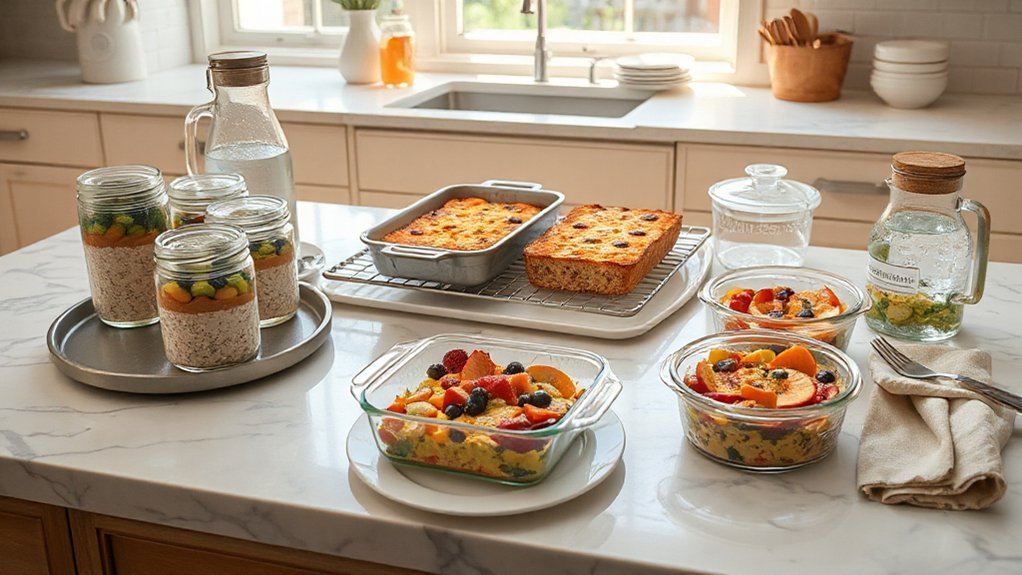
Plan your cooking so most of the menu is finished before guests arrive, and you’ll spend the party chatting instead of stuck at the stove. Prep with a timeline: cook casseroles and quiches one day ahead, chill overnight, and reheat gently. Use vacuum sealing storage for proteins, herbs, and baked goods to lock in freshness and save fridge space. Portion sauces and garnishes into small containers so assembly’s quick. Create a labeling system with date, dish, and reheating instructions to prevent last-minute guessing. Freeze components like muffin batter or breakfast sausage for easy thawing. On the day, focus on fast finishes — crisp toast, fresh fruit, and a simple warm starch — so you greet guests relaxed and confident. You’ll look polished and hospitable.
Beverage Bar: Coffee, Cocktails, and Mocktails
Set up a tidy coffee station with freshly ground beans, a hot carafe, milk alternatives, and simple syrups so each guest can make their perfect cup. Provide basic bar tools, a few spirit options, and a simple rule of thumb for balance—spirit, acid, sweet—so you’ll be able to mix a crisp cocktail or serve a prebatched pitcher. Offer sparkling waters, fruit purées, and herb garnishes so non-drinkers feel just as celebrated with bright, show-stopping mocktails.
Coffee Station Essentials
How will your coffee station keep guests happy all morning? Set a clear layout with station signage for brew types, decaf, and milk options so people self-serve confidently. Offer a quality drip brewer or French press, whole-bean and preground choices, plus a grinder. Provide small carafes of hot water, syrups, and a range of milks—dairy, oat, almond—labeled and chilled. Include sturdy mugs, disposable cups, teaspoons, napkins, stirrers, sweeteners, and a garbage bin positioned for easy waste management. Add an insulated carafe for extra hot coffee and a tray for used pods or grounds. Keep stirring spoons and spare filters nearby, and refresh supplies regularly. You’ll appear attentive and relaxed, which guests always truly appreciate.
Cocktail Mixing Basics
Want guests to sip something tailored to their taste? You should set a simple cocktail station with clear recipe cards, quality spirits, and fresh garnishes. Explain basic Cocktail ratios: 2:1:1 for a balanced sour, 2:1 for spirit-forward drinks, and a dash for bitters. Lay out essential Mixology tools — shaker, jigger, strainer, bar spoon, and muddler — so guests or you can build cocktails efficiently. Offer a couple of base spirits, a fortified wine, citrus, a sweetener, and sparkling option to stretch choices without clutter. Label glassware and include ice buckets. Guide guests briefly on strength and flavor, and be ready to make custom pours. Keep a small menu card for signature house cocktails.
Mocktail Refreshing Options
Offering a bright selection of mocktails guarantees every guest feels included and refreshed; you’ll want a mix of pre-batched pitchers and a small build-your-own station so guests can grab something ready or customize to taste. Label three crowd-pleasers—citrus spritz, berry shrub, and cucumber tonic—plus a rotating pitcher flavored with Seasonal Syrups to highlight produce. Provide simple garnishes, ice, and a measuring spoon so pours stay balanced. Set out Herbal Infusions like lavender water, basil cordial, and rosemary tonic as concentrated mixers for subtle complexity. Add a mocktail menu card with flavor notes and suggested pairings, and keep pitchers chilled. You’ll look prepared, let guests self-serve, and make sure every palate is satisfied. Refreshments should be replenished frequently to maintain temperature and presentation standards throughout service.
Buffet vs. Sit-Down: Service and Flow
You’ll choose buffet or sit-down based on how you want guests to move and mingle. Plan guest movement with clear pathways and staggered stations, arrange hot and cold dishes to prevent bottlenecks, and position drinks near seating to keep people comfortable. Time your courses, refills, and clearing so service flows smoothly and nobody feels rushed.
Guest Movement Planning
Although the choice between buffet and sit-down affects menu and staffing, it’s primarily about choreographing guest movement so people can relax, socialize, and access food without bottlenecks. Decide whether you want guests to circulate or remain seated, then plan pathways, seating spacing, and pacing. Use entry choreography to greet, collect coats, and orient guests; tidy coat organization keeps flow smooth. For buffet service, create unidirectional stations, clear start and finish points, and room for two people to pass. For sit-down, stage staggered serving and clear aisles for servers and guests. Signal changes with music shifts or announcements so people know when to approach food. Anticipate congestion points and assign a host to guide traffic; small adjustments prevent jams and keep the mood relaxed comfortably.
Food Placement Strategy
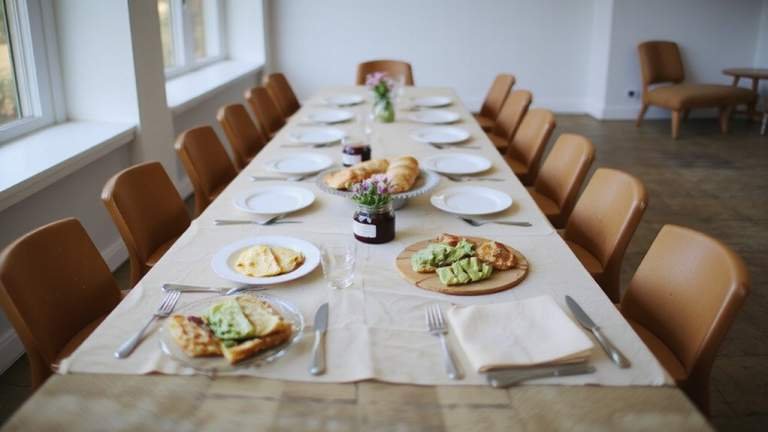
How you place food determines how smoothly guests move, eat, and socialize, so plan layouts that match whether people circulate or stay seated. Choose buffet for mingling, sit-down for intimate service; each needs deliberate flow. For buffets, create one-way lines, stagger stations, and leave landing spots for plates. For sit-down, pre-plate or use servers to minimize trips. Use height variation to create focal points and improve reach; balance color contrast to guide appetites and signal freshness. Keep utensils, napkins, and trash discreet but accessible. Consider dietary zones and clear labels so guests feel cared for. Keep sightlines open and traffic comfortable, always. Below are quick placement checks to follow:
- Start/End flow points
- Beverage station location
- Hot/Cold separation
- Accessible seating paths
Timing and Pacing
When you choose buffet or sit-down, plan timing so service supports conversation and comfort: buffets need staggered openings, clear windows for refills and peak traffic, and at least 20–30 minutes between the first pass and a major replenishment so guests aren’t rushing; sit-down meals require an arrival buffer, a short welcome period before the first course, and predictable intervals (10–15 minutes between courses for light brunch, 20–30 for multi-course) so guests can digest and chat. Decide which format suits your space and energy, then map timeline. For buffets, schedule initial service, refill window, and wind-down so people eat without queuing. For sit-downs, honor arrival buffer and course spacing, communicate timings to servers, and keep plates moving smoothly to protect conversation and comfort and relax.
Simple Table Styling and Decor Hacks
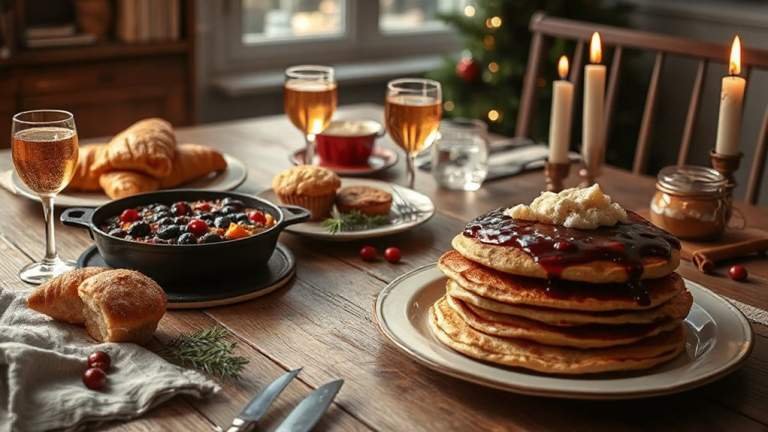
Centerpiece choices set the tone, so pick low, layered pieces that keep conversation flowing and leave plenty of elbow room. Use DIY Centerpieces with small vases, candles, and seasonal greenery to create Layered Textures; they look deliberate without crowding plates. Set place settings simply: chargers, napkin, name card, a fork and knife aligned neatly. Add practical accents that feel special but functional.
- Linen napkins folded simply for comfort.
- Mixed glassware for water and a brunch cocktail.
- A breadboard or shared dish placed centrally.
- Soft lighting—dimmable or candlelight for warmth.
Keep colors muted, patterns limited, and clear a path for servers so guests stay comfortable. Rotate small elements between courses to refresh the look without disrupting the table’s inviting rhythm gracefully.
Day-of Checklist and Hosting Tips
On the day of, set a clear timeline and stick to it so you can greet guests relaxed and keep courses flowing. Check alarms, preheat oven, finish coffee station, and label dishes. Keep an Emergency Kit (tongs, stain remover, candles, first aid) handy. Confirm Pet Arrangements so pets are comfortable and guests aren’t surprised. Greet arrivals, offer a drink, and start buffet when most have settled.
| Task | When | Who |
|---|---|---|
| Final cook | 30 min | You |
| Table reset | 10 min | Partner |
| Drinks ready | 15 min | You |
| Trash prep | End | Helper |
| Emergency check | Before | You |
Stay observant, circulate, and adjust timing quietly to keep mood light and food fresh. If weather’s nice, open windows; if late guests arrive, offer small plates so service stays seamless and smile.
Conclusion
You’ll host a relaxed, impressive brunch by planning smartly and leaning on make-ahead wins. Stick to a clear RSVP, label dietary needs, and stagger stations so guests glide, not queue. Set a self-serve beverage bar and finish hot items last minute; little touches—low centerpieces, replenished platters, a tidy checklist—keep conversations flowing. Trust your prep: you’ll look effortless while everyone feels impeccably cared for. You’ll be the calm conductor, letting the morning unfold with graceful ease.





Leave a Comment