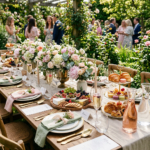
When you serve quiche, pick sides that balance texture and brightness. Choose quick salads, roasted vegetables, or warm breads to complement the eggy richness. You’ll want practical, make‑ahead options ranked by effort and season so you can assemble a satisfying plate for brunch or a light dinner. Start with these 15 easy sides to match your quiche and your schedule.
Mixed Green Salad With Lemon Vinaigrette
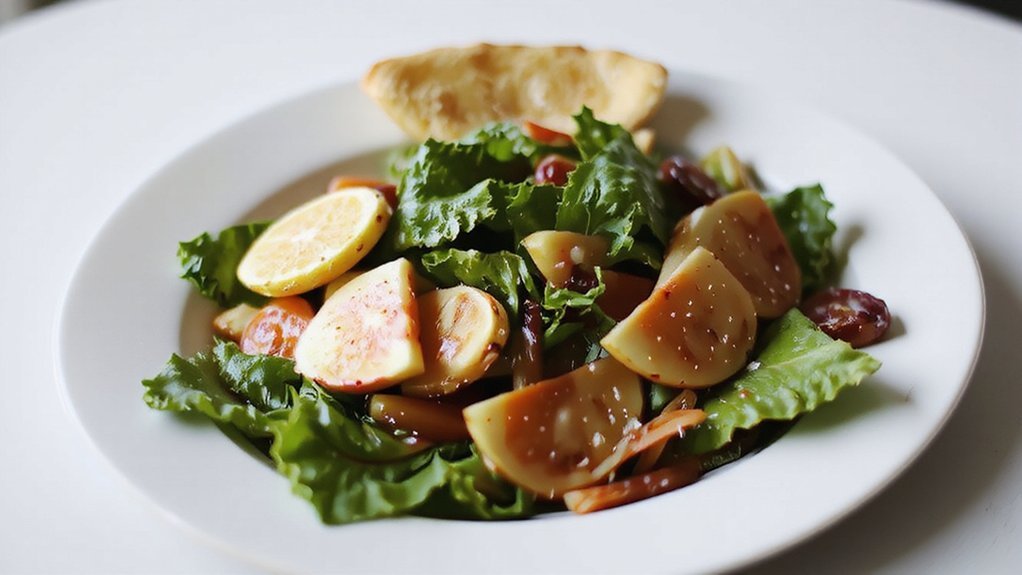
While the quiche rests, toss together a quick mixed green salad to add freshness and brightness to the plate. Choose a mix of baby lettuces, frisée, and mâche to create contrasting Leaf textures, rinse, spin dry, and gently tear larger leaves. For lemon vinaigrette, zest one lemon, whisk juice with Dijon, honey, and olive oil, and season with salt and black pepper. Dress the greens sparingly, toss once, and check balance — acidity should cut the quiche’s richness without overpowering it. Add thinly sliced cucumber for crunch and toasted seeds for earthiness. Plate alongside the quiche warm, so the Citrus pairing lifts each bite. You’ll innovate simply, focusing on technique and proportion for reliable results. Adjust dressing to taste and serve immediately for best.
Arugula, Pear, and Walnut Salad
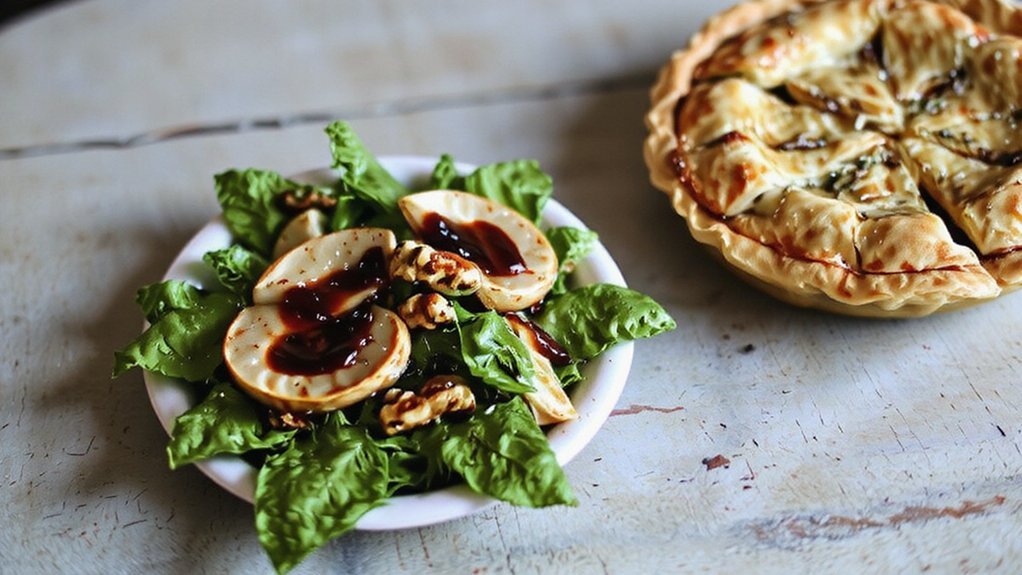
For a side that cuts through a rich quiche, toss peppery arugula with thinly sliced pear so the sharp greens contrast the custard. Toast and roughly chop walnuts for a pronounced crunch texture, then sprinkle them over the salad. Dress lightly with a bright lemon or sherry vinaigrette so you don’t overpower the quiche—use just enough to coat the leaves.
Peppery Arugula Contrast
Because quiche is rich and creamy, pair it with a quick arugula, pear, and walnut salad to cut the fat and add texture: toss 4 cups peppery arugula with one ripe pear sliced thin, 1/2 cup toasted walnuts, a handful of shaved Parmesan, and a simple dressing of 2 tbsp olive oil, 1 tbsp white wine vinegar, salt, and pepper. You’ll use the salad as a Creamy Counterpoint to the custard and introduce a Smoky Contrast with a light char on pear slices or a drop of smoked olive oil. Assemble and dress just before serving. Practical steps:
- Place arugula in a large bowl.
- Add pear slices and Parmesan.
- Toss with dressing gently.
- Scatter walnuts and serve immediately.
Enjoy the contrast.
Walnut Crunch Texture
Walnuts deliver the crunch you want, so toast them briefly in a dry skillet over medium heat until fragrant and lightly browned (about 3–5 minutes), shaking the pan and stirring frequently to prevent burning. Chop pears into thin wedges, toss with peppery arugula and vinaigrette, then add walnuts at the end to maintain texture. For consistency, test a small batch with your chosen Toasting Method—whole nuts brown differently than halves—so adjust time. Dress salad just before serving; oil and acid soften leaves but can sog arugula if left. Note Storage Impact: keep toasted walnuts separate in an airtight container up to three days and refrigerate dressed salad no more than an hour to preserve crunch and contrast for quiche service on your next brunch.
Caprese Salad With Balsamic Glaze
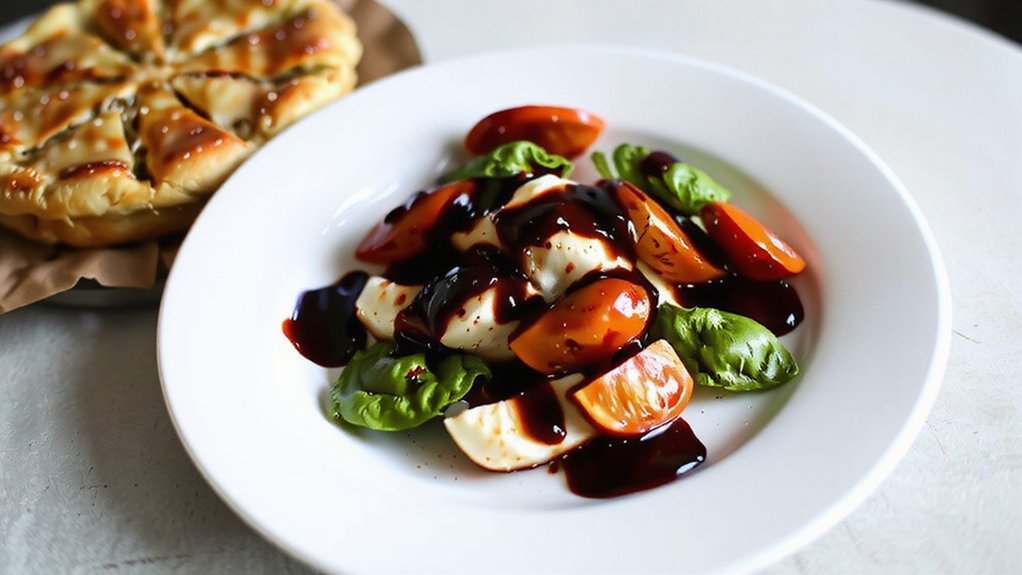
Assembling a quick Caprese salad gives you a bright, fresh counterpoint to rich quiche: slice ripe tomatoes and fresh mozzarella about ¼-inch thick, arrange them alternating on a platter, tuck whole or torn basil leaves between slices, season lightly with salt and freshly ground black pepper, then finish with a spoonful of thick balsamic glaze drizzled in a zigzag so every bite gets a sweet-tangy hit; serve immediately or chill for up to 30 minutes so the flavors meld without the tomatoes getting soggy. Explore basil pairing and mozzarella textures by choosing burrata, milk or aged slices. Follow quick steps to plate and serve:
- Uniform tomatoes.
- Alternate cheeses.
- Tuck basil.
- Drizzle glaze last.
Keep proportions bold for modern presentation style.
Roasted Asparagus With Parmesan
Choose firm, bright-green asparagus with closed tips and trim the woody ends where they naturally snap. Preheat your oven to 425°F (220°C) so the spears roast quickly and stay tender-crisp with a bit of char. Toss the asparagus in olive oil, salt, and pepper, roast 10–12 minutes, then finish with freshly grated Parmesan and a squeeze of lemon.
Choosing Fresh Asparagus
How do you pick asparagus that will roast up tender with a crisp, cheesy finish? Inspect bundles for firm stems and closed tips; bend a spear—fresh stalks snap cleanly. Choose even-thickness stalks so they cook uniformly. Smell the base; it shouldn’t be sour. Store unused spears upright in a jar with a little water, loosely covered, to keep them vibrant.
- Select medium-thickness spears for balance.
- Look for deep green color and compact tips.
- Trim woody ends by snapping where they naturally break.
- Pat dry before oiling and seasoning to promote browning.
Experiment with lemon zest or grated parmesan to push flavor boundaries. Keep prep simple and efficient. Every time.
Perfect Roasting Temperature
Wondering what temperature will give you tender stalks with crisp tips and melty parmesan? Roast at 400°F (200°C) to hit the Maillard threshold without drying, adjusting for thickness. Check Oven calibration before you start; a variance of 25°F changes timing. Trim, oil lightly, and spread in a single layer so hot air circulates. Roast 8–12 minutes for thin spears, 12–16 for thicker ones; flip halfway. Use visual cues: slight browning and a pop when you bend the stalk. If your oven runs hot, reduce temperature by 25°F and shorten time; if cool, increase by 25°F. Use an instant-read probe near center spears to verify doneness, then rest a minute before serving.
| Spear thickness | Time (min) |
|---|---|
| Thin | 8–10 |
| Medium | 10–14 |
| Thick | 13–16 |
| Extra thick | 15–18 |
Adding Parmesan and Seasonings
Once the asparagus rests for a minute off the heat, finish it with Parmesan and seasonings so the cheese melts into the warm stalks without turning greasy. You’ll want finely grated Parm for even coating; experiment with grating techniques (microplane versus box grater) to vary texture. Sprinkle, then toss gently so the residual heat binds the cheese. Consider aging differences: younger Parm melts creamier, older Parm adds crystalline crunch and punch. Balance with fresh lemon zest, cracked pepper, and a drizzle of good olive oil. For presentation, do this:
- Arrange stalks on serving platter.
- Grate 2 tbsp Parmesan over warm asparagus.
- Add zest, pepper, oil; toss twice.
- Finish with flaky salt and serve immediately.
Enjoy the contrast with your quiche.
Sautéed Garlic Spinach
Sautéing spinach with garlic gives you a bright, quick side that cuts through the richness of quiche. You’ll need fresh baby spinach, thinly sliced garlic, olive oil, salt, pepper, and a splash of lemon. Heat a wide skillet, add oil, then garlic; cook 30–45 seconds until fragrant. Add spinach in batches, using a toss-and-fold stovetop technique so leaves wilt evenly and you preserve nutrient retention. Season between additions, finish with lemon zest and a pinch of red pepper flakes if you want edge. Drain excess liquid by tilting the pan and pressing with a spatula. Serve immediately so textures stay vibrant. Try finishing with a drizzle of good aged balsamic.
Honey-Glazed Carrots
Make a quick honey glaze by simmering honey with butter and a splash of lemon or orange juice until it slightly thickens. Cook the carrots until just tender—check with a fork for slight resistance—then toss them in the glaze and finish over low heat so they’re glossy but not mushy. Serve them warm alongside your quiche, garnishing with chopped parsley or toasted seeds and offering extra glaze on the side.
Simple Honey Glaze
Glaze your carrots in a quick honey-butter mixture that takes minutes to prepare: melt butter in a skillet, stir in honey and a squeeze of lemon (or a splash of vinegar) to balance sweetness, then toss in peeled or baby carrots and cook until tender and glossy—about 8–10 minutes for baby carrots or 12–15 for larger pieces. Use a pinch of salt, cracked pepper and fresh herbs to cut sweetness. For inventive accents, consider: try small batches to explore profiles quickly.
- toasted sesame and soy for umami contrast
- orange zest and thyme brightness
- smoked paprika cumin warmth
- chopped pistachio mint crunch
Note honey’s preservative properties and cosmetic uses for glaze experimentation; deglaze with stock or wine to lift flavors.
Texture and Doneness
When you’re judging doneness, aim for tender carrots that still hold a slight bite—pierce the thickest piece with a fork or paring knife: it should meet some resistance but slide through without shredding. Roast or pan-glaze at medium heat, turning frequently so exterior caramelizes while interior stays vibrant; test several pieces because size varies. If you want experimental textures, steam briefly before glazing to control interior softness while achieving a lacquered exterior. Finish with a quick blast of high heat to intensify color and create slight snap. Use the same attention you give quiche — note custard jiggle and crust flakiness — to balance carrot integrity against glaze viscosity. Remove from heat as soon as fork tests show the desired bite, then rest briefly.
Serving Suggestions
How should you plate honey‑glazed carrots so they complement—not overpower—your quiche? Place a modest mound to one side, leaving room to showcase crust and filling. For modern contrast, slice carrots lengthwise and fan them; keep glaze glossy but light. Follow these Plating Tips and try Beverage Pairings that cut richness: a crisp dry Riesling or sparkling water with lemon.
- Fan slices along quiche edge for visual flow.
- Reserve a few whole baby carrots for height.
- Spoon glaze sparingly to avoid sweetness overload.
- Garnish with microgreens or thyme for aroma.
You’ll balance flavor, texture, and aesthetics while keeping the plate inventive and restrained. Consider serving carrots warm for contrast, or chilled for brunch; both approaches elevate your quiche experience and presentation.
Crispy Roasted Baby Potatoes
Roasting baby potatoes at a high heat gives you the crisp exterior and fluffy interior that pairs perfectly with quiche. You’ll halve potatoes, toss with oil, salt, and a teaspoon of cornstarch to amplify crunch; that’s simple texture science. Arrange cut sides down on a hot sheet, leave space, and roast at 220°C (425°F) for 25–30 minutes, flipping once for even color. For inventive seasoning, experiment with global spices like smoked paprika and cumin, za’atar, or Chinese five-spice combined with lemon zest. Finish with minced herbs, flaky salt, and a drizzle of acidic olive oil to cut richness. Serve straight from the oven so the contrast complements the quiche without overpowering it. Try a honey-chili glaze for sweet-spicy balance too.
Herbed Quinoa Salad
A herbed quinoa salad complements quiche—use flat-leaf parsley and chives for brightness, dill for a soft anise note, and mint for a fresh lift. Toss cooked, cooled quinoa with a simple lemon-olive oil vinaigrette, finely chopped herbs, a pinch of salt, and grated zest so the flavors carry through without overpowering the quiche. You can make it a day ahead—store the dressed salad chilled (or keep dressing separate and toss before serving) and take it out 20–30 minutes beforehand so the herbs wake up.
Fresh Herb Pairings
Pairing quiche with a herbed quinoa salad gives you a bright, textural contrast that cuts the richness and refreshes the palate. Use a mix of flat-leaf parsley, mint, chopped tarragon pairings and chives; master chive applications by adding them at the end so they stay vivid. Toasted almonds or pistachios add crunch; citrus zest brightens. Assemble while quiche rests.
- Fluff quinoa; fold in herbs.
- Dress with lemon, olive oil, salt.
- Add diced cucumber or tomato for freshness.
- Finish with toasted nuts and cracked pepper.
Serve chilled or room temperature beside warm quiche, adjusting herb ratios to echo fillings and push creative balance. Try swapping lemon for orange or adding feta for salty contrast to innovate and texture tweaks regularly.
Make-Ahead Convenience
When you make the herbed quinoa salad ahead, cook the quinoa until tender, cool it quickly on a baking sheet to stop cooking, then toss it with a light lemon-olive oil dressing while still slightly warm so the grains absorb flavor. Once cooled, fold in chopped parsley, mint, scallions and toasted nuts; season to taste. For a clear Prep timeline, plan 30 minutes active, 1 hour chill, or overnight for deeper flavor. Store portions in airtight containers; refrigerate up to four days. If you’ll need longer shelf life, flash-freeze in servings before sealing — Freezer storage extends life to three months, but thaw in fridge overnight. When serving, refresh with a squeeze of lemon and a drizzle of oil to revive texture and brightness.
Mediterranean Chickpea Salad
Toss drained canned chickpeas with diced cucumber, cherry tomatoes, thinly sliced red onion, chopped Kalamata olives and crumbled feta to build the salad’s base. You’ll then make a simple dressing: whisk extra-virgin olive oil, lemon juice, a splash of red wine vinegar, Dijon, season with salt, pepper and oregano. Vinegar choices. Add the dressing to the salad and toss so chickpeas absorb flavor and get a protein boost. Chill 20 minutes for melding, or serve for brightness. For texture and visual pop, consider these finishing touches:
- Fresh parsley and mint
- Toasted pine nuts or almonds
- Zest of lemon and a drizzle of good oil
- Cracked black pepper and flaky sea salt
You’ll innovate and serve alongside quiche today with flair.
Creamy Dijon Potato Salad
Building a creamy Dijon potato salad starts with choosing waxy potatoes (Yukon Gold or baby potatoes) and cooking them just until fork-tender so they hold shape when dressed; you’ll halve or quarter warm potatoes and toss them with a dressing made from Dijon mustard, mayonnaise (or Greek yogurt for tang), a splash of white wine vinegar, a little olive oil, minced shallot, salt, and black pepper. Next, focus on potato selection and cut uniform pieces for even cooling. Whisk dressing components, tasting as you go to achieve dressing balance between acidity, fat, and mustard heat. Fold potatoes gently to avoid mashing, add chopped chives and celery for texture, rest briefly to let flavors meld, then adjust seasoning before serving with quiche and enjoy it.
Fresh Fruit Salad With Mint
While you can use any ripe fruit, pick a mix that balances sweetness, acidity, and texture—berries for brightness, stone fruit for juiciness, apples or pears for crunch, and a firm melon for body. Chop uniformly, toss gently with a light citrus-honey dressing, and let flavors meld ten to fifteen minutes. For fresh mint pairing, bruise leaves slightly to release oils and sprinkle last to keep vibrancy. Consider seasonal selection when sourcing fruit; it intensifies flavor and sustainability. Assemble like this:
- Quarter strawberries and slice peaches.
- Dice apple or pear; add melon cubes.
- Add berries whole; fold gently.
- Finish with lemon zest, honey, and torn mint.
Serve chilled alongside quiche, using contrast to elevate both texture and aroma for modern meals.
Crusty Sourdough or Baguette
A crusty sourdough or baguette complements quiche—slice 3/4-inch (2 cm) thick, warm or toast for 4–6 minutes at 350°F (175°C) to revive the crumb and crisp the crust, then rub with a cut garlic clove or brush lightly with olive oil and a pinch of sea salt for immediate flavor. Understand Sourdough origins and apply simple Baking techniques: score loaf before heating, reduce oven temp after initial burst, and use steam for a glossy crust. Slice just before serving to protect crumb, or make open-faced to absorb juices. For innovation, experiment with flavored butters, herb oils, or quick pickles on the side. When reheating, use gentle heat and little moisture to avoid toughness. You’ll extend freshness and highlight the quiche’s texture without overpowering it.
Cheesy Garlic Bread
Spreading garlicky herb butter and a generous layer of melting cheese over split bread turns it into cheesy garlic bread that’s quick to make and pairs perfectly with quiche. You’ll preheat, spread, top, and bake; this section shows practical steps and Topping Innovations that elevate texture and flavor. Try compound butters, grated aged cheddar, Parmesan crust, or chili honey drizzle.
- Slice and split: halve a baguette lengthwise.
- Mix: combine softened butter, minced garlic, parsley, salt.
- Assemble: spread, layer cheese, add creative toppings.
- Bake and finish: broil briefly for browning; rest before slicing.
For make-ahead planning, flash-freeze slices for Freezer Storage; reheat from frozen at low temp for crisp results. You’ll innovate with sauces, seeds, and herb blends for memorable brunch.
Classic Tomato Soup
Tomatoes take center stage in this classic tomato soup, and you’ll build flavor by sweating onions and garlic, adding canned or fresh tomatoes, then simmering with stock and herbs until everything softens. Start by roasting tomato halves or using fire-roasted canned tomatoes to add depth; add a splash of soy or miso as Umami Boosters for complexity. Strain seeds if you prefer silkier texture, then use a blender or immersion blender, paying attention to Blending Techniques to control body. Taste for acidity and sweetness, adjust with a touch of vinegar or honey. Finish with a swirl of cream or olive oil and fresh basil. Serve alongside quiche warm, letting the soup complement rather than overpower. Make extra; it reheats beautifully and flavors deepen quickly.
Warm Butternut Squash Soup
When you want a cozy, savory side for quiche, roast a 2–3 lb butternut squash halved or cubed at 400°F until caramelized (25–35 minutes) to concentrate sweetness, then sweat 1 medium onion and 2–3 cloves garlic in butter or oil until translucent. Purée the squash with 2 cups stock, 1/2 cup cream or coconut milk, and a pinch each of nutmeg and salt; finish with a squeeze of lemon. Adjust consistency with stock and season to taste. For plating, consider texture contrast and serving temperature — warm but not scalding. Refrigerate leftovers within two hours; follow storage tips below. You’ll innovate with simple swaps:
- Roasted seeds for crunch
- Smoked paprika and chives
- Coconut milk for silkiness
- Crisp greens microherbs garnish
Conclusion
Choose two or three sides that balance your quiche—think peppery greens, a bright salad, and a warm soup—and prepare them while the quiche rests. Toss the salad with vinaigrette just before serving, roast asparagus at high heat for ten to twelve minutes, and warm soup gently on low. Slice crusty bread, offer spreads, and plate everything so guests can help themselves. Serve immediately — you’ll enjoy it together, and save leftovers for next-day lunches too.