

You want a brunch buffet that flows, stays safe, and looks intentional. Restaurants plan guest movement, temperature zones, portioning, and clear labels so service feels effortless. You can copy those principles at home without pro gear. Start with flow and temperature control — next you’ll get practical, step‑by‑step tactics to execute it.
Planning the Layout: Flow and Guest Movement
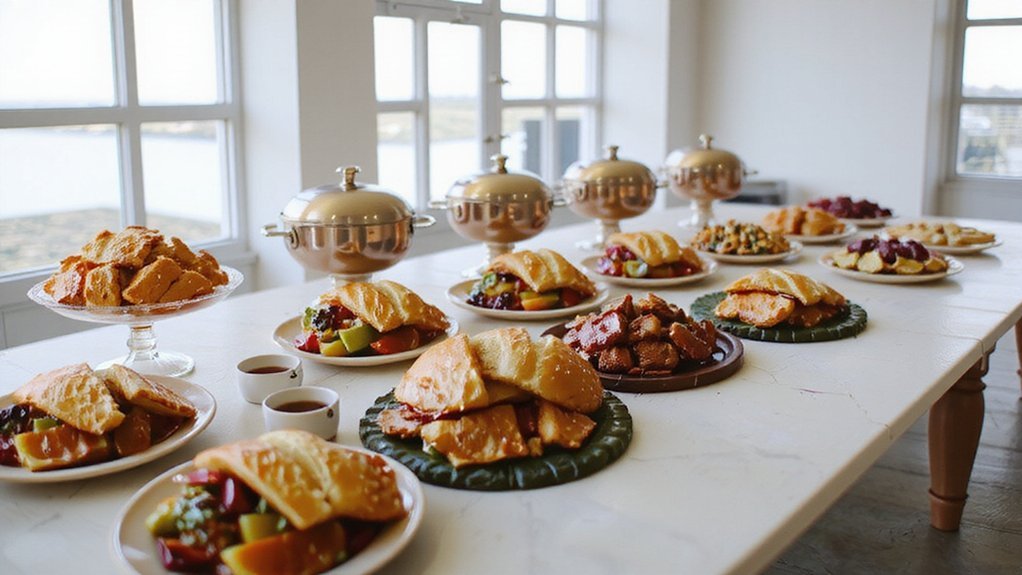
How will guests move through your buffet? You’ll design a linear or circuit layout that minimizes congestion and maximizes throughput. Place high-demand stations early, secondary items later, and keep complimentary flows separate to prevent cross-traffic. Maintain clear sight lines so guests see destinations and wait times, reducing hesitation. Define staff pathways behind stations for restocking and clearing without crossing guest flow; mark them and train staff to stick to lanes. Use modular islands to adapt to crowd size and to segment dietary zones while preserving continuous motion. Measure distances to make sure queueing doesn’t block entrances, seating, or emergency exits. Test the layout during a soft opening, monitor bottlenecks, and iterate based on real movement data. You’ll refine timing and signage to optimize guest satisfaction.
Menu Balance: Savory, Sweet, Light, and Indulgent
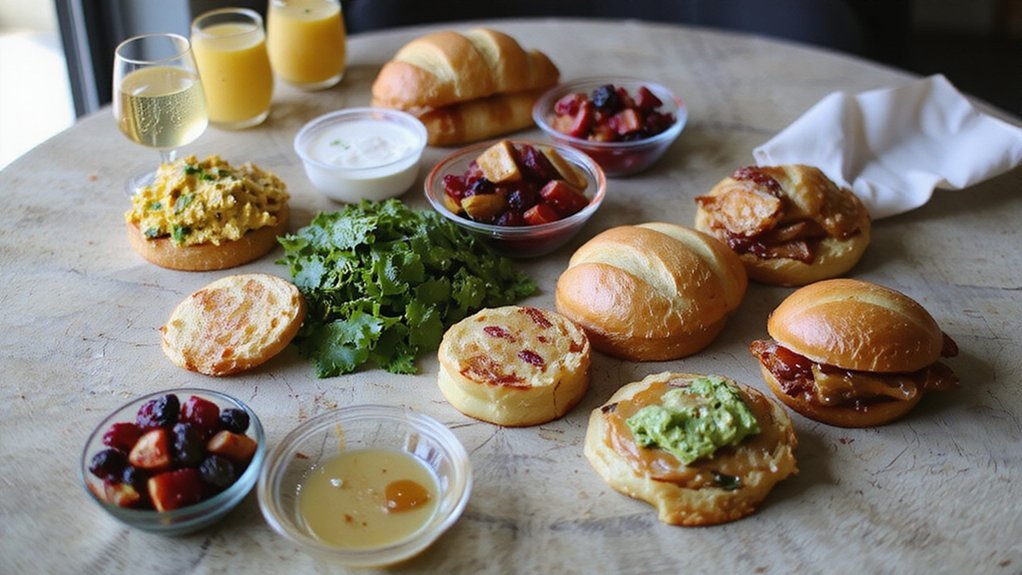
Balancing savory, sweet, light, and indulgent options lets you satisfy varied tastes and control pacing at your brunch buffet; aim for roughly 40% savory, 25% light/healthy, 25% sweet, and 10% truly indulgent while adjusting for your crowd and menu focus. You should design a concise menu that prioritizes texture contrasts and color harmony, enabling guests to build varied plates. Choose components that cross categories: a savory grain bowl, citrus salads, fruit-forward pastries, and a single rich centerpiece.
- Pair crunchy elements with creamy sauces to heighten texture contrasts.
- Use seasonal produce for color harmony and economical innovation.
- Reserve one indulgent item per station to keep the spread dynamic without excess.
Execute with measured portions and clear labeling. Track popularity and iterate each service.
Temperature Control: Keeping Hot Foods Hot and Cold Foods Cold

Maintain strict temperature zones to guarantee food safety and quality. You designate clear hot and cold stations using Thermal Zoning, set target ranges (hot 60°C+/140°F+, cold 4°C/40°F or below), and monitor with calibrated probes. Use discrete heat sources, induction wells, chilled wells, and insulated covers to preserve integrity. Watch for condensation: active Condensation Control via airflow, dehumidifiers, and drip trays prevents sogginess and microbial risk.
| Zone | Target |
|---|---|
| Hot | 60°C+ / 140°F+ |
| Cold | 4°C / 40°F or below |
You log readings, train staff to react to deviations, and integrate smart sensors for proactive alerts. Adopt modular equipment, predictive analytics, and energy-efficient components to optimize Thermal Zoning, reduce waste, cut energy cost, and maintain consistent safe temperatures across service cycles with minimal footprint and real-time monitoring and reporting.
Portioning and Replenishment Strategies
Proper portioning and scheduled replenishment keep food safe, consistent, and attractive while supporting your thermal zoning efforts. You set par levels per station based on demand patterns, plate sizes, and time windows, so you minimize waste and avoid cold/hot exposure. Use batch rotation: small batches refilled frequently instead of large platters. Train staff to monitor visual cues and discard per HACCP limits; server training emphasizes timing, portion sizes, and handoff protocols. Establish checkpoints: pre-service counts, mid-service check-ins, end-of-service audits to adjust par levels dynamically. Communicate replenishment triggers clearly so someone always owns the flow. Review metrics weekly and adjust tactics for measurable gains.
- Use measured scoops and plated guides.
- Schedule rapid micro-restocks during lulls.
- Track consumption data to refine par levels.
Equipment Essentials: What Restaurants Use and Alternatives
When you outfit a brunch buffet, prioritize proven categories—hot holding (steam tables, induction warmers, and insulated holding cabinets), cold display (refrigerated wells, merchandisers, and ice bins), service hardware (hotel pans, lids, speed racks, and sturdy serving utensils), and safety/flow items (sneeze guards, heat lamps, and clear signage)—and choose models that meet your capacity, thermal-control, and HACCP needs. You’ll favor durable stainless steel pieces for longevity and hygiene, but explore rental options for events or prototyping new layouts. Select streamlined units that deliver measurable thermal stability and intuitive maintenance. Use the table to map equipment to purpose and alternatives.
| Item | Purpose | Alternative |
|---|---|---|
| Steam table | Hot holding | Induction warmer |
| Refrigerated well | Cold display | Ice bin |
Prioritize serviceability, energy efficiency, modularity, and vendor support for scalable operations.
Preventing Bottlenecks at Service Stations
If you want guests moving smoothly, design each service station around clear traffic flow, capacity, and replenishment cycles. You’ll map one-way routes, place high-demand items at multiple access points, and set clear signage so you minimize clogs. Use peak forecasting to predict surges and allocate resources before queues form. Practice staff choreography for replenishment and trash clearing with short, repeatable actions. Monitor realtime queues and adjust station roles rather than items. Create modular stations that scale: add insulated inserts or extra chafing dishes when forecasts show demand. Train staff on rapid swaps and visual triggers for refills. Use small timed audits during service to catch developing bottlenecks and redeploy staff immediately.
Design modular, one-way service stations, duplicate high-demand items, and choreograph staff for rapid replenishment and flow.
- Map one-way flow
- Duplicate high-demand items
- Assign refill roles
Track metrics and iterate.
Timing and Staggering Dishes for Freshness
Although guests expect everything to look bountiful, you’ll preserve peak quality by timing production and service so hot items hit the line just before demand and cold items are replenished in measured batches. Plan batch sequencing by popularity windows: map arrival peaks and assign small, frequent runs for high-turn items and staggered larger runs for slower items. Use production timing charts tied to reservations and footfall sensors; sync kitchen stations so proteins, sides, and garnishes converge at the line within minutes. Rotate items to maintain temperature and texture—pull new pans only when others drop below set thresholds. Train staff on triggers: visual cues, time stamps, and handheld alerts. Continuous feedback loops let you refine intervals, reduce waste, and keep offerings consistently fresh and inventive.
Beverage Stations and Coffee Service Setup
How you position and outfit beverage stations determines flow, speed, and beverage quality: place self‑serve coffee and juice stations near arrival paths but away from food lines to prevent congestion, and provide staff‑run espresso/tea counters for specialty orders. You control throughput by zoning: a dedicated cold-bar for juices and water, a staffed espresso bar for made-to-order drinks, and a mobile garnish station that supports cocktails and mocktails. Prioritize modular equipment, clear sightlines, and a concise syrup selection to speed choices while keeping options innovative. Track KPIs. Train one attendant to oversee replenishment and temperature, and another to manage consistency and waste. Measure dwell time and iterate.
- Position stations for natural traffic flow.
- Keep specialty service separate from self-serve.
- Use modular carts for rapid reconfiguration.
Labeling, Allergen Management, and Guest Communication
Because clear labeling and proactive communication prevent incidents and streamline service, you must treat allergen management as a core operational function: label every dish with full ingredient lists and standardized allergen icons, post visible signage explaining your allergen policy, and train staff to answer questions and handle special requests. Designate clear stations for common allergens and use color-coded utensils to minimize cross contamination. Implement a digital menu QR code that provides ingredient transparency, prep methods, and timestamps for batch freshness. Require managers to audit labels hourly and document guest interactions when they report sensitivities. Empower staff with scripted responses and a fast-track kitchen protocol for made-to-order dishes. Regularly update templates and test procedures so you innovate safely while maintaining legal compliance and guest trust.
Cleanup, Storage, and Handling Leftovers Safely
When service slows, act immediately to cool, portion, and store leftovers to prevent bacterial growth and preserve quality. You’ll implement clear cleanup plan: wipe stations with sanitizers, segregate items, and document temperatures. Train staff with sanitation training modules focused on time control and cross-contamination avoidance. Portion into labeled, dated containers sized for rapid cooling and reheating; FIFO discard windows. For waste, separate recyclables, redirect food scraps to waste composting, and minimize landfill contributions.
- Quick cool to 41°F
- Label date rotate
- Compost and recycle
Store containers on racks to maintain airflow, traceability. At home, mirror the system with shallow containers and refrigeration. Audit records daily, revise procedures from feedback, and enforce accountability so leftovers remain safe, usable, and aligned with innovative sustainability goals for reuse.
Conclusion
Use restaurant principles to run a smooth brunch: plan a single‑direction flow, stage stations by temperature, and preportion items so you can replenish in small batches. Use shallow pans, calibrated probes and clear labels to keep hot above 60°C, cold below 4°C, and prevent cross‑contact. Staff or assign simple roles for replenishment, labeling and trash. With these controls and timing, you’ll keep food safe, portions consistent, guests moving efficiently, and reduce waste reliably daily regularly.






Leave a Comment