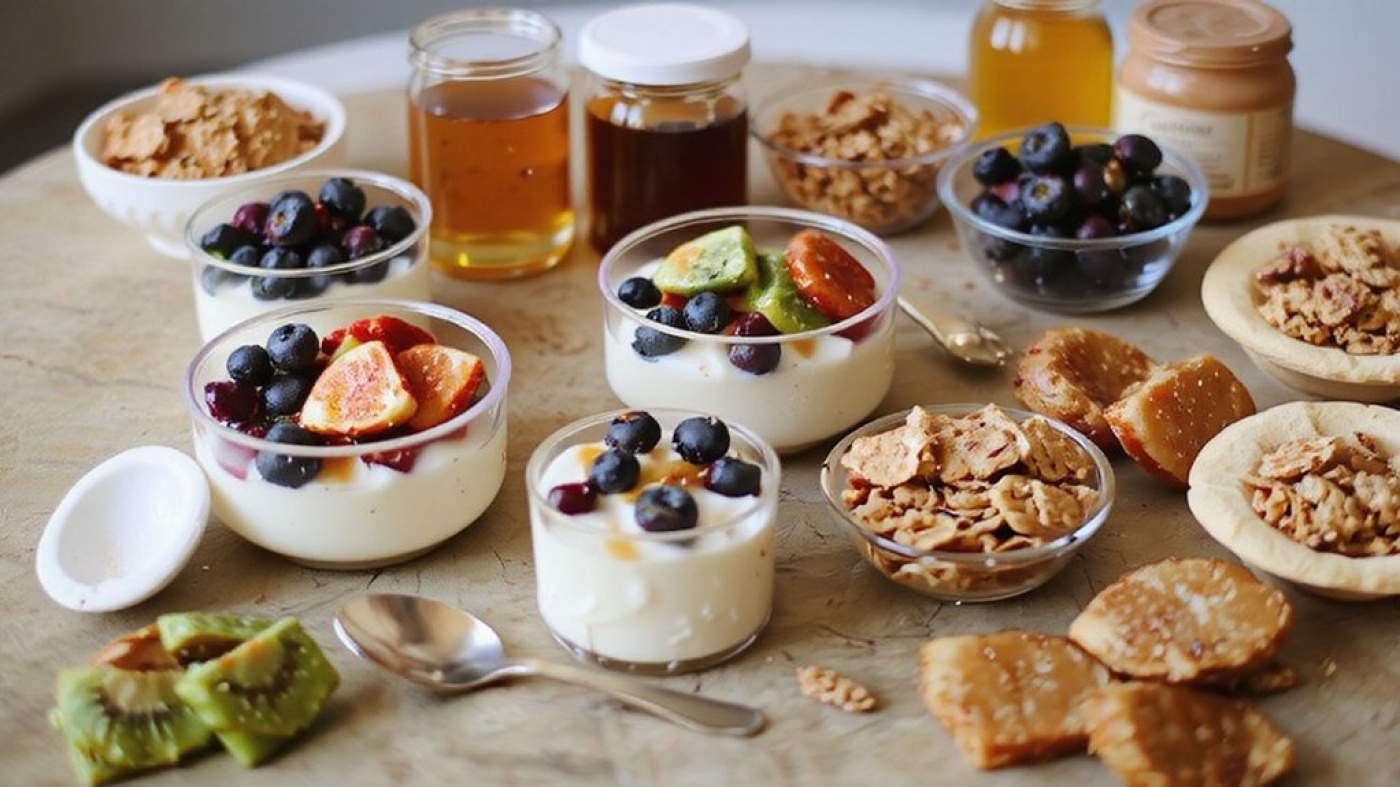

You’ll find a Greek yogurt parfait bar gives guests protein-packed, customizable brunch options while simplifying service and cutting waste. Set up refrigerated dispensers, portioned toppings, and clear labels to support varied diets and safety. Practical setup tips and seasonal topping ideas will help you streamline operations and boost satisfaction—here’s how to get started.
Why a Parfait Bar Works
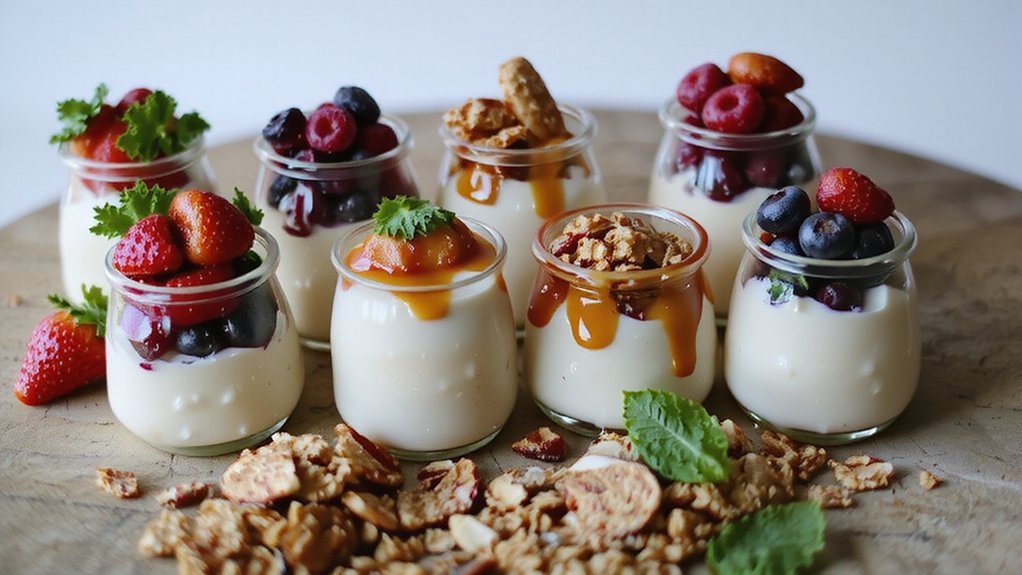
Because people eat better when choices are convenient and tailored to their preferences, a parfait bar boosts both intake quality and client satisfaction. You’ll leverage choice architecture: offering controlled portions of Greek yogurt, fruit, and toppings leads clients to increase protein and fiber without feeling restricted. Studies show autonomy improves adherence, so clients select combinations that meet dietary goals. The format encourages Social interaction, letting people share recommendations and try novel pairings—this raises engagement and loyalty. A self‑service model also maximizes Time efficiency for staff and guests, reducing wait times and portioning errors. You’ll measure success through simple metrics: consumption patterns, satisfaction scores, and reduced waste. Keep iterating based on feedback and outcomes.
Essential Components to Set Up
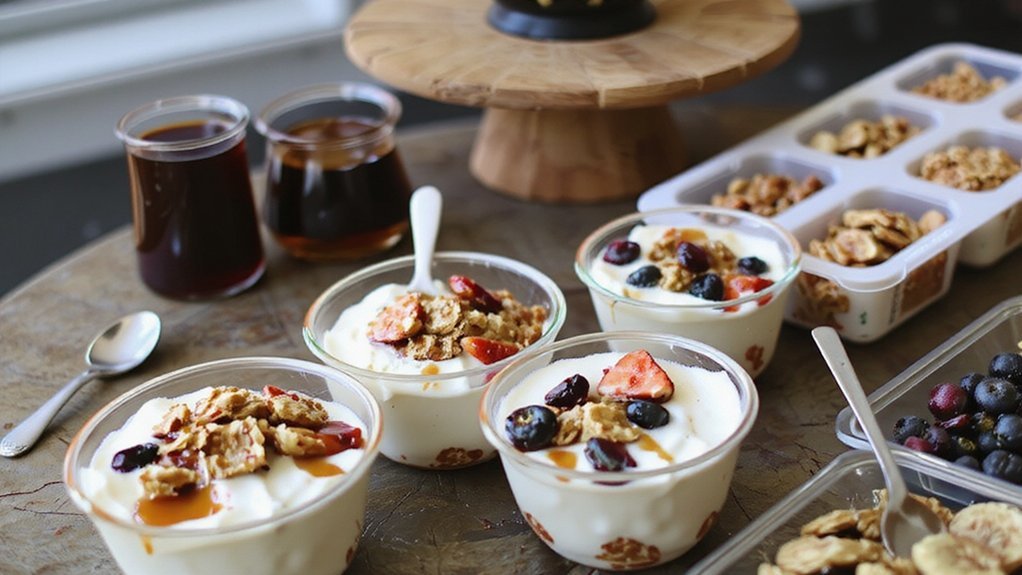
To put the parfait bar into practice, focus on three setup areas you’ll use daily: a refrigerated yogurt station with portioned dispensers, a chilled fruit and mix‑in area organized by macros and allergens, and a service layout that guides flow and minimizes cross‑contamination. First, plan refrigeration logistics: choose units that hold steady 40°F or lower, use clear labeling, and map capacity to expected throughput so you don’t run out or overstock. Second, create a sanitation station adjacent to serving lines with hand sanitizer, disposable gloves, sanitizing wipes, and clear protocols for staff and guests—post simple SOPs. Third, design sightlines and single‑direction flow to reduce touch points and speed service. Test and iterate with clients to optimize safety, speed, and satisfaction. Track metrics and adjust.
Toppings and Mix-Ins Ideas
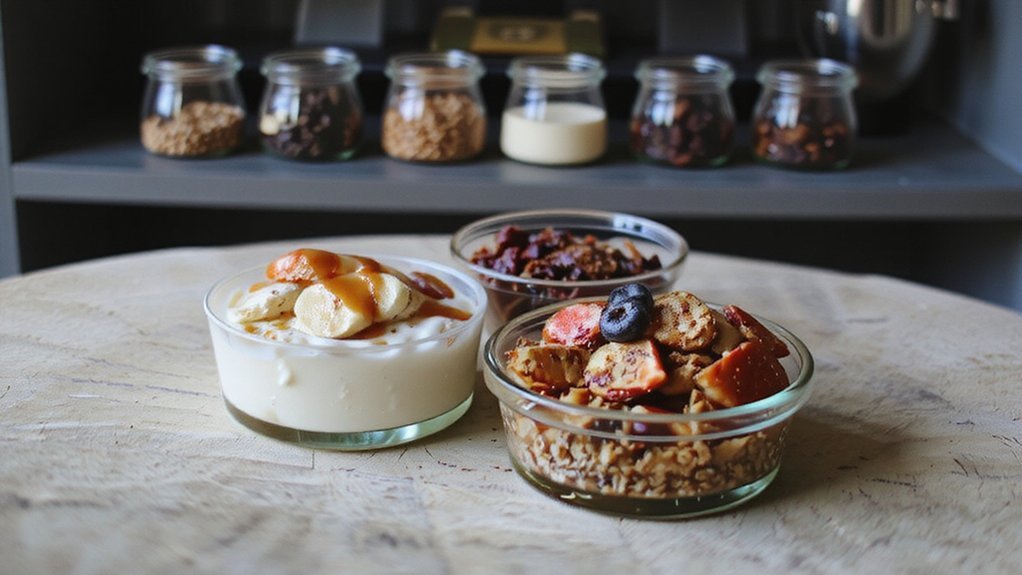
Several well‑chosen toppings and mix‑ins let you meet diverse dietary goals while keeping prep simple and safe: prioritize portioned proteins (nuts, granola, seed blends, cottage cheese), low‑sugar fresh fruits, high‑fiber options (chia, flax, oats), and clear allergen‑free choices so you can accommodate macros and restrictions. For innovation, rotate seasonal fruits for flavor and nutrient variance, offer small jars of homemade granola for texture control, and label serving sizes. Keep dressings and sweeteners optional and measured. You’ll support clients’ goals by providing evidence-backed portions and easily adjustable combos.
- Crunch and protein: toasted nuts, seed blend, homemade granola.
- Freshness and fiber: seasonal fruits, oats, chia.
- Creamy boosts: cottage cheese, nut butter, kefir.
Adjust quantities to client preferences, monitor responses, and iterate for improved satisfaction each visit.
Dietary Variations and Substitutions
You can adapt the parfait bar to meet specific needs by offering straightforward swaps and clear portion guidance rooted in nutrition practice. Offer Greek yogurt plus Dairy Alternatives like almond or soy to accommodate intolerance while keeping protein balance; label portion sizes (½–¾ cup) for clients. For sweetness, provide whole fruits first and Sugar Substitutes such as stevia or erythritol for low-calorie options, noting taste differences. Track macronutrient goals with simple signage so guests choose portions aligned with plans. Below is a quick substitution guide to streamline choices and support personalized recommendations. Document outcomes and client preferences monthly to refine options and improve adherence overall.
| Goal | Swap | Portion |
|---|---|---|
| Lactose-free | Almond/soy yogurt (Dairy Alternatives) | 1/2 cup |
| Lower sugar | Fresh berries / Sugar Substitutes | 1/3 cup |
Easy Presentation and Serving Tips
When setting up the parfait bar, arrange components so guests can build balanced portions quickly and confidently. You prioritize logical flow, evidence-based cues, and client-centered signage to minimize decision fatigue.
Arrange the parfait bar for logical flow and clear cues so guests build balanced servings confidently
- Use clear jars with tablespoon measures for consistent portions.
- Roll napkins with utensils for hygiene and aesthetic napkin styling.
- Employ subtle lighting tips—soft, directional bulbs—to highlight textures and colors.
You’ll keep refill schedules visible, label allergens, and collect brief guest feedback so you can iterate layouts and service patterns. This practical, innovative approach maintains efficiency, supports nutritional clarity, and enhances satisfaction while staying scalable for events of any size. Use real-time adjustments based on traffic flow metrics and staff observations to continuously improve guest experience week-to-week with measurable outcomes and reporting.
Conclusion
You’ll find a Greek yogurt parfait bar practical, evidence-backed, and guest-friendly: it lets you control portions, boost protein, and cater to dietary needs while cutting waste through portioning and clear labeling. Implement refrigerated dispensers, single-direction flow, and rotating seasonal toppings to keep choices fresh and safe. With visible allergen info and simple substitutions, you’ll support satisfaction and operational efficiency—helping guests build nutritious, personalized brunch bowls that align with health goals and service constraints and sustainability.




Leave a Comment